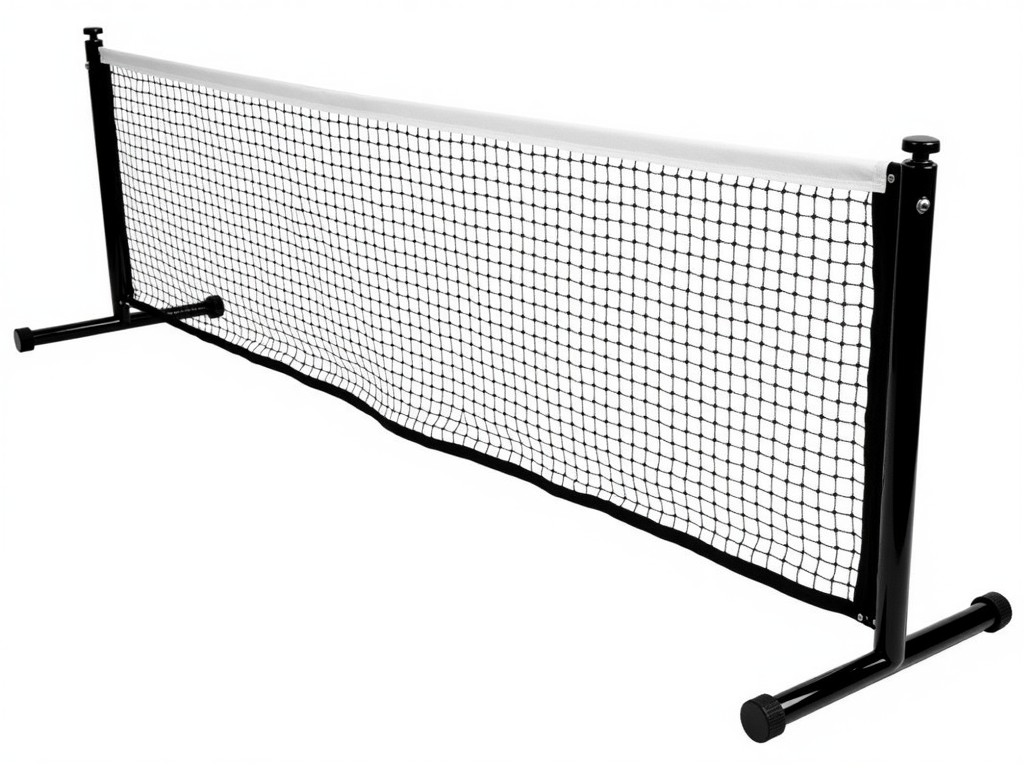
Factory Direct Outdoor Portable Pickleball Nets Supplier
Outdoor portable pickleball nets are engineered for rapid deployment on varied surfaces while maintaining consistent tension and rebound characteristics required for regulated play. The design
Factory Direct Outdoor Portable Pickleball Nets
Outdoor portable pickleball nets are engineered for rapid deployment on varied surfaces while maintaining consistent tension and rebound characteristics required for regulated play. The design balances lightweight transportability with structural rigidity to resist wind loads and repeated impact without sagging.
Key Technical Specifications
| Parameter | Typical Value |
|---|---|
| Net Material | UV‑stabilized polyethylene, 2 mm thickness |
| Mesh Opening | 45 mm × 45 mm square |
| Frame Material | Powder‑coated steel tubing, Ø 38 mm, wall 1.2 mm |
| Overall Dimensions (L × W × H) | 6.10 m × 0.91 m × 0.91 m (regulation) |
| Packed Weight | 12 kg (± 0.5 kg) |
| Wind Resistance Rating | Stable up to 24 km/h gusts with ground anchors |
| UV Exposure Limit | ≥ 1500 h equivalent ASTM G154 |
Material Selection and Engineering Considerations
The net fabric uses high‑density polyethylene (HDPE) treated with UV absorbers to limit photodegradation, ensuring tensile strength retention above 85 % after 1000 hours of simulated sunlight. HDPE offers low water absorption (< 0.01 % wt) which prevents weight gain during rain and maintains consistent mesh tension. Frame tubing undergoes a two‑stage pretreatment: zinc‑phosphate coating followed by electrostatic epoxy powder, delivering a corrosion‑resistance rating of 500 hours salt spray per ASTM B117.
Design Features for Portability and Setup
- Quick‑release cam locks on each pole segment allow assembly in under 90 seconds without tools.
- Telescoping outer tubes incorporate internal spring pins that lock at preset heights (0.91 m, 1.0 m, 1.07 m) for net height adjustment.
- Integrated ground spikes (hardened steel, 200 mm length) provide anchorage on grass, sand, or compacted soil.
- A reinforced polyester carry bag with padded handles and internal compression straps reduces packed volume to 0.12 m³.
Applications in Industrial and Recreational Facilities
Facilities such as corporate wellness centers, municipal parks, and school districts require nets that can be deployed for temporary tournaments and stored when not in use to free up court space. The portable system’s low ground pressure (< 0.4 kPa) minimizes turf damage, while the non‑marking powder coat prevents surface staining on concrete or asphalt. These attributes support multi‑use scheduling without permanent infrastructure investment.
Customization Options
- Net length adjustable from 4.5 m to 6.1 m to accommodate varied court dimensions.
- Custom logo printing on the net border using UV‑cured inks, suitable for up to three colors.
- Frame color selection from standard RAL palette (e.g., RAL 9005 black, RAL 7016 anthracite grey).
- Optional wheel kit with lock‑able casters for hard‑surface mobility.
To discuss specific configuration requirements, contact our engineering team.
Quality Control and Testing
Each production lot undergoes seam strength testing using a tensile tester at 150 N mm⁻¹, confirming that stitching exceeds the net’s rated load by a factor of 2.5. Frame assemblies are subjected to cyclic load simulations (10 000 cycles at 50 % yield stress) to verify fatigue resistance. Final inspection includes a visual check for coating uniformity and dimensional verification against CAD models within ± 2 mm tolerance.
Packaging and Logistics
Units are packed in double‑wall corrugated cartons (EB flute) with interior polyethylene foam corners to protect frame ends. Each carton is sealed with pressure‑sensitive tape and labeled with handling instructions and QR code linking to the product datasheet. Palletized shipments conform to ISPM 15 standards, with a maximum stack height of 1.2 m to ensure stability during transit.
Request a Quote
For procurement inquiries, technical data sheets, or sample arrangements, please reach out via the link below.


