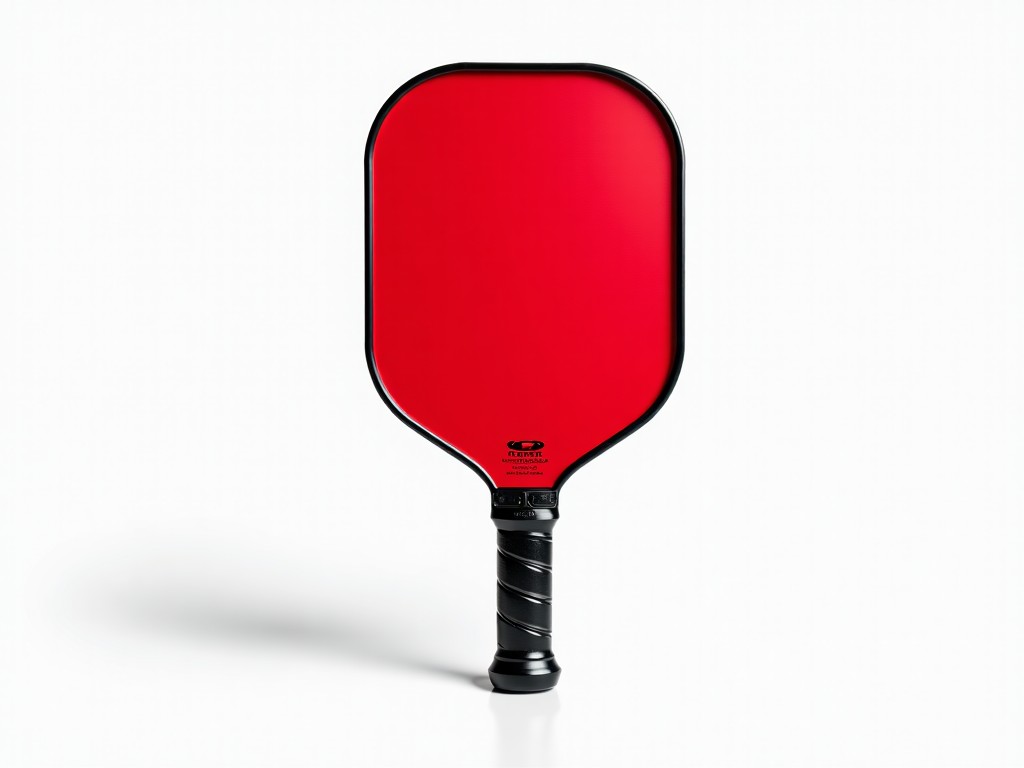
Factory Direct Textured Thin Pickleball Paddles Wholesale
Textured thin paddles are engineered with a reduced core thickness typically ranging from 8 mm to 10 mm, resulting in a lighter overall mass often between 190 g and 220 g. The hitting surface
Factory Direct Textured Thin Pickleball Paddles – Wholesale
Textured thin paddles are engineered with a reduced core thickness typically ranging from 8 mm to 10 mm, resulting in a lighter overall mass often between 190 g and 220 g. The hitting surface features a controlled micro‑texture measured by arithmetic average roughness (Ra) of 15 µm to 25 µm, which enhances ball‑string interaction without adding significant weight.
This combination of low mass and surface texture lowers swing inertia, allowing players to generate higher racket head speed while maintaining precise shot placement. Engineers quantify the benefit via a reduced moment of inertia about the handle axis, which translates to quicker response times during fast‑volley exchanges.
Material & Construction
The core is commonly a polypropylene honeycomb structure with a density of approximately 30 kg/m³, providing a balance of stiffness and shock absorption. Faces are typically constructed from woven carbon fiber or fiberglass reinforced polymer sheets, laminated with a thermoset resin that yields a flexural modulus around 25 GPa.
The textured finish is applied via a UV‑curable coating containing silica particulates, producing a consistent Ra value across the hitting area. Bonding between core and face is achieved using a high‑shear adhesive with a lap shear strength exceeding 2.5 MPa, ensuring durability under repeated impact loads.
Dimensional Specifications
| Parameter | Typical Value | Tolerance | Unit |
|---|---|---|---|
| Overall Length | 400 | ±2 | mm |
| Width (Face) | 200 | ±2 | mm |
| Thickness (Core) | 9 | ±0.2 | mm |
| Weight | 205 | ±5 | g |
| Surface Roughness (Ra) | 20 | ±5 | µm |
Performance Characteristics
The reduced thickness lowers the paddle’s natural frequency, shifting vibrational modes away from the dominant impact frequency range (approximately 150 Hz to 250 Hz). This results in diminished vibration transmission to the handle, measured by a reduction in peak acceleration of up to 30 % compared with standard 13 mm cores.
Surface texture increases the coefficient of restitution for tangential contact, enabling greater spin generation. Laboratory ball‑launch tests show an average increase of 12 % in topspin rate when using a textured thin paddle versus a smooth counterpart of identical mass.
Customization Options
Buyers may specify core thickness from 7 mm to 11 mm in 0.5 mm increments, allowing fine‑tuning of swing weight and power potential. Face material can be selected between carbon fiber, fiberglass, or hybrid layups, each offering distinct flexural modulus values ranging from 20 GPa to 30 GPa.
Texture pattern, depth, and coating chemistry are adjustable to achieve target Ra values between 10 µm and 30 µm. Grip circumference, length, and overwrap type can be customized to match player hand dimensions, with typical grip sizes ranging from 4 in to 4.5 in circumference.
Cosmetic options include full‑color sublimation printing, laser‑etched logos, and Pantone‑matched base coats, all applied without altering the underlying mechanical properties.
Quality Assurance
Each production lot undergoes dimensional verification using calibrated laser micrometers, confirming thickness tolerance within ±0.2 mm and length/width within ±2 mm. Mass is checked on analytical balances with a repeatability of ±0.1 g.
Surface roughness is sampled at five locations per paddle using a contact profilometer, ensuring the Ra mean stays within the agreed range. Adhesion integrity is validated by cross‑hatch tape tests per ASTM D3359, requiring a rating of 4B or higher.
Final inspection includes a low‑impact bounce test where a standard ball is dropped from 1.5 m; rebound height must fall between 55 % and 65 % of the drop height, indicating consistent energy transfer across the lot.
Typical Applications
Wholesale distributors supply these paddles to recreational facilities, school sports programs, and community centers where rapid turnover and consistent performance are essential. The lightweight design reduces fatigue during extended play sessions, making them suitable for beginner‑to‑intermediate player development programs.
Promotional operators choose the thin profile for custom‑branded giveaways because the reduced material volume lowers unit cost while still delivering a playable product that meets official tournament specifications for width and length.
Request a Quote
To receive a formal quotation, please provide the desired quantity, target thickness, face material, texture Ra range, grip size, and any branding details. Our engineering team will review the specifications and return a detailed cost sheet within two business days.


