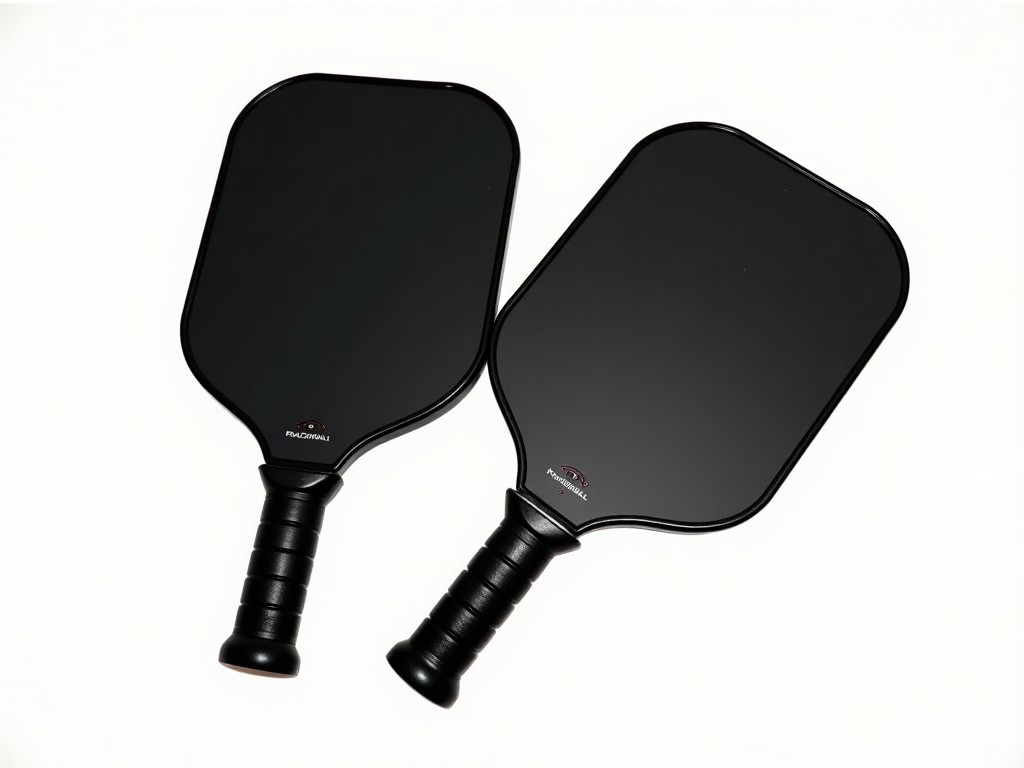
Low Price Carbon Pro Pickleball Paddle Factory
This facility specializes in the production of carbon‑fiber reinforced pickleball paddles that meet competitive play standards while targeting cost‑effective volume manufacturing. The process
Low Price Carbon Pro Pickleball Paddle Factory
This facility specializes in the production of carbon‑fiber reinforced pickleball paddles that meet competitive play standards while targeting cost‑effective volume manufacturing. The process combines automated lay‑up with precision molding to achieve consistent paddle geometry and weight distribution.
Material and Construction
The paddle face uses a unidirectional carbon fiber sheet impregnated with epoxy resin, providing a tensile strength of approximately 4,500 MPa. A lightweight polypropylene honeycomb core, typically 12 mm thick, is bonded between two carbon layers to deliver a high strength‑to‑weight ratio.
Edge protection is formed by a reinforced urethane rim that wraps the perimeter, reducing chipping during intense rallies. The handle incorporates a tapered graphite shaft over‑molded with a cushioned grip material, allowing for a range of circumference options from 4.0 in to 4.5 in.
Performance Characteristics
Measured swing weight averages 78 g·cm², placing the paddle in the mid‑range category favored by players seeking balanced power and control. The surface roughness, quantified by a Ra value of 0.8 µm, promotes consistent ball spin without excessive wear on the ball's felt.
Vibration damping is evaluated through a modal analysis showing a first‑mode frequency of 520 Hz, which translates to reduced hand fatigue during extended play sessions. Thermal expansion of the carbon‑epoxy laminate is below 2 ppm/°C, ensuring dimensional stability across typical indoor‑outdoor temperature variations.
Customization Options
- Face graphics: full‑color sublimation or laser‑etched logos
- Grip texture: perforated, ribbed, or smooth silicone overlays
- Weight tuning: insertion of tungsten or brass inserts up to 5 g
- Length variation: standard 15.5 in, extended 16.0 in, or shortened 15.0 in
- Core density: selection of polypropylene honeycomb with cell sizes from 6 mm to 10 mm
Quality Control and Testing
Each paddle undergoes a three‑stage inspection: visual defect screening, dimensional verification using a coordinate measuring machine (±0.1 mm tolerance), and dynamic impact testing with a standardized ball at 30 m/s to assess delamination resistance.
Batch sampling includes flexural modulus measurement via three‑point bend testing, targeting a minimum of 70 GPa for the carbon laminate. Any unit deviating beyond 5 % from the mean is flagged for rework or rejection, ensuring that shipped products meet the performance envelope outlined in the specification sheet.
Packaging and Shipping
Paddles are placed in individual corrugated sleeves with interior foam inserts that immobilize the handle and face, preventing movement during transit. The sleeves are then packed into master cartons rated for 30 kg gross weight, each carton bearing a barcode linking to the production lot.
For export shipments, cartons are strapped onto pallets and wrapped with stretch film, followed by a corner‑board edge protector to absorb handling impacts. Humidity indicator cards are included to monitor moisture exposure, with acceptable range maintained between 30 % and 60 % RH.
Typical Lead Times and Ordering
Standard production cycles run 18 working days for orders up to 5,000 units, inclusive of material procurement, lay‑up, curing, and final inspection. Larger volumes are scheduled in parallel manufacturing cells, allowing lead time scaling to approximately 22 days for 20,000 units.
Sample requests are fulfilled within 5 working days after receipt of approved artwork files, with sample paddles shipped via express courier to facilitate design validation. Payment terms typically follow a 30 % deposit upon purchase order confirmation and the balance prior to shipment.
Specification Table
| Parameter | Typical Value | Adjustable Range |
|---|---|---|
| Overall Length | 15.5 in | 15.0 in – 16.0 in |
| Weight (unstrung) | 7.6 oz | 7.0 oz – 8.5 oz |
| Face Material | UD Carbon Fiber/Epoxy | Optional Hybrid Carbon‑Glass |
| Core Type | Polypropylene Honeycomb | Nomex or Aluminum (upon request) |
| Grip Circumference | 4.25 in | 4.0 in – 4.5 in |
| Swing Weight | 78 g·cm² | 70 – 90 g·cm² |
Applications
The paddle’s balanced power‑control profile makes it suitable for intermediate club players who require a responsive feel for both defensive dinks and aggressive drives. Its lightweight construction also benefits senior athletes seeking reduced arm strain during prolonged matches.
Institutional buyers such as community recreation centers and school sports programs value the paddle’s durability under high‑frequency use, as the carbon‑fiber face resists surface degradation better than traditional wood or composite alternatives. The product’s consistent weight distribution supports uniform training outcomes across large groups.
For promotional events and brand‑building initiatives, the paddle’s surface readily accepts high‑resolution graphics, allowing organizations to display logos or sponsorship messages without compromising structural integrity. This capability supports both retail and B2B channels seeking customized equipment.


