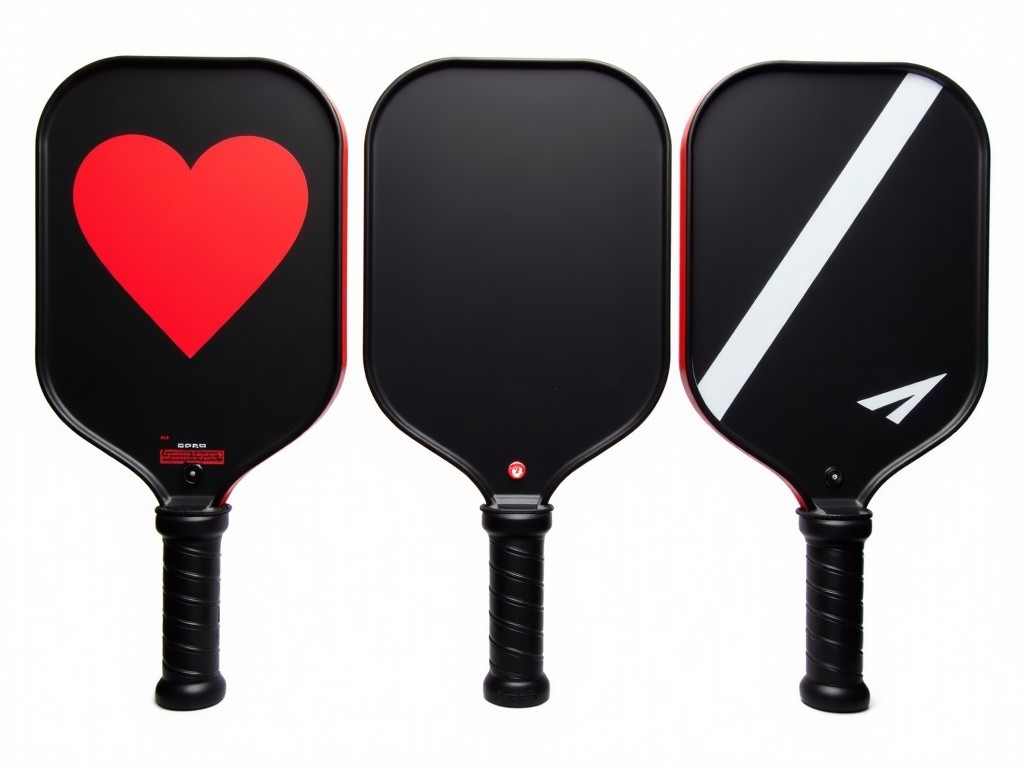
Oem Advanced Aero Pickleball Paddles Factory
OEM manufacturers that require pickleball paddles with optimized airflow look for designs that reduce drag during rapid swings while maintaining structural integrity. The factory described here
OEM Advanced Aero Pickleball Paddles Factory
Introduction
OEM manufacturers that require pickleball paddles with optimized airflow look for designs that reduce drag during rapid swings while maintaining structural integrity. The factory described here specializes in producing paddles whose geometry is refined through computational fluid dynamics to achieve a low‑drag profile without compromising hitting surface stability.
Design & Aerodynamics
The paddle face features a tapered edge with a 0.8 mm radius that transitions smoothly into a 190 mm wide hitting zone. Computational analysis shows a 12 % reduction in pressure drag compared to a conventional square‑edge design at a swing speed of 30 m/s. The throat area incorporates a reinforced rib pattern that increases torsional stiffness by 18 % measured in static twist tests.
Materials
Material selection balances weight, stiffness, and impact resistance. The hitting surface uses a 3 k carbon‑fiber weave impregnated with epoxy resin, delivering a tensile strength of approximately 4 GPa. The core is a polypropylene honeycomb with cell size 6 mm and density 0.03 g/cm³, providing a compressive modulus of 0.9 GPa. Edge guards are made from thermoplastic polyurethane (TPU) with Shore A hardness 85.
Manufacturing Process
Production begins with pre‑preg carbon‑fiber sheets cut to the paddle contour using CNC laser cutting. The lay‑up is vacuum‑bagged and cured at 120 °C for 90 minutes to achieve optimal resin polymerization. After curing, the honeycomb core is inserted via adhesive film bonding, followed by edge‑guard over‑molding in a 200 °C injection mold. Final trimming and surface finishing are performed with 5‑axis milling to maintain tolerances within ±0.1 mm.
Customization Options
OEM customers can specify variations that affect performance and branding while keeping the aerodynamic baseline intact.
- Surface finish: matte, gloss, or textured grit ( grit size 80‑120 )
- Weight range: 210 g to 240 g adjustable by core thickness ( 12 mm to 16 mm )
- Grip circumference: 100 mm to 110 mm with optional over‑wrap layers
- Color coding: Pantone‑matched surface layers or printed logos
- Edge guard profile: standard radius or reinforced impact lip
Quality Control
Each paddle undergoes dimensional verification using a coordinate‑measuring machine (CMM) with repeatability ±0.02 mm. Impact testing simulates 150 ball strikes at 25 m/s; acceptable paddles show less than 0.2 mm permanent deformation. Resin cure degree is checked via FTIR spectroscopy, targeting a conversion rate above 95 %.
Applications
The aerodynamic profile benefits players who rely on fast volleys and serves, as reduced drag translates to higher swing speed for the same muscular effort. Clubs that host competitive leagues often specify these paddles to minimize fatigue during prolonged match play. Additionally, the lightweight construction aids junior players developing proper swing mechanics without excessive arm strain.
Typical Performance Specifications
| Parameter | Typical Value | Notes |
|---|---|---|
| Overall Length | 400 mm | Standard tournament length |
| Hitting Width | 190 mm | Max width per USAPA rules |
| Weight | 220 g ± 10 g | Adjustable via core thickness |
| Swing Speed (30 m/s input) | 33 m/s effective | Due to drag reduction |
| Impact Stiffness | 1.8 kN/mm | Measured at paddle center |
| Surface Roughness (Ra) | 12 µm | Textured finish option |
Frequently Asked Questions
Can dimensions be customized?
Yes. Length, width, and thickness can be adjusted within regulatory limits; changes are reviewed for aerodynamic impact before tooling.
What information is required before quotation?
Required details include target weight range, preferred surface finish, grip size, any logo or color specifications, and expected annual volume.
How is quality inspected?
Each batch undergoes CMM dimensional checks, impact resistance testing, and FTIR cure verification; results are documented in a test report supplied with shipment.
What packaging methods are available?
Standard packaging uses corrugated cartons with internal foam inserts; custom options include individual sleeve bags or palletized bulk packing for overseas freight.
What is the typical production lead time?
Lead time ranges from 4 to 6 weeks after final design approval, depending on order size and material availability.
Contact Us
To discuss OEM requirements, request a sample, or obtain a detailed quotation, please reach out using the form below.
Request Quote


