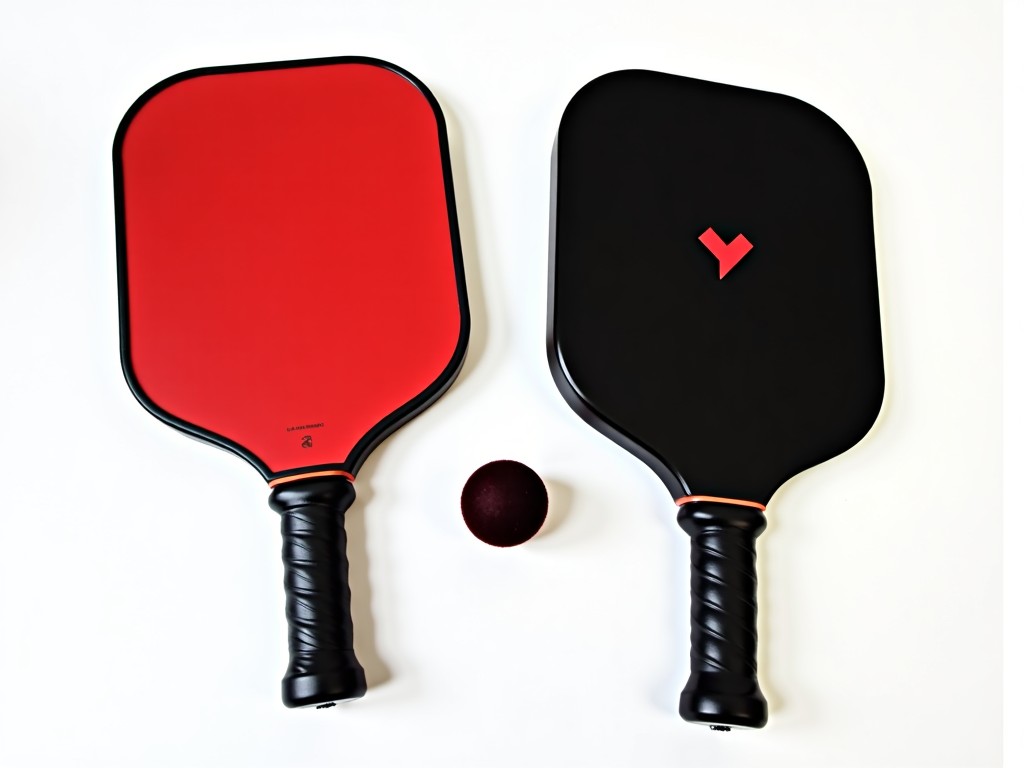
Oem Custom Design Pickleball Paddles Manufacturer
We produce pickleball paddles built to exact customer specifications, focusing on measurable performance parameters such as weight distribution, stiffness, and surface texture. Each paddle is
OEM Custom Design Pickleball Paddles Manufacturer
We produce pickleball paddles built to exact customer specifications, focusing on measurable performance parameters such as weight distribution, stiffness, and surface texture. Each paddle is engineered from selected core and face materials to meet the demands of recreational play, competitive tournaments, or training programs. The following sections detail the technical basis for our customization capabilities.
Material Selection and Performance Characteristics
Core materials influence the paddle’s rebound and vibration damping. Common options include polypropylene honeycomb (density 0.03–0.05 g/cm³), Nomex aramid honeycomb (density 0.04–0.06 g/cm³), and aluminum alloy cores (density 2.7 g/cm³, thickness 6–10 mm). Face materials affect ball spin and durability; typical choices are carbon fiber weave (tensile strength 3.5 GPa), fiberglass laminate (flexural modulus 70 GPa), and graphite overlay (surface roughness Ra 0.8 µm).
Resulting paddle weight typically ranges from 200 g to 260 g, with overall length between 395 mm and 410 mm and width from 190 mm to 205 mm. Core thickness varies from 10 mm to 16 mm, directly affecting the sweet spot size and power transfer. These ranges are starting points; exact values are adjusted per project requirements.
Design Customization Options
- Shape variations: standard, elongated, or wide‑body profiles, each altering swing weight and maneuverability.
- Grip circumference: adjustable from 100 mm to 115 mm in 2 mm increments, with optional over‑wrap textures.
- Edge guard materials: TPU, rubber, or composite strips, thickness 2–4 mm for impact protection.
- Surface graphics: full‑color sublimation, laser etching, or matte finishes, registration tolerance ±0.1 mm.
- Weight balancing: optional lead or tungsten inserts placed at 5 mm intervals along the handle to fine‑tune balance point.
Manufacturing Process
Blank cores are cut to tolerance ±0.2 mm using CNC routers, then laminated with selected face sheets under vacuum pressure (0.8 bar) to eliminate voids. After curing at 120 °C for 20 minutes, paddles are routed to final dimensions, edge guards are bonded, and grips are applied via heat‑activated adhesive (shear strength ≥1.5 MPa). Each step is logged for traceability.
Production lot sizes range from 50 units for prototype runs to 5 000 units for ongoing OEM supply, with changeover time under 4 hours between different core‑face combinations.
Quality Assurance and Testing
Dimensional inspection uses coordinate measuring machines (CMM) with repeatability ±0.01 mm; weight is verified on analytical balances (±0.1 g). Flexural stiffness is measured via three‑point bend test (span 150 mm, load rate 5 mm/min) to confirm target modulus within ±5 %. Surface roughness is checked with profilometer (Ra tolerance ±0.1 µm).
Impact resistance is evaluated by dropping a 0.5 kg steel ball from 1 m onto the paddle face; acceptable damage is limited to surface scratches <0.2 mm depth. All test results are archived and supplied with each shipment upon request.
Typical Applications
Recreational players benefit from paddles with larger sweet spots (core thickness 14–16 mm) and moderate weight (220–240 g) that reduce arm fatigue during extended play. Competitive athletes often prefer lighter, stiffer configurations (core 10–12 mm, carbon‑fiber face, weight 200–220 g) to maximize swing speed and spin generation. Training programs utilize weighted inserts to develop specific muscle groups, with adjustable balance points allowing progressive resistance.
Because each paddle is built to a defined set of mechanical properties, distributors can offer consistent performance across batches, simplifying inventory management and reducing warranty claims.
Specification Ranges
| Parameter | Typical Range | Customizable? |
|---|---|---|
| Weight (g) | 200–260 | Yes, per client spec |
| Length (mm) | 395–410 | Yes, limited by standards |
| Width (mm) | 190–205 | Yes |
| Core Thickness (mm) | 10–16 | Yes |
| Core Type | PP honeycomb, Nomex, Al | Yes |
| Face Material | Carbon fiber, Fiberglass, Graphite | Yes |
| Grip Circumference (mm) | 100–115 | Yes, 2 mm steps |
Frequently Asked Questions
- Can dimensions be adjusted beyond the typical ranges? – Yes, subject to tooling feasibility and minimum order quantities.
- What information is required before quotation? – Desired weight, length, core/face materials, grip size, edge guard type, graphics files, and target annual volume.
- Which materials are available for the core and face? – Polypropylene honeycomb, Nomex aramid honeycomb, aluminum alloy cores; carbon fiber, fiberglass, graphite faces.
- How is quality inspected? – CMM dimensional checks, weight verification, flexural stiffness testing, surface roughness measurement, and impact resistance trials.
- What packaging methods are available? – Individual corrugated sleeves, bulk cartons with foam inserts, or custom‑branded master cartons; all include moisture barrier liners.
- How are export shipments protected? – Palletized with corner boards, stretch‑wrapped, and sealed with humidity‑indicating cards.
- What is the typical production lead time? – 3–4 weeks for samples, 6–8 weeks for production orders after design freeze.
- How are samples arranged? – Sample units are produced using the same processes as production; shipping costs are quoted separately.
Get a Quote
To begin a custom paddle project, provide your performance targets and volume expectations. Our engineering team will review the specifications, propose material combinations, and deliver a detailed quotation with lead times.
Contact us for a quote, Request a sample, Download specification sheet.


