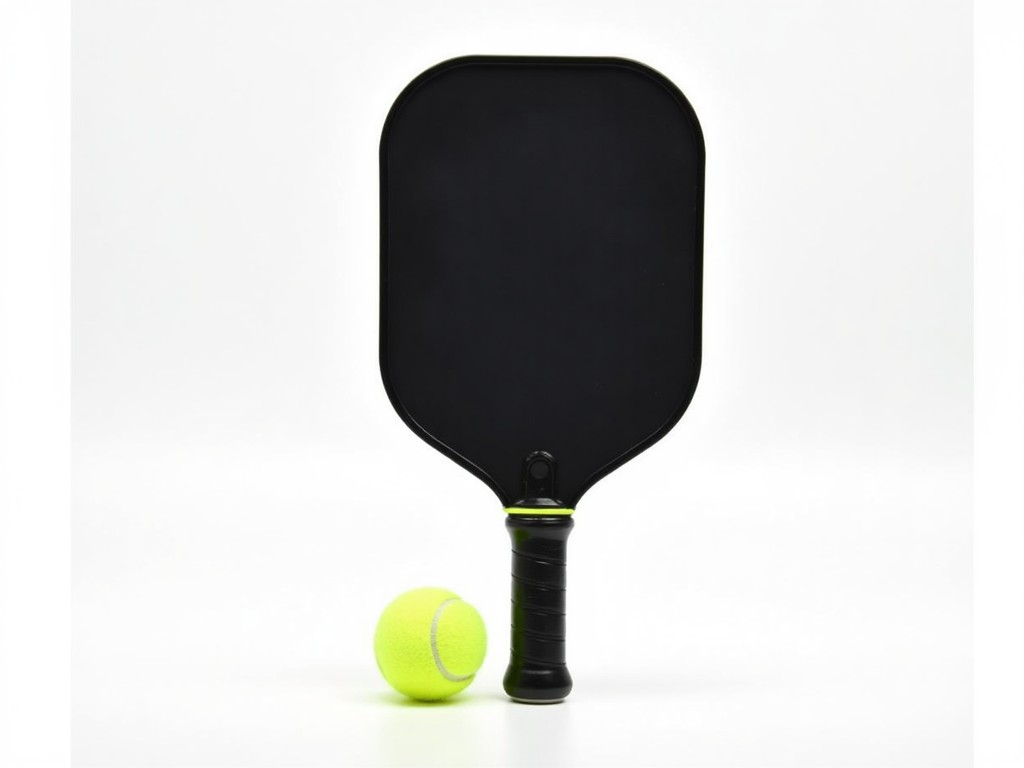
Oem Durable Carbon Fiber Pickleball Paddle Factory
We manufacture carbon fiber pickleball paddles for OEM partners who require consistent mechanical performance and tight dimensional tolerances across large production volumes. Our facility integrates
OEM Durable Carbon Fiber Pickleball Paddle Factory
We manufacture carbon fiber pickleball paddles for OEM partners who require consistent mechanical performance and tight dimensional tolerances across large production volumes. Our facility integrates automated layup, precision molding, and CNC finishing to achieve repeatable paddle geometry. This approach reduces variability that can affect play characteristics and helps customers meet their own quality specifications.
Material Composition and Structure
The paddle face uses a unidirectional carbon fiber fabric impregnated with an epoxy resin system, providing a tensile modulus typically around 230 GPa and a density near 1.55 g/cm³. A core layer—commonly a Nomex honeycomb or polypropylene honeycomb—adds shear stiffness while keeping overall weight low. Face thickness generally ranges from 0.8 mm to 1.2 mm, and core thickness from 10 mm to 16 mm, depending on the targeted weight and stiffness profile.
The layup orientation is engineered to maximize flexural stiffness in the plane of the paddle while maintaining adequate vibration damping through the core. Surface finishes are applied after curing to control friction and ensure compatibility with approved grip materials.
Manufacturing Process
Pre‑impregnated carbon fiber sheets are cut to shape and stacked with the core material in a matched metal mold. The stack undergoes vacuum bagging and is cured in a convection oven at approximately 120 °C for 90 minutes, achieving a void content below 0.5 % as measured by ultrasonic inspection. After demolding, CNC routers trim the paddle to final dimensions, and edge guards are applied using a polyurethane overmold.
Each paddle receives a laser‑etched serial number for traceability. The process is designed for high repeatability, with cycle times typically under 5 minutes per paddle in a multi‑cavity setup, supporting OEM volume requirements.
Performance Characteristics
Flexural stiffness of the finished paddle, measured in a three‑point bend test, usually falls between 150 N·mm² and 210 N·mm², depending on core selection and face thickness. Impact resistance, evaluated by dropping a 0.5 kg steel ball from 1 m onto the paddle face, shows no delamination or cracking in over 95 % of test units. Weight distribution is tuned to place the center of mass within 5 mm of the geometric center, contributing to a balanced swing feel.
Vibration damping is quantified by measuring the decay rate of a 200 Hz excitation; typical damping ratios range from 0.02 to 0.04, reducing hand fatigue during extended play. These values are presented as typical ranges; actual results can be adjusted through material selection and layup geometry to meet specific customer targets.
Typical Specification Table
| Parameter | Typical Range | Notes |
|---|---|---|
| Paddle Weight | 210 g – 240 g | Dependent on core thickness and face layup |
| Face Thickness | 0.8 mm – 1.2 mm | Carbon fiber/epoxy laminate |
| Core Thickness | 10 mm – 16 mm | Nomex or polypropylene honeycomb |
| Flexural Stiffness | 150 – 210 N·mm² | Three‑point bend, span 200 mm |
| Impact Resistance | No delamination at 0.5 kg, 1 m drop | ASTM‑style impact test |
| Damping Ratio | 0.02 – 0.04 | Measured at 200 Hz |
Customization Options
- Paddle shape: widebody, elongated, or traditional
- Core material: Nomex honeycomb, polypropylene honeycomb, or polymer foam
- Surface texture: smooth, matte, or spin‑enhanced grit
- Grip size: 4.0 in, 4.25 in, 4.5 in (custom lengths available)
- Color and branding: custom graphics, logos, or single‑tone finishes
Each option is evaluated for its effect on weight, stiffness, and durability before tooling is finalized. Our engineering team provides feasibility feedback based on finite‑element analysis and prototype testing.
Quality Control and Testing Philosophy
Inspection begins with incoming material verification: fiber areal weight, resin content, and core dimensions are checked against supplier certificates. During production, each paddle undergoes dimensional verification (±0.5 mm tolerance on length and width), weight check (±2 g), and a flexural stiffness test on a sample batch every 500 units.
Non‑destructive methods include ultrasonic C‑scan for delamination detection and visual inspection under 10× magnification for surface defects. Destructive testing on a statistical sample set measures impact resistance and peel strength of the face‑core bond. Results are logged and trended to detect process drift early.
All test procedures are documented in a quality manual aligned with ISO 9001 principles, and calibration of measurement equipment is performed quarterly. This systematic approach aims to minimize field failures and provide OEMs with reliable performance data for their own product validation.
Applications for OEM Partners
OEMs select our paddles because the manufacturing process delivers low batch‑to‑batch variation in stiffness and weight, which simplifies their own performance certification. The ability to adjust core thickness and face layup enables partners to target specific market segments—such as recreational play emphasizing maneuverability or competitive play emphasizing power—without changing suppliers.
Additionally, the use of carbon fiber provides a high strength‑to‑weight ratio that allows for thinner paddles while maintaining durability, reducing material cost and shipping weight. Our facility’s capacity for rapid tooling changes supports short‑run custom batches for limited‑edition releases or regional branding.
Frequently Asked Questions
- Can dimensions be customized? Yes, length, width, and thickness can be adjusted within the limits of our molding equipment; please provide a drawing or detailed specifications for a feasibility review.
- What information is required before quotation? We need the target weight range, preferred core material, face finish, grip size, annual volume, and any required compliance standards (e.g., USAPA).
- How is quality inspected? Each lot undergoes dimensional, weight, flexural stiffness, and ultrasonic inspections; destructive tests are performed on a statistically significant sample.
- What packaging methods are available? Standard packaging includes individual poly‑bags placed in master cartons with corner protection; custom inserts or branded sleeves can be arranged upon request.
For technical discussions, sample requests, or to begin a quotation process, please reach out to our engineering team.
Contact our engineering team


