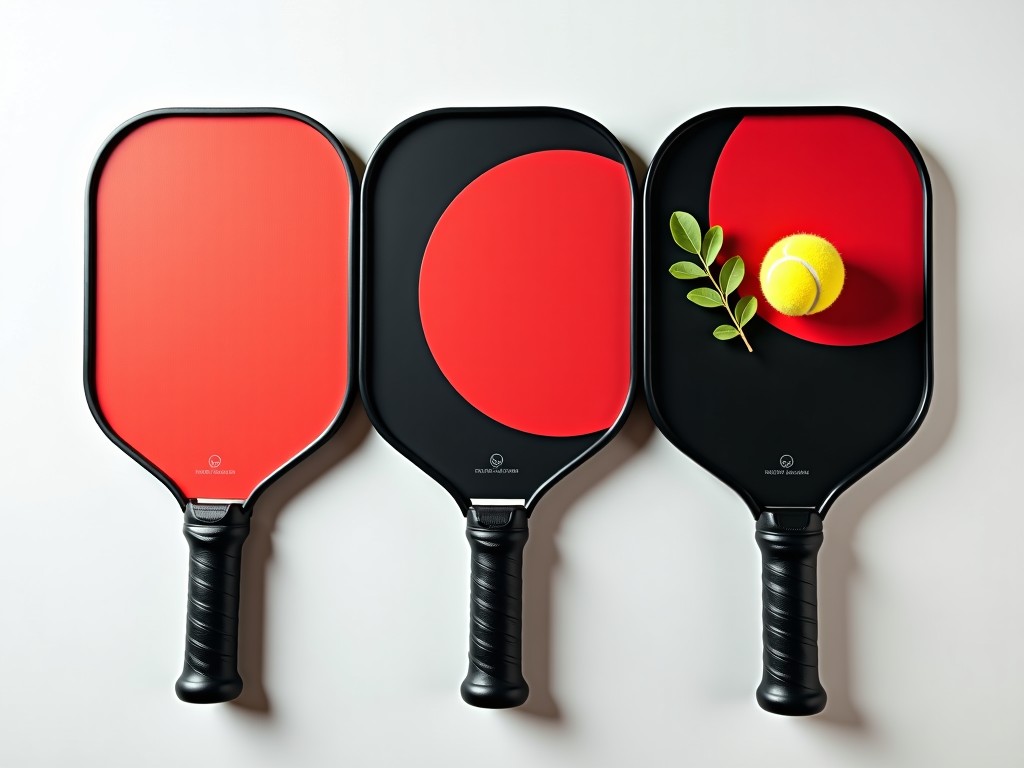
Oem Funny Design Pickleball Paddles Factory
Original equipment manufacturer (OEM) production of pickleball paddles with humorous graphics requires precise control over core composition, surface adhesion, and dimensional tolerances to ensure
OEM Funny Design Pickleball Paddles – Custom Manufacturing
Original equipment manufacturer (OEM) production of pickleball paddles with humorous graphics requires precise control over core composition, surface adhesion, and dimensional tolerances to ensure consistent play performance while delivering custom visual branding. The process balances lightweight maneuverability with sufficient stiffness for controlled shot placement, meeting both recreational and promotional-use requirements.
Material Selection and Core Construction
Paddle cores are typically formed from polymer honeycomb (polypropylene) or aramid fiber (Nomex) sheets, each offering distinct stiffness-to-weight ratios. Polypropylene honeycomb cores provide a uniform cell size of 6 mm thickness, resulting in a nominal core density of 0.03 g/cm³ and a flexural modulus around 1.2 GPa. Nomex cores, with a thinner 3 mm cell structure, yield higher modulus (~2.5 GPa) and increased impact resistance, suitable for players seeking a firmer feel.
- Polypropylene honeycomb – density 0.03 g/cm³, modulus 1.2 GPa, typical weight contribution 180 g
- Nomex honeycomb – density 0.04 g/cm³, modulus 2.5 GPa, typical weight contribution 210 g
- Hybrid core options – combine layers to tune stiffness and vibration damping
Surface Finish and Graphic Application
The paddle face receives a composite overlay of fiberglass or carbon fiber cloth impregnated with epoxy resin, providing a hard, wear-resistant surface. Graphics are applied via sublimation printing for polymer-based overlays or UV-curable ink printing for fiberglass surfaces, both methods achieving adhesion strength exceeding 1.5 MPa after curing. A clear protective topcoat (polyurethane, 25 µm thickness) adds abrasion resistance, maintaining color fidelity under repeated ball impact.
Dimensional Specifications and Weight Distribution
| Parameter | Typical Value | Adjustment Range |
|---|---|---|
| Overall Length | 400 mm | 395 – 405 mm |
| Overall Width | 200 mm | 195 – 205 mm |
| Thickness (core + face) | 13 mm | 12 – 14 mm |
| Weight (unstrung) | 210 g | 190 – 230 g |
| Grip Circumference | 102 mm | 95 – 110 mm |
| Swing Weight (balance point) | 185 mm from butt cap | 175 – 195 mm |
Manufacturing Process Overview
Core sheets are cut to shape and layered with adhesive film before hot‑press molding at 180 °C and 2.5 MPa for 4 minutes, achieving uniform bond strength. The molded core then receives a wet layup of fiberglass/resin prepreg, vacuum‑bagged and cured at 120 °C for 60 minutes. After demolding, the paddle undergoes CNC trimming to final dimensions, surface sanding, and cleaning prior to graphic printing. Final steps include clear coat application, grip installation, and edge‑guard attachment.
Quality Control and Testing
Each batch undergoes dimensional inspection (±0.5 mm tolerance on length/width, ±0.2 mm on thickness) and weight verification (±5 g). Impact resistance is evaluated using a standardized ball‑drop test (0.5 kg mass from 1 m height) with acceptance criteria of no delamination or surface cracking. Graphic adhesion is measured via cross‑hatch tape test per ASTM D3359, requiring a rating of 4B or higher. Random samples are subjected to 500‑shot durability cycles to assess wear‑rate of the overlay.
- Dimensional CMM verification
- Weight scale (±0.1 g resolution)
- Impact tester (drop‑height 1 m)
- Adhesion tape test (ASTM D3359)
Applications and Market Fit
Humorous graphic paddles serve niche markets where brand recognition and consumer engagement outweigh strict performance tolerances, such as promotional events, league sponsorships, and retail gift packs. The visual element does not alter the underlying mechanical properties; therefore, the paddle maintains the same swing weight and bounce characteristics as a standard model, ensuring fair play while delivering a marketing impression.
Distributors benefit from reduced SKU complexity because the same core and tooling can be used across multiple graphic variants, simplifying inventory management and lowering per‑unit setup costs.
Customization Options
- Graphic artwork – full‑color sublimation or UV print, spot‑color or CMYK
- Core material – polypropylene honeycomb, Nomex honeycomb, or hybrid
- Grip type – cushioned perforated, contoured rubber, or leather‑wrapped
- Edge guard – rubber, TPU, or none
- Weight tuning – lead tape inserts or internal weighting chambers
Lead Times and Packaging
Standard production lead time for a 500‑piece order is 18‑22 working days after artwork approval, inclusive of tooling setup, molding, printing, and final inspection. Each paddle is placed in a low‑density polyethylene sleeve (50 µm) to protect the finish, then packed into a corrugated master carton (150 gsm) with internal dividers to prevent movement. Cartons are palletized (1.1 m × 1.1 m base) and stretch‑wrapped for export.
Frequently Asked Questions
- Can dimensions be customized? Yes, length, width, and thickness can be adjusted within the ranges shown in the specifications table; changes may affect core tooling and lead time.
- What file formats are required for artwork? High‑resolution PDF, AI, or EPS with embedded fonts and CMYK color mode; raster images should be 300 dpi at final size.
- How is quality inspected before shipment? Each lot undergoes dimensional, weight, impact, and adhesion tests as described in the QC section; a test report is available upon request.
- What packaging options exist for fragile graphics? In addition to the standard PE sleeve, double‑wall cardboard inserts and corner protectors can be added for extra safeguarding.
- What is the typical production lead time? For orders up to 2000 pieces, lead time ranges from 16 to 25 working days depending on graphic complexity and material selection.
To discuss your specific design, material, or volume requirements, please reach out for a detailed quotation.
Request a Quote


