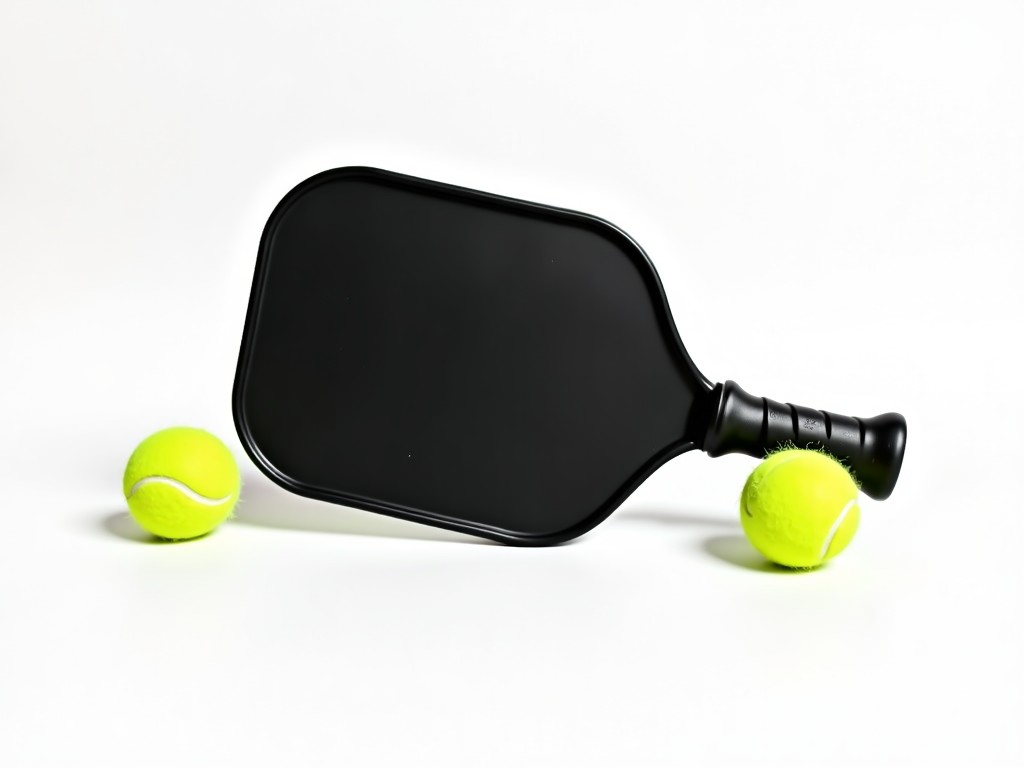
Oem Newest Carbon Pickleball Paddle Supplier
Carbon fiber composites provide a high modulus of elasticity and low density, making them suitable for paddles where swing speed and control are critical. Understanding the material behavior helps
OEM Newest Carbon Pickleball Paddle Supplier
Carbon fiber composites provide a high modulus of elasticity and low density, making them suitable for paddles where swing speed and control are critical. Understanding the material behavior helps OEMs evaluate long‑term performance and warranty risk.
Sourcing paddles directly from an OEM supplier reduces part‑variability, aligns lead times with product cycles, and enables traceability from raw material to finished good.
Material Composition and Construction
The paddle face is built from aerospace‑grade carbon fiber prepreg, typically layered in a quasi‑isotropic layup (0°, ±45°, 90°) to balance tensile strength and impact resistance. Resin systems are epoxy‑based with a glass transition temperature above 120 °C to maintain dimensional stability during play.
A core material—commonly Nomex honeycomb or polymer polypropylene—provides shear stiffness while keeping overall paddle weight between 7.5 kg and 8.5 kg per square meter of face area. Core thickness ranges from 10 mm to 16 mm depending on the desired power‑control trade‑off.
Manufacturing Process
Prepreg sheets are cut to shape, stacked in a mold, and vacuum‑bagged to remove entrapped air. The assembly undergoes autoclave curing at 180 °C and 2 bar pressure for 90 minutes, ensuring a void content below 0.5 %.
After curing, the paddle is demolded, CNC‑trimmed to final length and width tolerances of ±0.5 mm, and an edge guard—usually TPU or rubber—is injection‑molded onto the perimeter for impact protection.
Dimensional Tolerances and Performance Metrics
| Parameter | Typical Value | Tolerance / Note |
|---|---|---|
| Overall Length | 400 mm | ±1 mm |
| Overall Width | 200 mm | ±1 mm |
| Face Thickness | 12 mm | ±0.5 mm |
| Weight (unstrung) | 220 g | ±5 g |
| Swing Weight | 115 kg·cm² | Measured at 10 cm from butt cap |
| Flexural Stiffness (EI) | 1.8 Nm² | Three‑point bend test |
| Surface Roughness (Ra) | 0.8 µm | Average over 10 mm² area |
Customization Options
- Core type: Nomex honeycomb, polypropylene, or aluminum alloy
- Face texture: smooth, sand‑sprayed, or laser‑etched for spin enhancement
- Grip circumference: 100 mm, 106 mm, or 112 mm with optional over‑wrap
- Edge guard color: black, white, navy, or custom Pantone match
- Logo placement: screen‑printed on face, embossed on grip, or sublimated on edge guard
Quality Control and Testing
Each paddle undergoes a weight check on a precision scale (±0.1 g) and a flex test using a three‑point bend fixture to verify stiffness within the target range. Impact resistance is evaluated by dropping a 200 g steel ball from 1 m height onto the face center and measuring rebound height.
Dimensional inspection is performed with a coordinate measuring machine (CMM) to confirm length, width, and thickness tolerances. Surface uniformity is assessed via a laser profilometer to ensure Ra remains below 1.0 µm across the hitting zone.
Applications in OEM Supply Chain
OEMs select carbon paddles because the consistent modulus reduces variance in ball launch angle, which is critical for brand performance claims. The low mass enables faster hand speed, decreasing player fatigue during extended play sessions.
Durability benefits arise from the fatigue resistance of carbon‑epoxy laminates, allowing paddles to sustain over 5,000 impact cycles without noticeable delamination, thereby lowering warranty costs for the OEM.
Lead Times and Logistics
Sample production typically requires 7‑10 business days after final design approval, including prototype molding and initial QC. Full production lead time ranges from 18‑25 days for order quantities up to 5,000 units, depending on core material availability.
Finished paddles are packed in individual LDPE sleeves, placed in corrugated cartons with internal foam inserts, and stacked on standard pallets for export. Each carton bears a barcoded label with part number, lot code, and QR‑linked inspection report.
Frequently Asked Questions
Can dimensions be customized?
Length, width, and thickness can be adjusted within the ranges specified in the table; custom shapes require new mold tooling and are quoted separately.
What information is required before quotation?
We need the desired core material, face layup specification, grip size, edge guard color, logo artwork files, and target annual volume.
What materials are available for the core?
Standard options include Nomex honeycomb (density 64 kg/m³), polypropylene honeycomb (density 48 kg/m³), and aluminum alloy honeycomb (density 70 kg/m³). Custom cores are available upon request.
How is quality inspected?
Each lot undergoes weight, flex, impact, CMM dimensional, and surface roughness checks. Inspection reports are provided with every shipment.
What packaging methods are available?
Primary packaging is an anti‑static LDPE sleeve; secondary packaging is a double‑wall corrugated carton with custom foam inserts. Palletization follows ISPM‑15 standards for international shipments.
What is the typical production lead time?
For orders under 5,000 units, lead time is 18‑25 business days after sample approval. Larger volumes are scheduled based on factory capacity and material lead times.
Contact Us
To discuss your OEM requirements, request a sample, or obtain a detailed quotation, please reach out via the link below.
Send Inquiry


