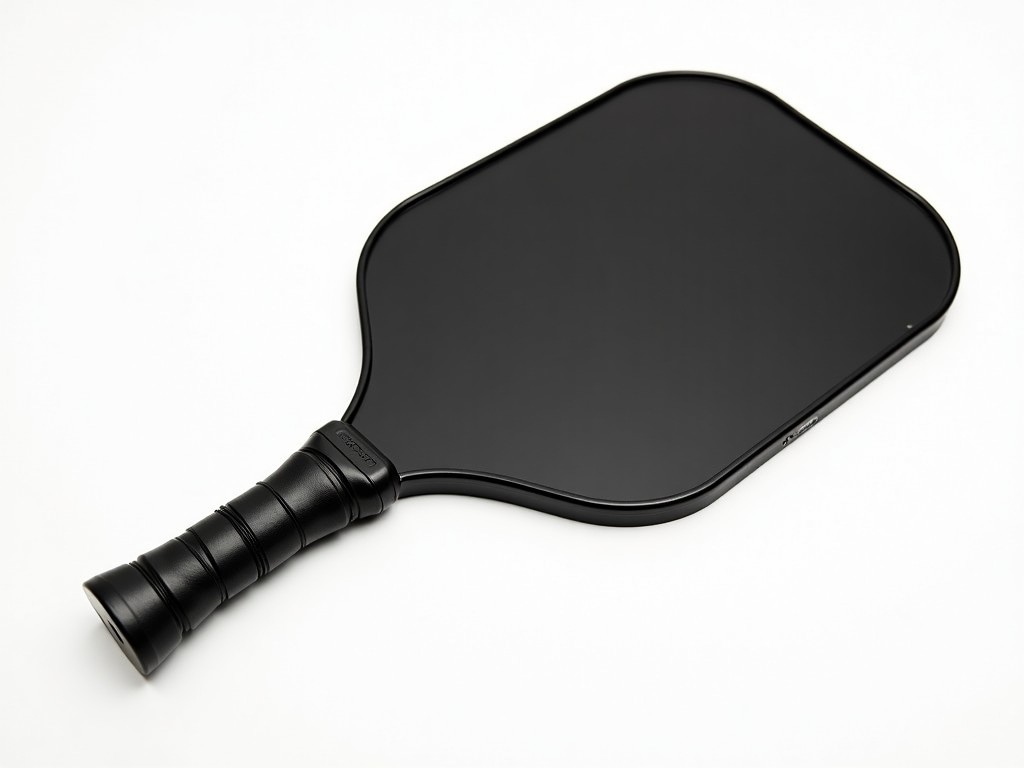
Oem Professional Graphite Pickleball Paddle Factory
Graphite paddles are constructed from layered carbon‑fiber reinforced polymer sheets that provide a high stiffness‑to‑weight ratio. The face material typically exhibits a tensile modulus between 30
OEM Professional Graphite Pickleball Paddle Factory
Graphite paddles are constructed from layered carbon‑fiber reinforced polymer sheets that provide a high stiffness‑to‑weight ratio. The face material typically exhibits a tensile modulus between 30 GPa and 45 GPa, while the core thickness ranges from 10 mm to 16 mm depending on the desired balance of power and control.
Material Composition and Structure
The paddle face consists of unidirectional graphite plies oriented at 0° and 90° to maximize in‑plane rigidity. A thin resin film binds the plies, yielding a surface roughness of approximately 0.8 µm Ra, which influences ball spin characteristics. The core is usually a honeycomb polypropylene or Nomex structure with cell diameters of 3 mm to 6 mm, contributing to energy absorption and vibration damping.
Manufacturing Process
Plies are cut to shape using CNC laser cutting with a tolerance of ±0.1 mm. Lay‑up occurs in a temperature‑controlled press at 130 °C under 1.5 MPa pressure for 8 minutes to achieve full resin cure. After pressing, edges are trimmed and a protective edge guard is applied via over‑molding with TPU having a Shore A hardness of 85.
Performance Characteristics
Typical weight ranges from 190 g to 220 g, with a swing weight measured at 115 mm²·g. The impact stiffness, derived from modal testing, falls between 150 N/mm and 210 N/mm, influencing rebound velocity. Surface friction coefficient, measured against a standard pickleball, is approximately 0.35, which affects spin generation.
Customization Options
- Face ply count: 4 to 8 layers, adjustable in 2‑ply increments
- Core material: polypropylene honeycomb, Nomex, or aluminum honeycomb
- Core thickness: 10 mm, 12 mm, 14 mm, 16 mm (custom thicknesses available)
- Edge guard profile: rounded, beveled, or flat with width options 3 mm to 6 mm
- Surface finish: matte, gloss, or textured with defined roughness values
Quality Assurance
Each paddle undergoes dimensional inspection using a coordinate measuring machine (CMM) with repeatability ±0.02 mm. Weight is verified on a calibrated scale accurate to 0.1 g. Flexural stiffness is assessed via three‑point bending test according to ASTM D790, with acceptance criteria of ±10 % of target value. Visual inspection follows a 10× magnification checklist for surface defects, delamination, and edge uniformity.
Applications
Graphite paddles are selected for competitive play where rapid response and consistent energy transfer are required. The high modulus face reduces vibration transmission to the arm, lowering fatigue during extended matches. Custom core geometries allow tuning of the sweet spot location, benefiting players who prioritize either control near the handle or power at the tip.
Typical Specifications
| Parameter | Range / Typical Value | Notes |
|---|---|---|
| Weight | 190 g – 220 g | Measured with paddle unstrung |
| Face Modulus | 30 GPa – 45 GPa | Dependent on ply count and orientation |
| Core Thickness | 10 mm – 16 mm | Available in 2 mm increments |
| Swing Weight | 110 mm²·g – 130 mm²·g | Calculated from mass distribution |
| Impact Stiffness | 150 N/mm – 210 N/mm | Three‑point bend equivalent |
| Surface Roughness (Ra) | 0.6 µm – 1.0 µm | Affects ball spin |
Frequently Asked Questions
- Can dimensions be customized? Yes, length, width, and thickness can be adjusted within standard tooling limits; custom molds are available for volumes over 500 units.
- What information is required before quotation? Detailed drawing or CAD model, desired face ply count, core type, target weight, and any surface finish specifications.
- What materials are available for the core? Polypropylene honeycomb (standard), Nomex honeycomb (higher temperature resistance), and aluminum honeycomb (increased stiffness).
- How is quality inspected? Dimensional CMM check, weight verification, flexural stiffness test, and 10× visual inspection for defects.
- What packaging methods are available? Individual PE foam sleeve, corrugated carton with corner protectors, or palletized bulk packaging with moisture‑barrier lining.
- How are export shipments protected? Cartons are sealed with poly‑strap and include shock‑absorbing inserts; optional ISPM‑15 treated pallets for international transport.
- What is the typical production lead time? 3‑4 weeks for tooling preparation and first article approval, followed by 2‑3 weeks for mass production per 1 000 units.
- How are samples arranged? Sample paddles are produced after design confirmation; shipping costs are borne by the requester, with sample units invoiced at cost.
Contact for Technical Inquiry
To discuss your specific graphite paddle requirements, provide your application details, performance targets, and expected annual volume. Our engineering team will respond with a feasibility review, material recommendations, and a formal quotation within two business days.


