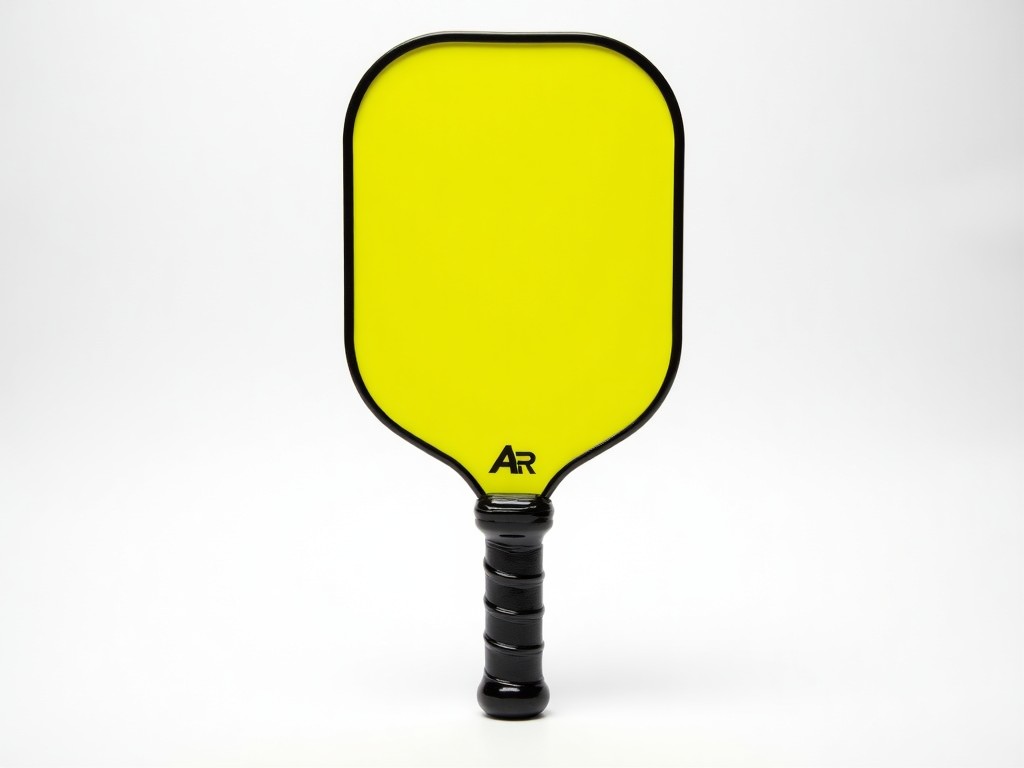
Wholesale Academy Sports Pickleball Paddles Supplier
Pickleball paddles used in institutional and recreational settings must meet specific dimensional and weight tolerances to ensure consistent play across courts. This section outlines the engineering
Wholesale Academy Sports Pickleball Paddles Supplier
Pickleball paddles used in institutional and recreational settings must meet specific dimensional and weight tolerances to ensure consistent play across courts. This section outlines the engineering parameters that define a paddle suitable for wholesale supply to sports facilities, clubs, and distributors.
Product Overview
A standard pickleball paddle comprises a striking face, a core material, an edge guard, and a handle with grip. The overall length cannot exceed 430 mm, width limited to 240 mm, and total weight typically falls between 190 g and 255 g. These limits are enforced by the USA Pickleball Association (USAPA) for sanctioned play.
Technical Specifications
| Parameter | Typical Value | Adjustable Range |
|---|---|---|
| Overall Length | 400 mm | 380 mm – 430 mm |
| Width | 200 mm | 180 mm – 240 mm |
| Weight | 220 g | 190 g – 255 g |
| Core Thickness | 12 mm | 10 mm – 16 mm |
| Face Material | Fiberglass‑reinforced polymer | Carbon fiber, graphite, polypropylene honeycomb |
| Grip Circumference | 102 mm | 95 mm – 110 mm |
Material Construction
The core is commonly a polypropylene honeycomb structure, providing a balance of stiffness and shock absorption. Face layers may consist of fiberglass weave impregnated with resin, offering a tensile strength of approximately 350 MPa. Edge guards are typically extruded PVC or rubber compounds with a Shore A hardness of 70±5, designed to absorb impact without delamination.
Handle shafts are often made from wood composite or thermoplastic elastomer, selected for a compressive modulus between 1.5 GPa and 2.5 GPa, ensuring minimal vibration transmission to the player’s wrist.
Customization Options
- Face finish: matte, gloss, or textured spin‑enhancing surface (roughness Ra 2–6 µm).
- Core density adjustment: 30 kg/m³ to 45 kg/m³ honeycomb cell weight.
- Grip material: synthetic leather, perforated PU, or absorbent cotton blend.
- Weight balancing: addition of tungsten or steel inserts up to 5 g total.
- Color matching: Pantone‑specified pigments for face and edge guard.
Applications and Performance Considerations
Facilities that host league play benefit from paddles with a consistent swing weight (moment of inertia around the handle axis) ranging from 115 kg·mm² to 135 kg·mm². This range reduces player fatigue during extended sessions and maintains shot reproducibility. Educational institutions often prioritize durability; a paddle that withstands >5000 impact cycles at 30 J per strike without face cracking is suitable for high‑volume use.
For outdoor courts, UV‑stabilized face coatings retard degradation, retaining >80 % of initial tensile strength after 500 hours of accelerated weathering (ASTM G154). Indoor environments allow for lower‑mass cores to enhance maneuverability.
Quality Assurance and Testing
Each batch undergoes dimensional verification using calibrated calipers (±0.05 mm tolerance) and weight measurement on analytical balances (±0.1 g). Impact resistance is evaluated via a drop‑tower test: a 200 g striker dropped from 300 mm onto the paddle face; acceptable units show no delamination or crack propagation >2 mm.
Surface roughness is measured with a profilometer to ensure spin‑enhancing textures remain within the specified Ra range. All tests are documented and traceable to the production lot.
Packaging and Logistics
Paddles are packed in single‑wall corrugated cartons with interior polyethylene foam inserts, each compartment sized to 420 mm × 230 mm × 30 mm. Cartons are sealed with pressure‑sensitive tape and labeled with barcodes for SKU tracking. Standard pallet configuration holds 48 cartons (24 kg per carton) for efficient container loading.
For export shipments, cartons are subjected to ISTA 3A performance testing to confirm protection against vibration and compression stresses encountered during transit.
Frequently Asked Questions
Custom lengths up to 460 mm and widths up to 260 mm are possible upon request, though such paddles fall outside USAPA regulation for sanctioned play and are typically sold for recreational or training use.
To generate an accurate quote we need: desired face material, core thickness, grip type, target weight range, order quantity, and any branding or color specifications.
Inspection follows ANSI/ASQ Z1.4 sampling level II; critical dimensions and weight are checked on 10 % of units, with visual and impact tests performed on a representative sample.
Options include standard carton packs, double‑wall cartons for extra protection, and reusable plastic crates with foam lining for closed‑loop distribution.


