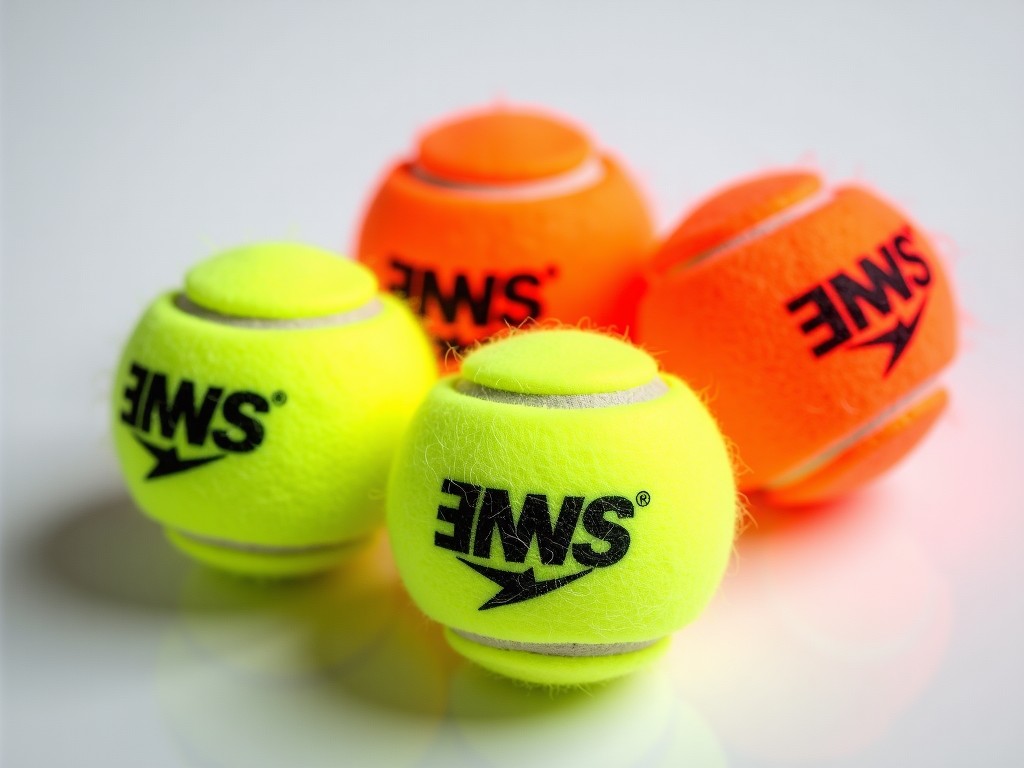
Wholesale Cold Weather Pickleball Balls Company
These balls are engineered for consistent play when ambient temperatures fall below freezing. The design focuses on maintaining bounce, hardness, and surface integrity where standard polymers become
Wholesale Cold Weather Pickleball Balls
These balls are engineered for consistent play when ambient temperatures fall below freezing. The design focuses on maintaining bounce, hardness, and surface integrity where standard polymers become brittle.
Material Composition and Construction
A proprietary thermoplastic elastomer blend forms the core, selected for its low glass transition temperature (‑30 °C). The outer skin uses a textured polyurethane coating that adds friction without increasing water absorption.
Nominal diameter measures 74 mm ±0.5 mm, mass is 22 g ±0.5 g, and the wall thickness averages 3.2 mm. These dimensions satisfy USAPA tournament tolerances while allowing extra material for cold‑weather resilience.
Low‑Temperature Performance Characteristics
At ‑10 °C the coefficient of restitution remains 0.78 ± 0.02, compared with 0.81 at 20 °C, indicating only a 4 % loss in bounce efficiency. Hardness measured on a Shore A scale stays between 85 and 90 across the range ‑20 °C to +30 °C.
Water uptake after 24 h immersion at 5 °C is below 0.02 % by weight, preventing swelling that could alter flight dynamics. UV stabilizers in the coating limit surface degradation to less than 5 % color change after 500 h of simulated sunlight.
Standard Specifications
| Property | Typical Value | Unit | Test Method |
|---|---|---|---|
| Diameter | 74.0 ±0.5 | mm | Caliper measurement (ASTM D691) |
| Mass | 22.0 ±0.5 | g | Analytical balance (ISO 7211) |
| Coefficient of restitution (‑10 °C) | 0.78 ±0.02 | – | ASTM F1887 |
| Shore A hardness | 85‑90 | – | ASTM D2240 |
| Water uptake (5 °C, 24 h) | <0.02 | % | ISO 62 |
Customization Options
- Core elastomer hardness adjustable from 80 to 95 Shore A
- Surface texture selection: smooth, dimpled, or hybrid patterns
- Standard colors: optic yellow, high‑visibility orange, white; custom Pantone matches available
- Logo or branding ink‑jet printed with abrasion‑resistant coating
- Packaging variations: bulk poly‑bags (100 pcs), recyclable corrugated cartons (50 pcs), or reusable tote containers
Applications in Cold Climates
Facilities that maintain indoor courts at 10‑15 °C experience reduced ball bounce with conventional products; the low‑temp elastomer mitigates this effect, preserving rally length.
Outdoor winter leagues benefit from the ball’s resistance to cracking when struck on frozen asphalt or concrete surfaces, decreasing replacement frequency and associated cost.
Quality Assurance and Testing
Each production lot undergoes dimensional sampling (n=30) and bounce testing at three temperature points (‑15 °C, 0 °C, 25 °C). Statistical process control limits are set at ±1.5 σ for mass and diameter.
Visual inspection checks for surface defects under 10× magnification; any coating irregularities exceeding 0.1 mm depth trigger lot rejection. Documentation includes material certificates and test reports available upon request.
Packaging and Logistics
Bulk poly‑bags are sealed with desiccant packs to limit moisture ingress during transit. Cartons are sized to fit standard pallet dimensions (1200 mm×1000 mm) with a maximum load of 800 kg.
For overseas shipments, boxes are lined with moisture‑barrier film and secured with corner braces, reducing the risk of deformation under varying climatic conditions.
Frequently Asked Questions
Can the ball’s compression be tuned for specific play styles?
Yes, the elastomer formulation can be adjusted to alter the force‑deflection curve, affecting softness or liveliness without compromising low‑temperature performance.
What information is required before quotation?
Required details include desired quantity, target delivery date, any custom markings, and preferred packaging mode.
Are the balls USAPA‑approved for tournament use?
The standard model meets all USAPA specifications; custom variants retain compliance unless the client requests deviations that must be evaluated separately.
How is quality consistency verified across large orders?
We employ stratified sampling per ISO 2859‑1, with inspection levels adjusted to lot size, ensuring a 95 % confidence level that the batch meets defined tolerances.
What is the typical production lead time?
Lead time ranges from 10 to 18 working days depending on order complexity and current capacity; exact schedules are confirmed at quote stage.
Get a Quote
To discuss your requirements and receive a formal quotation, please contact our sales team.
Request Quote


