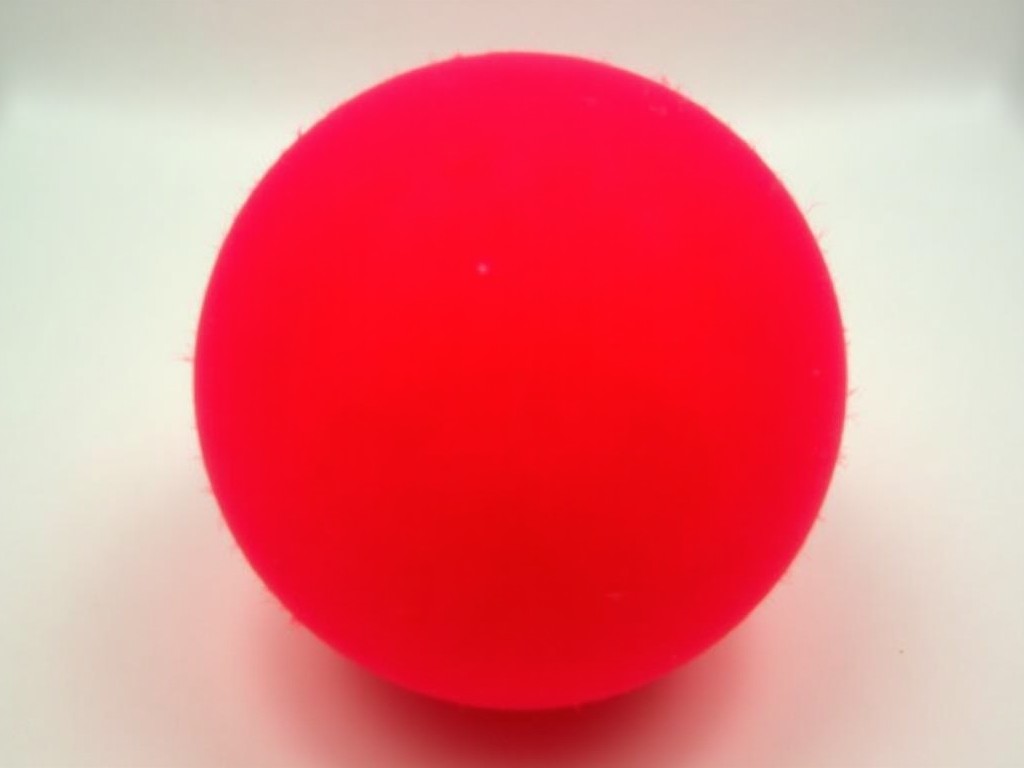
Wholesale Red Indoor Pickleball Balls Supplier
These balls are engineered for reliable bounce and trajectory on smooth indoor surfaces such as wood, sport‑tile, or sealed concrete. The core is a polypropylene‑copper blend that yields a mass of 22
Wholesale Red Indoor Pickleball Balls
These balls are engineered for reliable bounce and trajectory on smooth indoor surfaces such as wood, sport‑tile, or sealed concrete. The core is a polypropylene‑copper blend that yields a mass of 22 g ±0.5 g and a diameter of 74 mm ±0.5 mm, conforming to USAPA indoor specifications.
Technical Specifications
| Parameter | Typical Value | Tolerance | Reference Standard |
|---|---|---|---|
| Weight | 22 g | ±0.5 g | USAPA Indoor |
| Diameter | 74 mm | ±0.5 mm | USAPA Indoor |
| Hardness (Shore D) | 45 D | ±2 D | ASTM D2240 |
| Rebound Height (drop from 200 cm) | 130 cm | ±5 cm | USAPA Test Method |
| Colorfastness (UV 150 h) | ΔE < 2 | – | ISO 105‑B02 |
Manufacturing Process
The balls are produced using a two‑stage injection molding cycle. First, a preform is created with the core polymer, then a second injection adds the outer skin that integrates the seam. The seam is formed by a thermal weld that exceeds 2.5 MPa shear strength, preventing delamination under repeated impact. Cooling is controlled to achieve a uniform crystallinity, which directly influences the bounce consistency.
Applications
- Indoor recreational facilities where consistent bounce reduces player fatigue.
- School physical education programs requiring durable, low‑maintenance equipment.
- Club leagues that need balls meeting USAPA indoor tolerance for sanctioned play.
- Multi‑court complexes that benefit from uniform ball characteristics across different surfaces.
Quality Control
Each production lot undergoes statistical sampling. Weight and diameter are measured on a calibrated scale and laser micrometer, with acceptance limits of ±0.5 g and ±0.5 mm respectively. Rebound height is verified using a drop‑test rig calibrated to USAPA methodology. Visual inspection checks for surface defects, color uniformity, and seam integrity under 10× magnification. Lots that exceed a 1 % defect rate are re‑worked or scrapped.
Customization Options
- Logo or text pad‑printed on the ball surface using UV‑cured inks that meet ASTM D4236 safety standards.
- Alternative color batches (e.g., white, yellow) available upon request, with the same core formulation.
- Custom packaging configurations such as bulk cartons of 120 balls or retail‑ready packs of 3.
- Private label barcoding and QR code insertion for inventory tracking.
Packaging and Logistics
Balls are packed in low‑density polyethylene liners inside corrugated cartons. Each carton includes a desiccant packet to maintain humidity below 50 % RH, preventing polymer hydrolysis during transit. Cartons are unitized on pallets with stretch film and corner protectors, achieving a maximum stack height of 1.8 m for safe forklift handling. Lead time for standard orders is typically 10‑12 working days after receipt of approved artwork.
Frequently Asked Questions
Can the ball diameter be adjusted for specific court conditions?
Diameter is fixed to the USAPA indoor tolerance; however, we can discuss alternative tolerance bands for specialty applications, subject to material feasibility testing.
What information is required to receive a quotation?
Please provide estimated annual quantity, desired packaging style, logo artwork files (vector PDF or AI), and delivery destination.
Are the balls compliant with REACH and RoHS?
Yes, the polymer compound is formulated to meet REACH SVHC limits and RoHS restrictions on heavy metals.
How are sample balls arranged?
We can send a limited number of pre‑production samples via express courier; sample costs are credited against the first production order.
Request a Quote


