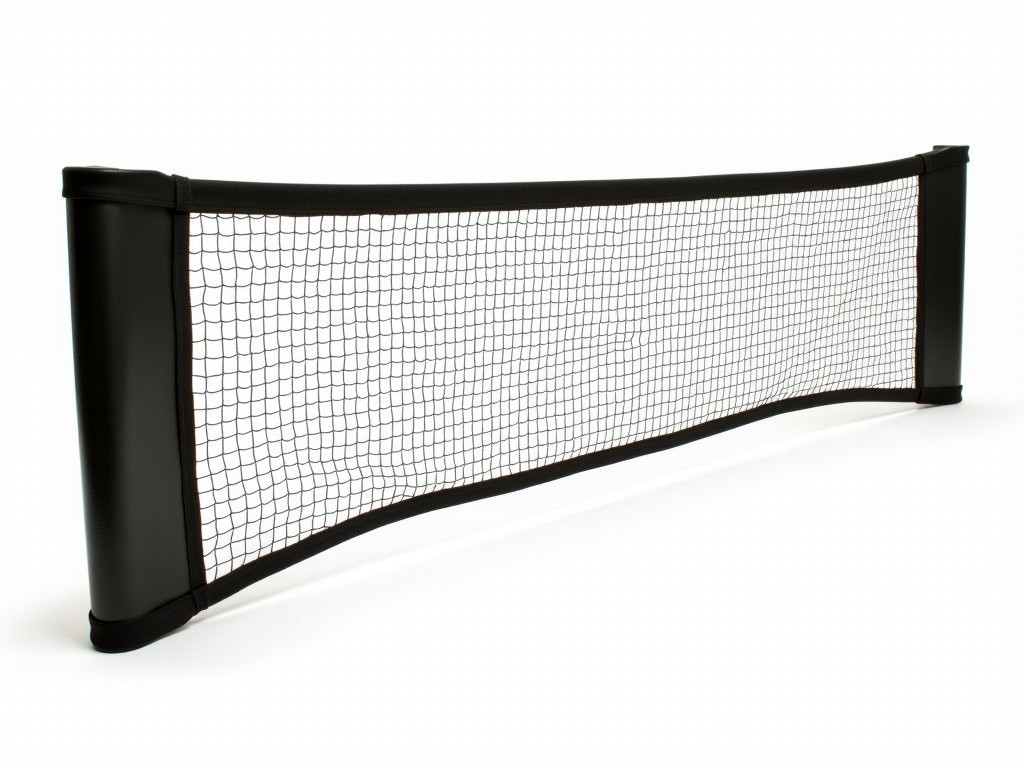
Wholesale Top Rated Pickleball Nets Supplier
Pickleball nets are tensioned barriers that define the playing court and must withstand repeated impact, UV exposure, and varying weather conditions. Selecting a net with appropriate mesh size,
Wholesale Top Rated Pickleball Nets Supplier
Pickleball nets are tensioned barriers that define the playing court and must withstand repeated impact, UV exposure, and varying weather conditions. Selecting a net with appropriate mesh size, tensile strength, and frame rigidity directly influences game consistency and equipment lifespan.
Product Overview
The nets are supplied in standard regulation dimensions of 6.10 m width × 0.76 m height, matching USAPA and IFP specifications. Each unit includes a perimeter rope or cable system for adjustable tension, allowing installation on permanent posts or portable frames.
Frame options consist of extruded aluminum alloys (typically 6061‑T6) with wall thicknesses ranging from 1.2 mm to 2.0 mm, providing a balance between weight and flexural resistance. Corrosion protection is achieved through powder coating or anodizing, with coating thickness usually between 60 µm and 80 µm.
Technical Specifications
| Parameter | Typical Value | Notes |
|---|---|---|
| Mesh opening (square) | 45 mm | Meets ball‑retention standards |
| Twine diameter | 2.5 mm (polyethylene) | UV‑stabilized HDPE |
| Breaking strength (twine) | ≥ 180 N | Per ISO 9073‑2 |
| Frame material | Aluminum 6061‑T6 | Extruded, T6 temper |
| Frame cross‑section | 30 mm × 20 mm rectangular | Wall thickness 1.5 mm (standard) |
| Overall weight (net + frame) | ≈ 4.2 kg | Varies with coating option |
Materials and Construction
The netting uses high‑density polyethylene (HDPE) filaments that are UV‑stabilized to retain tensile strength after 1500 hours of accelerated weathering per ASTM G154. Filaments are twisted into a 2.5 mm diameter and knotted at each junction to prevent slippage under load.
Edge reinforcement incorporates a double‑stitched polyester tape (width 25 mm) along the top and bottom borders, increasing tear resistance by approximately 30 % compared with single‑tape edges. The tape is sewn with UV‑resistant polyester thread.
Frames are cut to length, deburred, and then subjected to a pretreatment cleaning stage before powder coating. The coating process applies an epoxy‑polyester hybrid, cured at 180 °C, yielding a film hardness of 2H–3H on the pencil scale.
Performance Characteristics
Under a simulated impact load of 50 N applied at the net center, the deflection measured at the edge is less than 12 mm, ensuring minimal interference with ball trajectory. The net recovers to within 2 mm of its original position within 0.4 seconds after load removal.
Wind tunnel testing at 15 m/s shows a pressure drop across the net of less than 30 Pa, indicating that the mesh design does not significantly impede airflow, which helps maintain court temperature stability during outdoor play.
Resistance to chlorinated water exposure (simulating poolside environments) is validated by a 500‑hour immersion test, after which tensile strength retains at least 85 % of the initial value.
Applications in Sports Facilities
Pickleball courts installed in community recreation centers benefit from nets that can be quickly tensioned and released, allowing multi‑use spaces to transition between activities without specialized tools. The lightweight aluminum frame enables a single operator to relocate the net system in under two minutes.
In school athletic programs, the net’s low‑maintenance coating reduces the need for frequent repainting, while the rounded frame edges meet safety guidelines for equipment used by minors. The net’s mesh size prevents smaller balls (e.g., tennis balls) from passing through, preserving court integrity.
Commercial clubs that host tournaments prefer nets with consistent tension characteristics across units, ensuring fair play. The included tensioning rope system allows fine‑tuning to the competition standard of 914 mm net height at the sidelines and 864 mm at the center.
Quality Assurance and Testing
Each production lot undergoes visual inspection for mesh uniformity, knot integrity, and frame finish defects. Dimensional checks are performed using calibrated gauges to verify width, height, and frame squareness within ±2 mm tolerance.
Mechanical validation includes tensile testing of three random twine samples per batch, with results recorded and compared against the specification limit of 180 N. Frame bend testing applies a three‑point load to confirm that the elastic limit exceeds 250 N·mm.
Finished units are subjected to a functional assembly test where the net is tensioned to 150 N and inspected for sag or misalignment. Only units passing all checks are cleared for packaging.
Customization Options
- Alternative mesh colors (white, yellow, orange) available upon request.
- Custom frame lengths for non‑standard court widths (e.g., 5.5 m or 6.5 m).
- Choice of powder‑coat colors (RAL palette) or clear anodizing.
- Integrated cable tensioning system with ratchet mechanism.
- Optional wind‑screen flaps made of UV‑coated polyester.
Packaging and Logistics
Nets are folded along the longitudinal axis and placed in a polyethylene sleeve to protect against moisture during transit. The frame components are nested within a corrugated cardboard insert that prevents bending and surface abrasion.
Each carton contains a single net system, labeled with part number, quantity, and handling instructions. Palletization follows ISPM‑15 standards for export shipments, with a maximum stack height of 1.2 m to maintain stability.
For bulk orders, cartons are stacked on Euro‑pallets (800 mm × 1200 mm) and secured with stretch film. Tracking information is provided via EDI or API integration upon request.
Lead Time and Ordering
Standard configurations ship within 10–15 business days after receipt of a signed purchase order, assuming raw material availability. Custom color or length requests may extend the lead time to 20–25 business days, depending on tooling and coating schedule.
Minimum order quantity for wholesale distribution is 20 units. Sample units can be arranged with a lead time of 5–7 business days, subject to stock availability.
Payment terms typically include a 30 % deposit upon order confirmation, with the balance due before shipment. Letters of credit or open account options are available for established partners.
Frequently Asked Questions
- Can the net dimensions be customized? Yes, width and height can be adjusted to meet specific court requirements; please provide the desired measurements during quoting.
- What information is required before quotation? Required details include quantity, any custom colors or lengths, preferred tensioning method, and delivery destination.
- What materials are available for the frame? Standard is aluminum 6061‑T6; alternative alloys such as 6063 or stainless steel grades are available upon request.
- How is quality inspected? Each lot undergoes visual, dimensional, tensile, and functional tests as described in the Quality Assurance section.
- What packaging methods are available? Standard is polyethylene sleeve with cardboard insert; options include reusable plastic crates or pallet‑less packing for regional shipments.
- How are export shipments protected? Cartons meet ISPM‑15 pallet requirements, are stretch‑wrapped, and include moisture‑absorbent desiccant packs.
- What is the typical production lead time? Refer to the Lead Time and Ordering section; standard lead time is 10–15 business days.
- How are samples arranged? Samples can be shipped via express courier; the requestor covers freight charges unless otherwise negotiated.
Contact for Quote
To receive a detailed quotation or discuss technical specifications, please reach out via the contact form.
Request Quote


