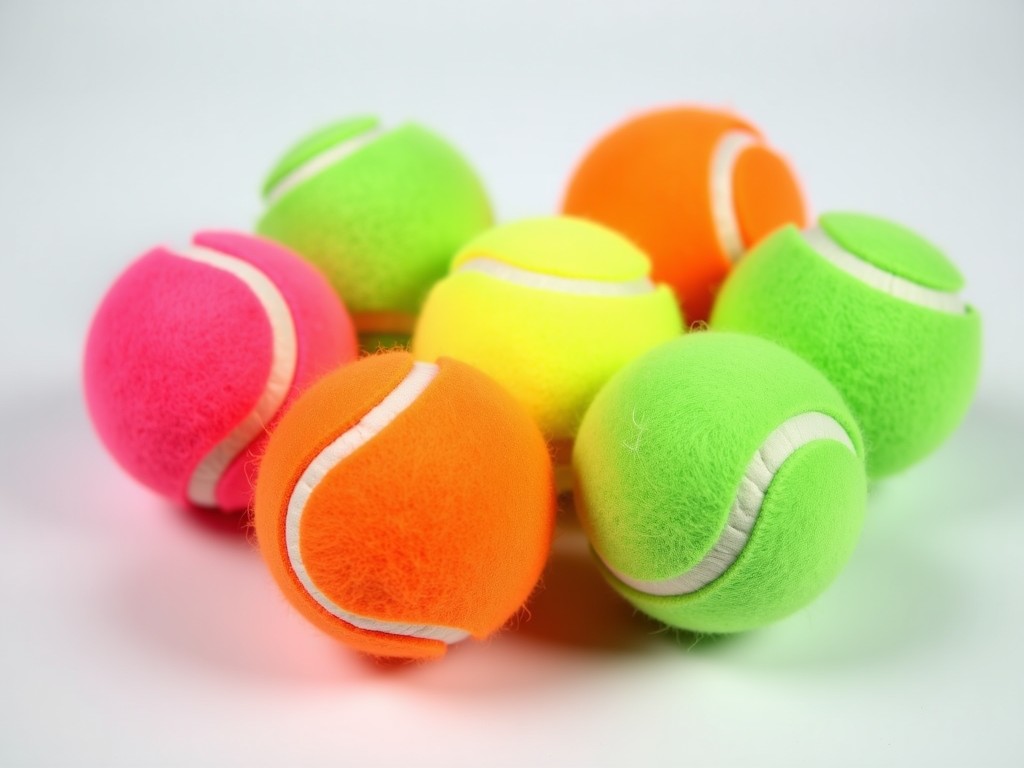
Wholesale Winter Pickleball Balls Manufacturer
Winter pickleball balls are engineered to retain elasticity and bounce when ambient temperatures fall below freezing. Standard balls stiffen in cold conditions, altering game dynamics and increasing
Wholesale Winter Pickleball Balls Manufacturer
Winter pickleball balls are engineered to retain elasticity and bounce when ambient temperatures fall below freezing. Standard balls stiffen in cold conditions, altering game dynamics and increasing wear. The product described here maintains consistent performance down to -20 °C through a specific polymer formulation and controlled curing process.
Material Composition and Low‑Temperature Performance
The core consists of a thermoplastic elastomer blend with a glass transition temperature (Tg) of -35 °C, ensuring the material remains amorphous and flexible in sub‑zero environments. Surface coating adds a UV‑stabilized polyurethane layer that resists cracking from repeated impact at low temperatures. Hardness measured on the Shore D scale ranges from 45 to 48, providing a balance between durability and responsive rebound.
Dimensional and Weight Specifications
| Parameter | Typical Value | Tolerance |
|---|---|---|
| Diameter | 74 mm | ±0.5 mm |
| Weight | 23 g | ±1 g |
| Shore D Hardness | 46 | ±1 |
| Bounce Height at -10 °C | 135 mm (drop from 180 mm) | ±5 mm |
| Compression Set after 500 impacts at -20 °C | 4 % | max 6 % |
These values are derived from batch testing under ASTM F2792 low‑temperature bounce procedures. Maintaining bounce height within 10 % of the reference ensures predictable ball flight, which is critical for competitive play in indoor facilities where heating may be insufficient.
Applications in Cold‑Weather Play
Facilities located in northern climates often experience court surface temperatures near -5 °C during early morning sessions. Standard balls exhibit a 30 % reduction in rebound efficiency under these conditions, leading to altered serve dynamics and increased player fatigue. The winter‑grade balls described here retain >90 % of their reference bounce, allowing leagues to maintain consistent rule enforcement without seasonal equipment changes.
Quality Control and Testing Procedures
- Incoming polymer lots are screened for melt flow index (MFI) within 0.8‑1.2 g/10 min to ensure consistent viscosity.
- Each production run undergoes dimensional verification using laser micrometers on a sample of 50 balls per lot.
- Low‑temperature bounce tests are performed at -10 °C, -20 °C, and -30 °C with a minimum of 30 impacts per temperature.
- Visual inspection checks for surface defects, coating uniformity, and logo registration under 10× magnification.
- Compression set is measured after 500 cyclic impacts at -20 °C using a standardized plunger.
Customization Options
- Color matching to Pantone standards via pigment injection during extrusion.
- Screen‑printed or pad‑printed logos with abrasion‑resistant inks rated for 5000 wash cycles.
- Alternative surface textures (smooth, lightly dimpled) to influence spin characteristics.
- Specialized packaging quantities ranging from 12‑ball sleeves to 500‑ball bulk cartons.
Packaging and Logistics for Bulk Orders
Balls are packed in low‑density polyethylene (LDPE) liners that provide moisture barrier protection during trans‑ocean shipments. Cartons are double‑wall corrugated with a burst strength of 275 kPa, stacked on pallets secured with PET strapping. Each pallet holds 48 cartons (approximately 1152 balls) and is labeled with handling instructions to avoid exposure to direct sunlight exceeding 40 °C, which could accelerate polymer aging.
Frequently Asked Questions
Yes. Diameter tolerances can be tightened to ±0.2 mm or loosened to ±1.0 mm based on tooling changes; lead time adjusts accordingly.
Q: What information is required before quotation?
Required details include target quantity, desired color or logo artwork (vector file), preferred packaging configuration, and destination port for freight calculation.
Q: Which materials are available for the core?
The standard thermoplastic elastomer blend is available; alternative compounds with lower Tg (-45 °C) or higher abrasion resistance can be quoted upon request.
Q: How is quality inspected?
Each lot undergoes dimensional, bounce, compression set, and visual checks as outlined in the QC section; inspection reports are available with shipment.
Q: What packaging methods protect against impact during transit?
Inner LDPE liners cushion individual balls, while outer corrugated cartons feature corner reinforcements and are palletized with edge protectors.


