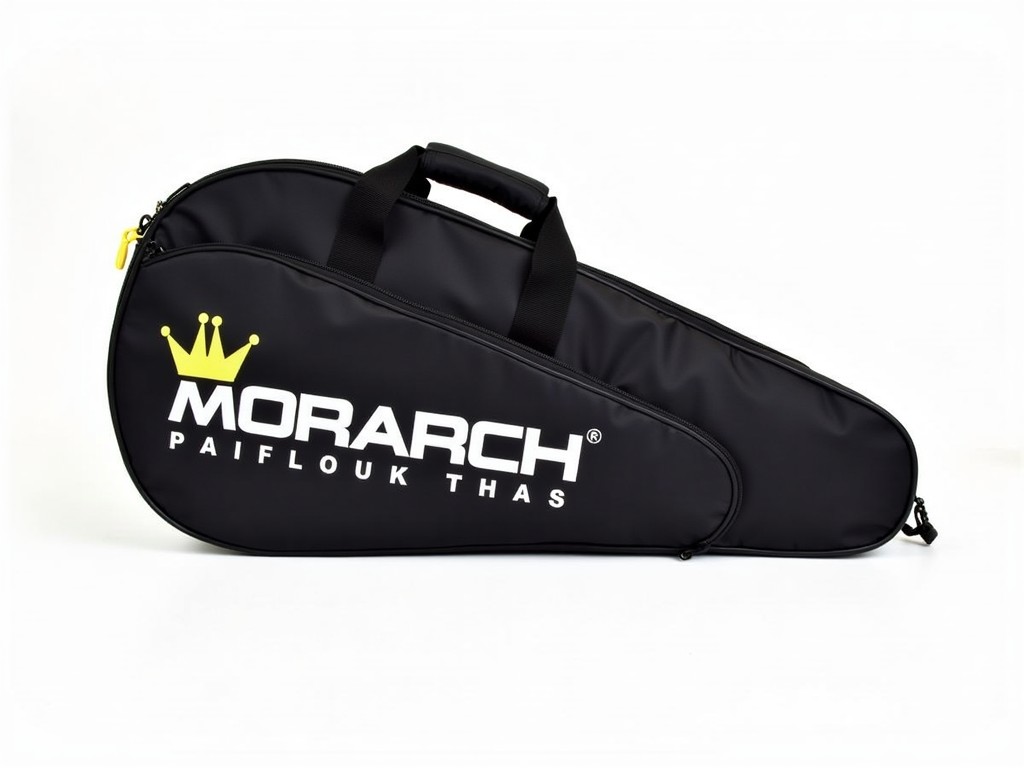
Custom Monarch Pickleball Racket Bags Manufacturer
Pickleball racket bags protect equipment during transport, storage, and frequent handling on courts. As a B2B manufacturer, we engineer bags that meet the specific dimensional, load‑bearing, and
Custom Monarch Pickleball Racket Bags – Manufacturer
Pickleball racket bags protect equipment during transport, storage, and frequent handling on courts. As a B2B manufacturer, we engineer bags that meet the specific dimensional, load‑bearing, and branding requirements of sports distributors, club operators, and promotional agencies.
Material Selection
Primary fabrics are specified by denier count and coating type to balance weight, abrasion resistance, and moisture protection. Typical options include 600D polyester (tensile strength ≈55 MPa, 1500 mm hydrostatic head), 840D nylon (tensile strength ≈70 MPa, superior tear resistance), and PVC‑coated polyester (water‑impermeable, added UV stabilizer). Each material is supplied with a certified test report upon request.
Design and Customization
Bag geometry is defined by internal racket compartment length, width, and depth, plus external accessory pockets. Customization covers dimensions, internal foam padding thickness (5–15 mm), strap configuration, closure hardware, and surface branding. The following list outlines typical variable parameters that can be adjusted per project.
- Racket compartment length: 380 mm–460 mm (adjustable in 10 mm increments)
- External pocket count: 0–3, with zipper or hook‑and‑loop closure
- Shoulder strap width: 38 mm or 50 mm, adjustable length 800–1400 mm
- Closure types: YKK #5 coil zipper, molded plastic buckle, or heavy‑duty Velcro®
- Branding methods: screen printing (up to 4 colors), embroidery (12 mm stitch density), or sublimation transfer
Manufacturing Process
Production begins with CAD‑derived patterns that are nested for material efficiency. Cutting is performed on rotary die cutters to maintain edge tolerance within ±0.5 mm. Sewing uses 301 lockstitch with bar tack reinforcement at stress points (strap attachments, corner joints, zipper ends). Edge binding with bias‑cut tape prevents fraying, and hardware is attached using rivets or bartack‑secured loops. Each operation is logged for traceability.
Quality Assurance
Inspection follows a defined control plan: seam strength measured per ASTM D2261 (target ≥200 N), abrasion resistance evaluated via Martindale cycles (≥20 000 cycles for 600D polyester), colorfastness to light and washing (ISO 105‑B02 grade ≥4), and dimensional stability after humidification (±2 % change). Hardware functionality is tested for 500 opening/closing cycles without deformation. Non‑conforming items are segregated and reworked or scrapped per SOP.
Applications
Sports retailers stock these bags to offer athletes a dedicated transport solution that reduces racket wear from impact and moisture. Club operators order bulk quantities with team logos to reinforce brand identity during tournaments and league play. Promotional agencies specify custom colors and logos for event giveaways, leveraging the bag’s visible surface area for prolonged brand exposure. In each case, the bag’s engineered protection lowers return rates and extends equipment lifespan.
Technical Specifications
| Parameter | Typical Value / Range |
|---|---|
| Base Fabric | 600D polyester, 840D nylon, PVC‑coated polyester (custom) |
| Tensile Strength (Fabric) | 50–70 MPa (depending on material) |
| Water Resistance | 1500 mm hydrostatic head (polyester), impermeable (PVC‑coated) |
| Weight (per unit, empty) | 350–550 g (size dependent) |
| Racket Compartment Length | 380 mm–460 mm (customizable) |
| Maximum Load Capacity | 8 kg (distributed load, validated by static test) |
| Strap Width | 38 mm or 50 mm (adjustable length 800–1400 mm) |
| Closure Type | YKK #5 coil zipper, plastic buckle, or heavy‑duty Velcro® |
| Branding Area | Up to 300 mm × 150 mm (front panel) |
Frequently Asked Questions
Can dimensions be customized? Yes. Length, width, depth, and pocket placement are adjusted in 10 mm increments based on your racket model and accessory requirements.
What information is required before quotation? We need target dimensions, fabric preference, closure type, strap configuration, artwork files for branding, and order quantity. A brief technical sketch helps accelerate the quote.
What materials are available? Standard options include 600D polyester, 840D nylon, and PVC‑coated polyester. Alternative fabrics such as recycled PET or TPU‑laminated nylon are available upon request.
How is quality inspected? Each batch undergoes seam strength, abrasion resistance, colorfastness, and hardware cycle tests per the control plan outlined above. Test reports are supplied with shipment documentation.
What packaging methods are available? Bags are packed flat in poly‑bags, then placed in export‑grade corrugated cartons with corner protection. Palletizing and stretch‑wrapping can be arranged for full‑container loads.
Contact Us
To discuss your specific requirements or request a formal quotation, please reach out via our contact form. Our engineering team will respond with detailed technical feedback and lead‑time estimates.
Request a Quote


