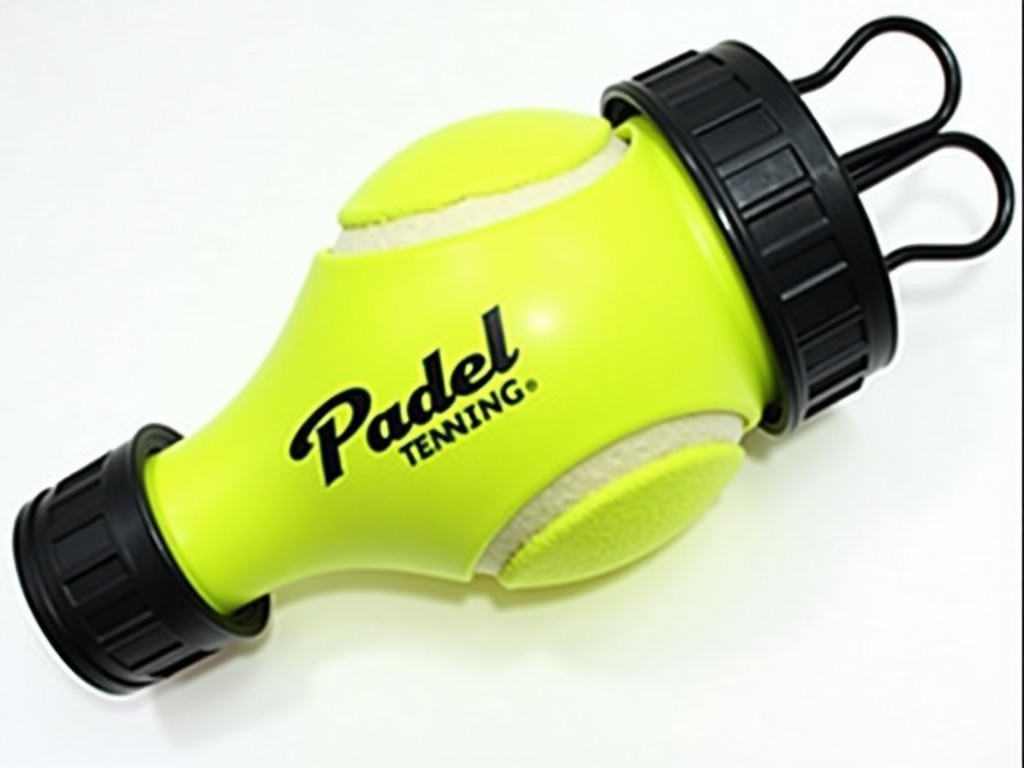
Factory Direct Padel Tennis Ball Pressurizers Company
A padel tennis ball pressurizer restores internal pressure to balls that have lost bounce after repeated impacts. The device applies a controlled over‑pressure for a set duration, allowing the rubber
Factory Direct Padel Tennis Ball Pressurizers
Overview
A padel tennis ball pressurizer restores internal pressure to balls that have lost bounce after repeated impacts. The device applies a controlled over‑pressure for a set duration, allowing the rubber core to re‑absorb gas and regain its original rebound characteristics. This process extends the usable life of balls, reduces waste, and maintains consistent playing conditions.
Technical Specifications
| Parameter | Typical Value |
|---|---|
| Pressure range | 0.8–1.2 bar gauge |
| Cycle time | 30–90 s adjustable |
| Batch capacity | 24–48 balls per cycle |
| Power supply | 230 V AC, 50/60 Hz, 150 W |
| Overall dimensions | 350 mm × 260 mm × 200 mm (L×W×H) |
| Construction material | Powder‑coated steel frame, food‑grade silicone seals |
Applications
In club environments, balls lose pressure after approximately 30–40 games, leading to uneven bounce and player dissatisfaction. Pressurizing batches restores performance to near‑new levels, allowing facilities to extend ball rotation cycles and lower consumable costs. Manufacturers also use these units during quality assurance to verify that newly produced balls meet the International Padel Federation pressure specification before packaging.
Working Principle
The unit contains a sealed chamber equipped with a pneumatic pump and a pressure relief valve. Balls are loaded into a perforated basket that allows uniform gas exchange. When the cycle starts, the pump raises chamber pressure to the setpoint; the relief valve prevents over‑pressurization. A timer maintains pressure for the programmed duration, after which the pump stops and the valve vents to ambient. The slight temperature rise during compression aids gas diffusion into the rubber matrix.
Quality Control
Each pressurizer undergoes a hydrostatic leak test at 1.5 times the maximum rated pressure to verify seal integrity. Pressure transducers are calibrated against a traceable dead‑weight tester before shipment. Functional validation includes running three consecutive cycles with a set of reference balls and measuring post‑cycle pressure rebound; units are accepted only if the average rebound falls within ±0.05 bar of the target.
Customization Options
- Adjustable pressure setpoint range (0.5–1.5 bar)
- Programmable cycle timer with multiple preset profiles
- Stainless‑steel chamber for corrosive environments
- Touch‑screen PLC interface or simple rotary selector
- Integrated ball counter and batch logging
- Safety interlock lid with emergency stop
Frequently Asked Questions
Can the pressure and time be adjusted for different ball brands? Yes, the pressure range and cycle timer are user‑adjustable to accommodate variations in ball construction and manufacturer recommendations.
What information is needed for a quotation? Required details include desired pressure setpoint, typical batch size, power supply voltage, and any preferred enclosure material or control interface.
Which materials are available for the chamber? Standard units use powder‑coated carbon steel; optional upgrades include 304 stainless steel or coated aluminum for specific hygiene or corrosion requirements.
How is quality verified before delivery? Each unit receives a leak test, pressure transducer calibration, and functional test with reference balls as described in the Quality Control section.
What packaging options are available for export? Units are packed in double‑wall corrugated cartons with foam corner protectors; palletizing and heat‑shrink wrapping can be arranged upon request.
What is the typical production lead time? Lead time varies from 4 to 6 weeks depending on configuration and current order volume; exact timing is confirmed after final specification approval.
Contact for Technical Inquiry
To discuss your specific pressurization requirements, request a detailed quotation, or arrange a sample evaluation, please use the inquiry form linked below. Our engineering team will respond with a feasibility assessment and lead‑time estimate.


