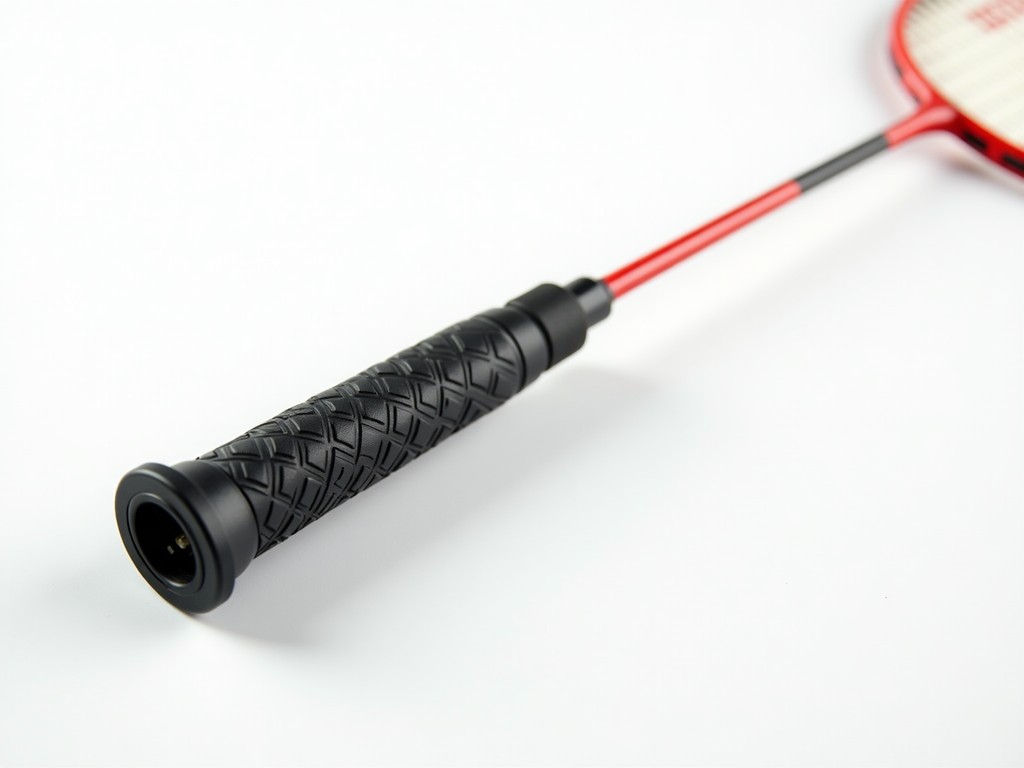
Wholesale Badminton Racket Hand Grip Accessories Supplier
Hand grip accessories for badminton rackets include overgrips, replacement grips, and shock‑absorbing sleeves. These components directly affect player comfort, control, and vibration damping during
Wholesale Badminton Racket Hand Grip Accessories Supplier
Hand grip accessories for badminton rackets include overgrips, replacement grips, and shock‑absorbing sleeves. These components directly affect player comfort, control, and vibration damping during play. Industrial buyers specify them based on measurable properties such as thickness, durometer hardness, tensile elongation, and moisture absorption rate.
Product Overview
The accessories are manufactured from elastomeric blends, typically polyurethane (PU) or ethylene‑vinyl acetate (EVA) foams, laminated with a textile backing. Thickness ranges from 0.5 mm for thin overgrips to 2.5 mm for cushioned replacement grips. Density varies between 0.12 g/cm³ and 0.25 g/cm³ depending on the foam formulation.
Material Composition
PU grips provide a durometer hardness of 60‑80 Shore A, offering a tacky feel and high abrasion resistance. EVA cores deliver lower hardness (40‑55 Shore A) and superior shock absorption, reducing peak impact forces by up to 30 % compared with bare graphite shafts. Textile backings are usually polyester or nylon with a tensile strength of 45‑55 MPa to prevent delamination under repeated stress.
Dimensional Specifications
Standard grip lengths are 1 000 mm to accommodate full‑size rackets, with tolerances of ±2 mm. Width is matched to the handle circumference, typically 20 mm to 28 mm, with a radial thickness tolerance of ±0.1 mm. Weight per meter ranges from 4 g for ultrathin overgrips to 12 g for heavy‑duty cushioned grips.
Customization Options
- Hardness adjustment: durometer can be tuned from 30 Shore A (soft) to 90 Shore A (firm) by varying crosslink density.
- Thickness grading: incremental steps of 0.25 mm allow fine‑tuning of grip feel.
- Surface patterning: laser‑etched or molded textures improve coefficient of friction from 0.35 to 0.55.
- Color matching: Pantone‑referenced pigments enable batch‑to‑batch consistency ΔE < 2.
- Additive incorporation: antimicrobial agents (e.g., silver‑based) achieve >99 % reduction of surface bacteria after 24 h exposure.
Applications in Badminton Equipment Manufacturing
OEMs integrate these grips during the final assembly stage, where the grip is wrapped around the tapered graphite shaft and secured with adhesive or heat‑shrink tape. The grip’s compressive modulus influences the transfer of impact load from the shuttle to the player’s hand; a modulus of 0.8‑1.2 MPa provides a balance between feedback and vibration dampening. Proper thickness ensures that the overall handle diameter stays within the 22‑24 mm range preferred by competitive players.
Quality Control and Testing
Each batch undergoes inline thickness measurement using laser micrometers (±0.01 mm accuracy). Durometer is verified with a Shore A durometer gauge at three points per sample. Tensile elongation is tested per ASTM D412, with acceptance criteria of 250‑400 % for PU and 350‑500 % for EVA. Moisture absorption is gauged by conditioning specimens at 90 % RH for 24 h; acceptable weight gain is < 2 %. Visual inspection checks for surface defects, delamination, and color uniformity under D65 lighting.
Typical Specification Table
| Property | Typical Range | Test Method |
|---|---|---|
| Thickness | 0.5 mm – 2.5 mm | Laser micrometer |
| Durometer (Shore A) | 40 – 90 | ASTM D2240 |
| Density | 0.12 – 0.25 g/cm³ | ASTM D792 |
| Tensile Elongation | 250 % – 500 % | ASTM D412 |
| Moisture Absorption (24 h, 90 % RH) | < 2 % | ASTM D570 |
| Coefficient of Friction (dry) | 0.35 – 0.55 | ASTM D1894 |
Frequently Asked Questions
- Can dimensions be customized? Yes, length, width, and thickness are adjustable per drawing; tolerances are typically ±0.1 mm for thickness and ±2 mm for length.
- What information is required before quotation? Required data include target durometer, thickness, length, quantity, surface texture, and any additive requirements (e.g., antimicrobial).
- What materials are available? Standard options are PU foam, EVA foam, and hybrid blends; alternative elastomers such as silicone or nitrile rubber are available upon request.
- How is quality inspected? Inline dimensional checks, durometer sampling, tensile testing, and moisture absorption testing are performed per batch; final visual inspection follows ASTM D3130.
- What packaging methods are available? Grips are wound on PVC cores, placed in polybags, and packed in corrugated cartons with desiccant packs; custom labeling and palletization are offered.
- How are export shipments protected? Cartons are strapped, corner‑protected, and shrink‑wrapped; moisture barrier liners prevent condensation during transit.
- What is the typical production lead time? Lead time ranges from 15 to 30 working days depending on order size and customization complexity.
- How are samples arranged? Sample kits (up to three variants) are shipped via express coupons; freight is prepaid for qualifying inquiries.
For technical data sheets, sample requests, or to discuss specific performance targets, please contact our engineering team using the form below.
Submit Inquiry


