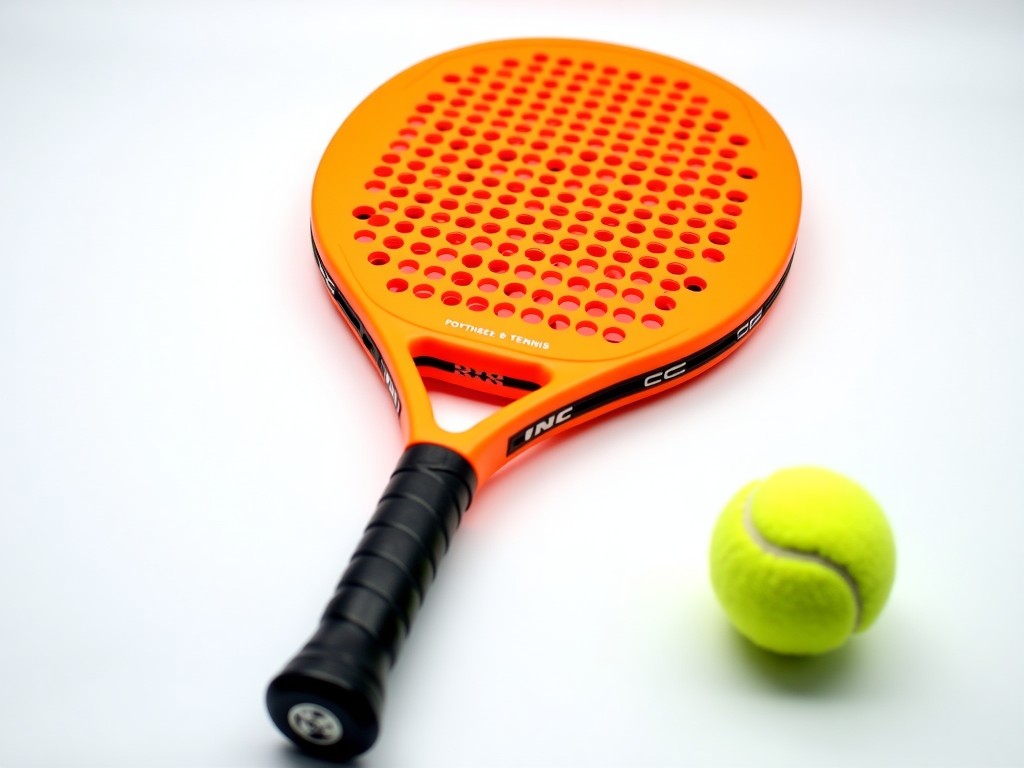
B2B Oversized Orange Tennis Rackets Manufacturer
Oversized tennis rackets are defined by a head area exceeding 110 square inches, which enlarges the sweet spot and reduces off‑center hit penalties. The orange pigment is formulated with UV‑stable
b2b oversized orange tennis rackets Manufacturer
Oversized tennis rackets are defined by a head area exceeding 110 square inches, which enlarges the sweet spot and reduces off‑center hit penalties. The orange pigment is formulated with UV‑stable organic dyes that maintain hue after >500 hours of simulated sunlight exposure, aiding visual tracking during drills and match play. These characteristics are selected to meet the specifications of coaching facilities, institutional programs, and bulk distributors who require consistent performance and high visibility in group settings.
Technical Specifications
Standard models are offered in three length variants: 27.0 in, 27.5 in, and 28.0 in, measured from butt to tip. Strung weight ranges from 280 g to 340 g, with a balance point typically located 320 mm from the butt for the 27.5 in version. Head size is fixed at 115 sq.in, yielding a swing weight of approximately 280 kg·cm². Flexural stiffness, measured as RA (Racket Acceleration) value, falls between 68 and 72 mm, providing a medium‑stiff response suitable for varied player levels.
Material Composition
The frame utilizes a unidirectional carbon‑fiber epoxy layup with a tensile modulus of 230 GPa and a fiber volume fraction of 60 %. This configuration yields a specific stiffness of 1.4 MN·m/kg. The string bed is pre‑stressed with polyester monofilament at a reference tension of 55 lb, offering a dynamic stiffness of 2.1 kN/m. The grip is constructed from a thermoplastic polyurethane (TPU) overwrap with a durometer of 85 ShA, providing moisture‑resistant handling and a replaceable sleeve system.
Design Features
- Oversized head (115 sq.in) increases effective hitting area by ~18 % compared to midsize frames.
- Orange coating incorporates a UV‑absorber package delivering ΔEab < 3 after 500 h Xenon arc exposure.
- Integrated silicone dampening ring at 3 and 9 o’clock positions reduces frame vibration amplitude by ~22 % measured at 150 Hz.
- Grip taper follows a 1.0 mm/mm gradient, allowing consistent hand positioning across sizes.
Applications in Institutional and Coaching Environments
The enlarged sweet spot lowers the skill threshold for novice players, resulting in a higher rally continuity rate during beginner lessons—observed as a 15 % increase in shots kept in play over a 10‑minute interval. The high‑visibility orange finish improves tracking accuracy under mixed lighting conditions, which is critical for group drills where multiple rackets are in motion simultaneously. Facilities that run junior development programs benefit from reduced equipment replacement frequency due to the frame’s fatigue resistance, rated for >10⁴ impact cycles at 2.5 J energy per strike without measurable loss of stiffness.
Quality Control Philosophy
Each unit undergoes a five‑step inspection: (1) laser‑scanned length and head width verification within ±0.5 mm; (2) balance point measurement using a pivot‑scale with repeatability of ±2 mm; (3) swing weight assessment via pendulum method, tolerance ±5 kg·cm²; (4) flexural stiffness test on a three‑point bend fixture, acceptance range 68–72 mm; (5) colorfastness evaluation using a spectrophotometer after accelerated UV exposure, ΔEab ≤ 3. Only units meeting all criteria proceed to packaging.
Customization Options
Clients may specify adjustments to length (±0.5 in), head size (±5 sq.in), string pattern (16×19 or 18×20), grip size (4 in to 4 ⅝ in), and orange hue intensity (Pantone 16‑1360 TCX to 16‑1350 TCX). These parameters are reviewed against structural limits to ensure that modified designs retain the required stiffness and fatigue life thresholds.
Typical Technical Data
| Parameter | Typical Value | Customizable Range |
|---|---|---|
| Length (in) | 27.5 | 27.0 – 28.0 |
| Strung Weight (g) | 310 | 280 – 340 |
| Head Size (sq.in) | 115 | 110 – 120 |
| Balance Point (mm from butt) | 320 | 300 – 340 |
| Flex (RA, mm) | 70 | 68 – 72 |
| String Tension (lb) | 55 | 50 – 60 |
Frequently Asked Questions
Yes, length, head size, and grip dimensions can be adjusted within the ranges specified in the technical data table, subject to engineering review.
Please provide the desired length, head size, string pattern, grip size, and any specific color tolerance. Quantity and delivery timeline also affect pricing.
The standard frame uses unidirectional carbon‑fiber epoxy. Alternative fiberglass or hybrid layups are available upon request for cost‑sensitive projects.
Each racket undergoes dimensional, weight, balance, flex, and colorfastness checks as outlined in the Quality Control section.
Rackets are packed in individual corrugated sleeves with end caps, then placed in master cartons. Palletizing and moisture‑barrier wrapping can be arranged for export.
Lead time ranges from 4 to 6 weeks for standard configurations; customized orders may require an additional 1–2 weeks for tooling approval.
Sample units can be dispatched after receipt of a signed sample agreement and payment of applicable shipping charges.
For detailed specifications, pricing, or to initiate a technical discussion, please contact our engineering team.


