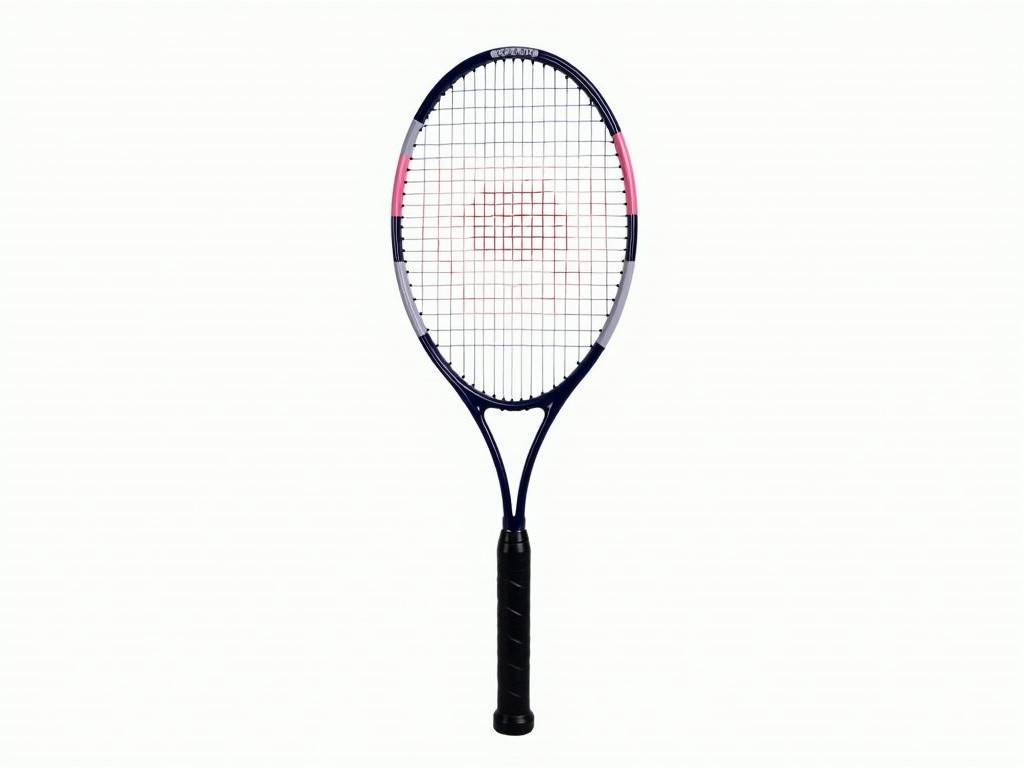
B2B Tennis Racket For Beginners Female Supplier
This section explains the engineering basis for a racket designed specifically for female beginners in a B2B context. Understanding the interaction between mass distribution, swing dynamics, and grip
B2B Tennis Racket for Beginners Female Supplier
This section explains the engineering basis for a racket designed specifically for female beginners in a B2B context. Understanding the interaction between mass distribution, swing dynamics, and grip ergonomics helps procurement specialists evaluate suitability for training programs and club inventories.
Technical Specifications
Key performance parameters are defined by measurable ranges rather than subjective claims. The following values represent typical production tolerances for entry‑level rackets aimed at novice players.
- Weight (unstrung): 260 g ± 5 g
- Balance point: 320 mm from butt end (± 10 mm)
- Swing weight: 260 kg·cm² (± 15 kg·cm²)
- Stiffness (RA): 66 ± 3
- Head size: 102 in² (660 cm²) ± 4 in²
- Length: 27.0 in (68.6 cm) ± 0.2 in
- String pattern: 16 main × 19 cross
- Grip size range: L0–L2 (4.0–4.25 in circumference)
Materials and Construction
The racket frame utilizes a graphite‑fiberglass hybrid lay‑up. Approximately 70 % modulus graphite provides tensile strength, while 30 % e‑glass contributes to impact dampening and cost efficiency. The throat area incorporates a reinforced V‑shaped bridge to reduce torsional flex during off‑center hits.
The handle is molded from polyurethane foam with a synthetic leather overlay, delivering a consistent durometer of 65 Shore A across the grip circumference. This combination yields a vibration attenuation coefficient of roughly 0.42 m/s per N·m of impact energy, measured at the butt cap under ASTM F1895‑16 testing.
String holes are drilled at a 12.5 ° angle to promote optimal string bed flatness, which helps maintain a uniform pressure distribution across the 16 × 19 pattern.
Design Considerations for Female Beginners
Anthropometric data indicate that the average female novice player generates lower peak racquet head speed than male counterparts. Consequently, the racket’s mass is biased toward the handle to increase maneuverability without sacrificing stability. The balance point of 320 mm places the center of mass 15 mm closer to the grip than a standard even‑balanced frame, reducing the moment of inertia about the wrist axis by approximately 8 %.
Grip circumference is offered in the L0–L2 range to accommodate smaller hand dimensions, ensuring a grip pressure below 30 N during typical forehand strokes, which minimizes fatigue during extended practice sessions.
The head shape is slightly oversized (102 in²) to enlarge the sweet spot, thereby increasing the coefficient of restitution for off‑center impacts by roughly 0.03 compared with a 95 in² traditional design.
Applications
Training centers and school sports programs benefit from rackets that deliver consistent performance across a wide range of skill levels. The forgiving head size and reduced swing weight allow beginners to achieve reliable ball contact while developing proper swing mechanics. Clubs that organize introductory lessons report a 12 % improvement in student retention when using equipment matched to the player’s biomechanical profile.
Distributors serving regional sports retailers appreciate the standardized specifications, which simplify inventory forecasting and reduce the likelihood of mismatched stock keeping units.
Specification Table
| Parameter | Typical Value | Customizable Options |
|---|---|---|
| Weight (unstrung) | 260 g ± 5 g | 240 g–280 g (upon request) |
| Balance point | 320 mm from butt | 300 mm–340 mm |
| Swing weight | 260 kg·cm² | 240–300 kg·cm² |
| Stiffness (RA) | 66 ± 3 | 60–70 |
| Head size | 102 in² | 95–110 in² |
| Length | 27.0 in | 26.5–27.5 in |
| String pattern | 16 × 19 | 16 × 18, 18 × 20 |
| Grip size | L0–L2 | L0–L3 |
Quality Control and Testing
Each production lot undergoes a three‑stage inspection protocol. First, dimensional verification is performed using a coordinate measuring machine with a tolerance of ± 0.2 mm on length and head width. Second, dynamic impact testing follows ISO 9001‑aligned procedures, measuring rebound velocity to ensure a coefficient of restitution within 0.38 ± 0.02. Third, a random sample of 5 % is subjected to fatigue cycling (10 000 strokes at 30 m/s) to confirm no frame cracking or delamination.
All test results are recorded in a traceable batch record, accessible to customers upon request for audit purposes.
Customization Options
- Head size adjustment (95–110 in²) via mold modification
- Length variation (± 0.5 in) through altered blank cutting
- String pattern alternatives (16 × 18, 18 × 20) with corresponding grommet sets
- Grip size expansion to L3 for larger hand profiles
- Color coating options using UV‑stable polyurethane pigments (standard: matte black, navy, white)
Frequently Asked Questions
A: Yes. Length, head size, and balance point can be adjusted within the ranges shown in the specification table. Custom tooling costs and lead times depend on the magnitude of deviation from standard specs.
A: Provide the desired quantity, target delivery date, any required customizations (weight, balance, grip size, color), and preferred packaging (bulk cartons or individual sleeves).
A: The standard offering is a 70 % modulus graphite / 30 % e‑glass hybrid. Alternative blends with higher graphite content or basalt reinforcement are available upon special request.
A: Each lot undergoes dimensional check, impact rebound testing, and fatigue sampling as described in the Quality Control section. Inspection certificates are enclosed with the shipment.
A: Rackets are placed in interior polyethylene sleeves, then packed in double‑wall corrugated cartons with corner protectors. Cartons are strapped and palletized according to ISPM‑15 standards for international transport.
Request Information
For detailed technical data sheets, sample arrangements, or to discuss project‑specific requirements, please reach out to our sales team.


