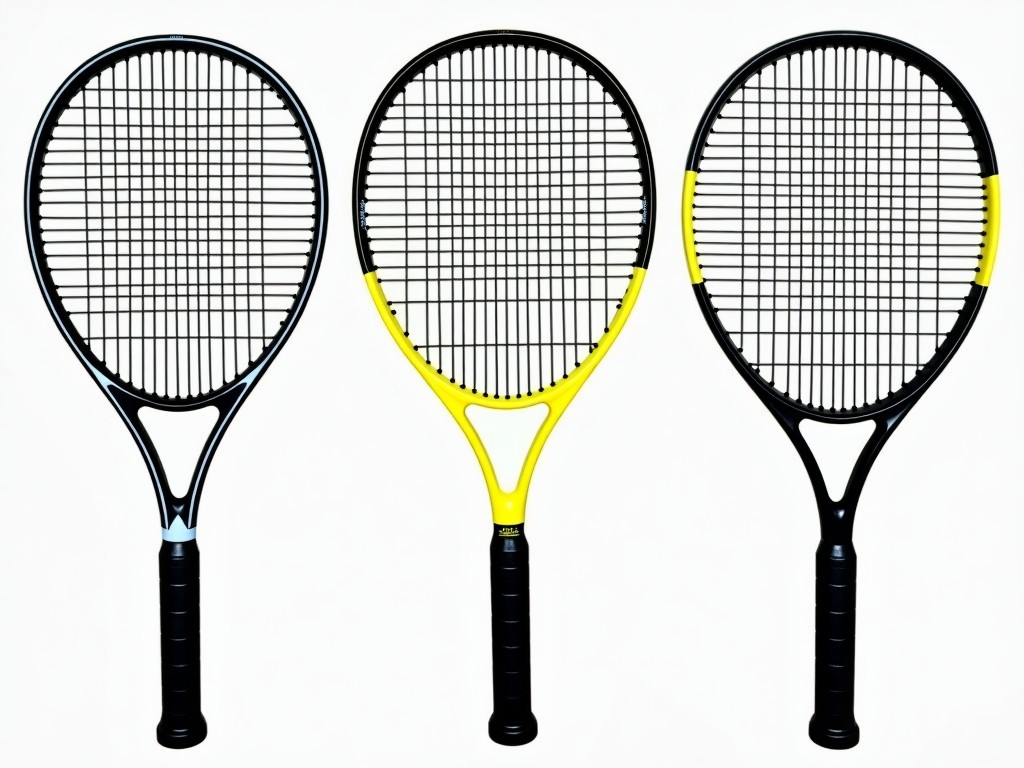
Best Price Tennis Rackets For Intermediate Players For Sale
Selecting a racket for intermediate play involves balancing mass, balance point, head size, and string pattern to achieve adequate power without sacrificing control. These four parameters directly
Intermediate Tennis Rackets – Best Price Options
Selecting a racket for intermediate play involves balancing mass, balance point, head size, and string pattern to achieve adequate power without sacrificing control. These four parameters directly affect swing speed, shock absorption, and shot consistency, making them the primary technical criteria for price comparison.
Key Specifications to Evaluate
Frame mass typically ranges from 280 g to 305 g for rackets aimed at intermediate players; lighter frames improve maneuverability while heavier frames add stability. Balance point measured from the butt end usually falls between 31 cm and 34 cm, with a head‑light bias favoring quick volleys and an even balance providing uniform feel across strokes.
Head size influences the sweet spot area; common values are 98 in² to 105 in². Larger heads increase forgiveness on off‑center hits, whereas smaller heads offer greater precision. String pattern, expressed as main × cross strings, affects spin potential and durability; a 16 × 19 pattern is typical for intermediate models, providing a compromise between spin generation and string life.
Stiffness, measured in RA units, generally lies between 60 and 70 for this segment. Higher stiffness yields more power but transmits more vibration to the arm, while lower stiffness enhances comfort at the expense of power output.
Frame Material Options
- Graphite‑based composites provide a high strength‑to‑weight ratio, allowing precise tuning of mass and stiffness.
- Aluminum alloys offer lower cost and adequate durability, though they tend to be heavier and less responsive.
- Hybrid constructions combine graphite outer layers with an aluminum core to reduce price while maintaining playable stiffness.
Performance Characteristics
Power output correlates with frame stiffness and head size; a racket with RA ≈ 68 and a 102 in² head delivers roughly 5 % more ball speed than a 60 RA, 98 in² counterpart at the same swing velocity.
Control is influenced by balance and string tension range; a head‑light balance (≈ 32 cm) permits quicker racket head acceleration, facilitating placement shots, while an even balance (≈ 33.5 cm) offers a stable platform for baseline rallies.
Maneuverability, critical for net play, improves as total mass decreases and the balance shifts toward the handle; a 285 g frame with a 31.5 cm balance allows a swing weight reduction of approximately 15 % compared to a 300 g, 34 cm configuration.
Typical Model Comparison
| Parameter | Model A | Model B | Model C |
|---|---|---|---|
| Frame Mass (g) | 285 | 295 | 300 |
| Balance Point (cm from butt) | 31.5 | 33.0 | 34.0 |
| Head Size (in²) | 98 | 102 | 105 |
| String Pattern (main × cross) | 16 × 19 | 16 × 19 | 16 × 19 |
| Stiffness (RA) | 62 | 66 | 68 |
| Approx. Price (USD) | 55 | 68 | 80 |
Suitability for Intermediate Play
Intermediate players typically benefit from a racket that offers enough mass to absorb shock from powerful groundstrokes while remaining light enough for quick directional changes at the net. A balance point near 32 cm to 33 cm provides a neutral feel, allowing players to develop both baseline consistency and volley confidence without extreme bias toward either end.
Head sizes between 100 in² and 104 in² enlarge the sweet spot, reducing the penalty for occasional mishits during the transition from beginner to advanced technique. String patterns in the 16 × 19 range maintain adequate spin potential for topspin groundstrokes while keeping string bed durability sufficient for frequent practice sessions.
Frequently Asked Questions
Can the grip size be customized?
Most manufacturers offer grip sizes ranging from 4 inches to 4 ⅝ inches in ⅛‑inch increments; selection is based on hand measurement and personal preference, and can be specified when requesting a quote.
What information is needed for a price quotation?
To generate an accurate quote, provide the desired frame mass range, balance preference, head size, string pattern, grip size, and order quantity. Optional details such as preferred material (graphite, aluminum, hybrid) and any branding requirements help refine the estimate.
How is product quality assured?
Quality control includes dimensional verification of mass (± 2 g), balance point (± 0.3 cm), and stiffness (± 2 RA) using calibrated machines, followed by visual inspection for cosmetic defects and a limited play test to confirm feel consistency across a batch.
Request a Quote
For detailed pricing, lead times, or to discuss specific configuration needs, please use the inquiry form below.
Submit Inquiry


