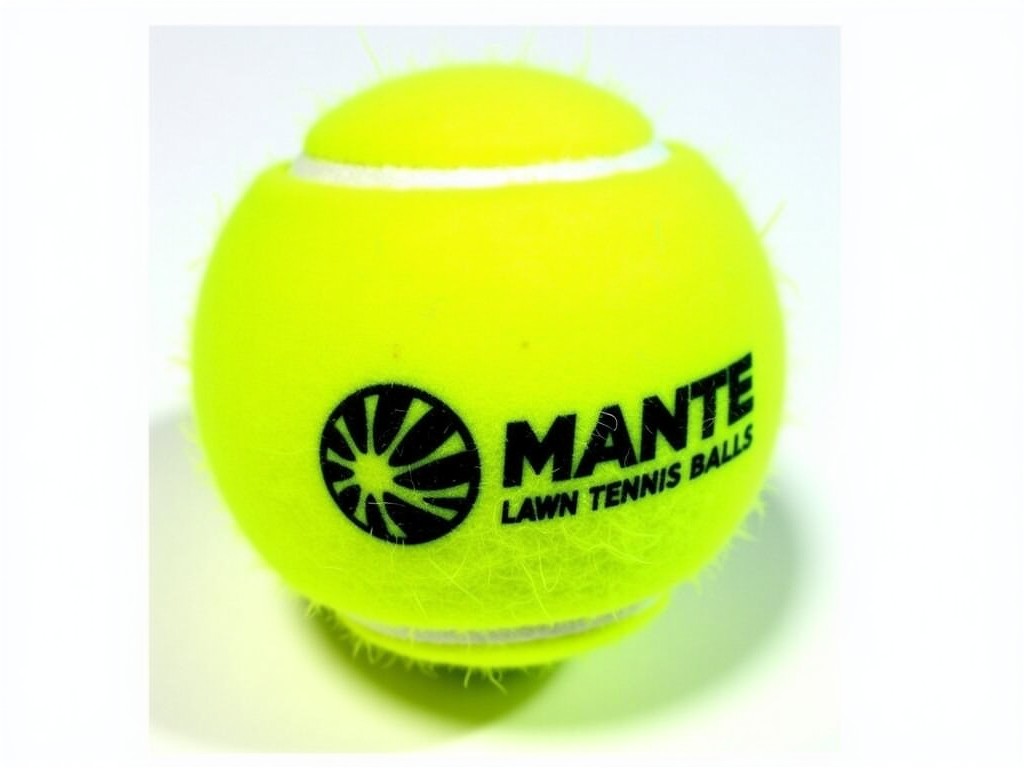
Bulk Indoor Large Lawn Tennis Balls Supplier
Indoor tennis facilities often require balls with a slightly larger diameter and lower internal pressure than standard outdoor versions to accommodate slower court surfaces and reduce bounce height.
Bulk Indoor Large Lawn Tennis Balls Supplier
Product Overview
Indoor tennis facilities often require balls with a slightly larger diameter and lower internal pressure than standard outdoor versions to accommodate slower court surfaces and reduce bounce height. These balls maintain the same felt-covered construction but are engineered to provide consistent playability across extended training sessions.
Technical Specifications
| Property | Typical Value | Unit | Notes |
|---|---|---|---|
| Diameter | 6.86 | cm | Measured per ITF standard for indoor use |
| Weight | 58.0 | g | Within ±0.5 g tolerance |
| Internal Pressure | 0.60 | bar | Lower than outdoor balls to reduce bounce |
| Felt Thickness | 2.0 | mm | Uniform nylon‑wool blend |
| Core Hardness | 65 | Shore A | Ensures consistent deformation |
Material Composition
The core consists of natural rubber compounded with specific sulfur levels to achieve the target hardness and rebound characteristics. A layered felt covering made from a 70/30 nylon‑wool blend provides durability and optimal friction for racket strings. All materials are selected for low outgassing and resistance to indoor humidity variations.
Manufacturing Process
First, rubber sheets are compression‑molded into half‑shells, then cured at 160 °C for 20 minutes to stabilize the core. The shells are joined with a water‑based adhesive, pressurized to the specified internal pressure, and cooled. Finally, the felt is cut, wrapped, and bonded using a heat‑activated adhesive system that ensures uniform coverage without delamination.
Applications and Performance Benefits
- Training academies benefit from reduced bounce height, allowing players to practice volleys and groundstrokes with greater control.
- Multi‑purpose sports halls use these balls because the lower pressure minimizes noise and impact on surrounding equipment.
- Recreational leagues experience longer ball life due to the softer felt, which resists wear on smooth indoor surfaces.
Quality Control and Testing
Each batch undergoes dimensional verification using laser micrometers, pressure checks with calibrated gauges, and bounce tests conducted on a standardized concrete surface at 20 °C. Visual inspection identifies felt irregularities, while abrasion cycles simulate 500 hits to assess durability. Only lots meeting all criteria are cleared for bulk shipment.
Customization Options
- Logo printing in up to three colors using water‑based inks that do not affect felt integrity.
- Adjustable internal pressure ranging from 0.50 bar to 0.70 bar for specific court speeds.
- Alternative felt compositions such as 100 % nylon for enhanced wear resistance.
- Custom core hardness values between 60 and 70 Shore A to fine‑tune rebound.
Packaging and Logistics
Bulk quantities are packed in corrugated cartons containing 72 balls each, arranged in a 6 × 6 × 2 layer configuration to prevent deformation. Cartons are sealed with pressure‑sensitive tape and stacked on standard EUR pallets, stretch‑wrapped for moisture protection. Each pallet holds 48 cartons, totaling 3 456 balls, facilitating efficient container loading.
Frequently Asked Questions
Can the diameter be adjusted for different indoor court types?
Yes, the mold tooling can be modified to produce diameters ranging from 6.60 cm to 7.00 cm, allowing fine‑tuning for fast or slow indoor surfaces.
What information is required before a quotation is issued?
We need the requested quantity, any customization details (pressure, logo, felt type), preferred packaging, and delivery destination to calculate freight costs accurately.
How is quality consistency maintained across large orders?
Statistical process control monitors core weight, pressure, and felt adhesion on every 1 % of produced balls, with full batch verification before release.
Get a Quote
Ready to discuss your specific requirements? Provide your project details and we will respond with a technical quotation and lead‑time estimate.
Request a Quote


