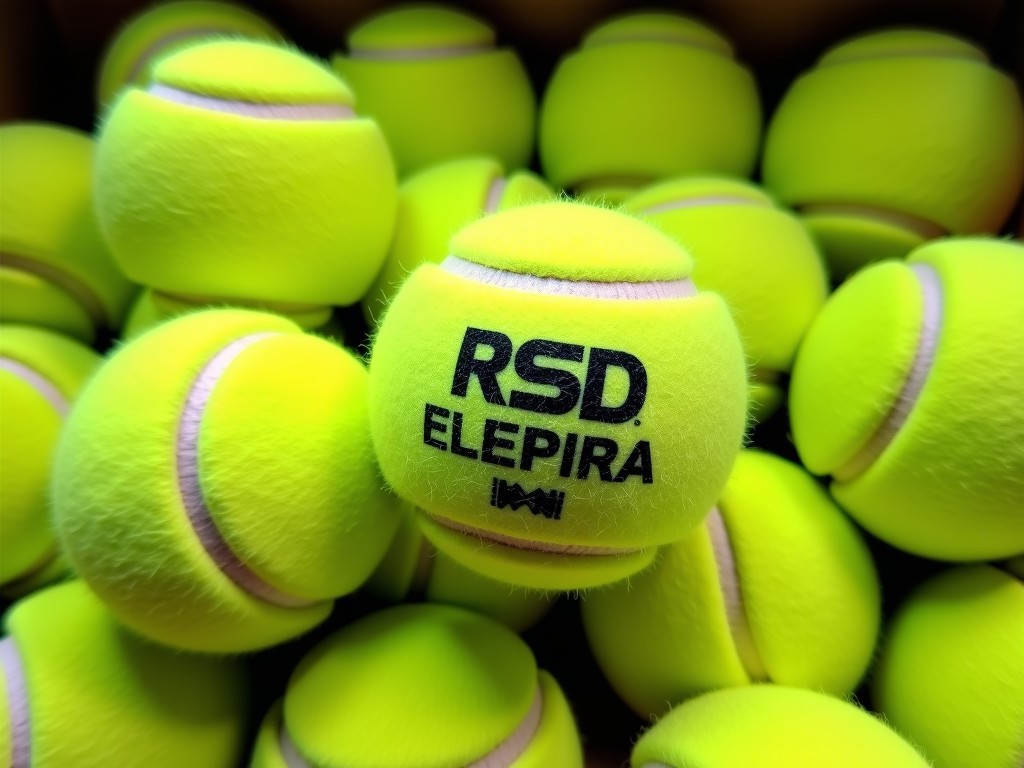
Bulk Red And Green Tennis Balls Top Factory
Manufacturers of sports equipment, training facilities, and promotional distributors often require large volumes of colored tennis balls that meet consistent performance specifications. Supplying red
Bulk Red and Green Tennis Balls – Factory Supply
Manufacturers of sports equipment, training facilities, and promotional distributors often require large volumes of colored tennis balls that meet consistent performance specifications. Supplying red and green variants in bulk enables standardized visual coding for drills, age‑group segregation, or branding while maintaining the same mechanical properties as conventional yellow balls.
Key Technical Characteristics
Each ball is engineered to conform to ITF‑approved Type 2 standards, ensuring reliable bounce, durability, and feel across court surfaces. The following table lists typical nominal values; actual measurements can be adjusted according to project‑specific tolerances.
| Parameter | Typical Value | Adjustment Range |
|---|---|---|
| Diameter | 6.54 mm – 6.86 mm | ±0.2 mm (custom) |
| Mass | 56.0 g – 59.4 g | ±0.5 g (custom) |
| Rebound Height (100 in drop) | 135 cm – 147 cm | ±5 cm (custom) |
| Front‑face Deformation | 0.6 mm – 0.8 mm | ±0.1 mm (custom) |
| Core Pressure | 1.65 kg – 1.80 kg per inch² | ±0.1 kg/in² (custom) |
Material Composition
The core consists of a pressurized rubber compound formulated for consistent internal pressure retention over the product’s service life. The outer felt is a woven blend of nylon and wool, dyed with fast‑acting, UV‑stable pigments to achieve the specified red or green hue without altering friction characteristics. Both materials are sourced from suppliers that provide traceable batch certificates.
Manufacturing Overview
Production begins with precision molding of the rubber cores under controlled temperature and pressure to achieve uniform wall thickness. After curing, cores are subjected to a pressure‑holding test to verify leak rates below 0.02 psi per hour. The felt is cut to precise dimensions, then adhered using a water‑based adhesive that cures at ambient temperature, minimizing VOC emissions. Final dyeing occurs in a closed‑loop system to ensure color consistency across lots.
Quality Control Philosophy
Each batch undergoes statistical process control sampling. Key checks include diameter measurement via laser micrometry, mass verification with analytical balances, rebound testing on a standardized rig, and visual inspection for felt integrity and color uniformity. Results are logged against control charts; any deviation beyond ±2σ triggers a lot review. Documentation of inspections is available upon request.
Typical Applications
- Training programs where color‑coded balls indicate skill level or drill type.
- Recreational facilities requiring high‑visibility balls for outdoor courts.
- Promotional events or corporate branding where custom colors reinforce brand identity.
- Educational institutions using distinct colors for age‑group segregation in physical education classes.
Comparison of Standard vs. Custom Options
| Feature | Standard Yellow | Red / Green Bulk |
|---|---|---|
| Core Pressure Range | 1.65 – 1.80 kg/in² | Same as standard (customizable) |
| Felt Color Fastness (ISO 105‑B02) | ≥4 (yellow dye) | ≥4 (red/green pigment) |
| Lead Time for 50 k Units | 3–4 weeks | 4–5 weeks (includes dyeing) |
| Minimum Order Quantity | 10 k units | 20 k units (color‑specific) |
Frequently Asked Questions
- Can the diameter or weight be tightened beyond the standard tolerance?
Yes, tighter tolerances are achievable upon request and may affect unit price. - What information is needed to receive a quotation?
Required details include desired quantity, color(s), any special tolerance requirements, preferred packaging, and delivery destination. - Are alternative core materials available for extreme climates?
Compound adjustments for higher or lower ambient temperatures can be discussed with our engineering team. - How is color consistency validated between production lots?
We use spectrophotometric analysis with ΔE < 2 as the acceptance criterion for each batch. - What packaging options protect the balls during overseas shipment?
Options include corrugated cartons with internal dividers, moisture‑barrier liners, and palletization with stretch‑wrap.
For further technical details, sample requests, or to discuss a customized supply agreement, please contact our sales engineering team.
Request Quotation


