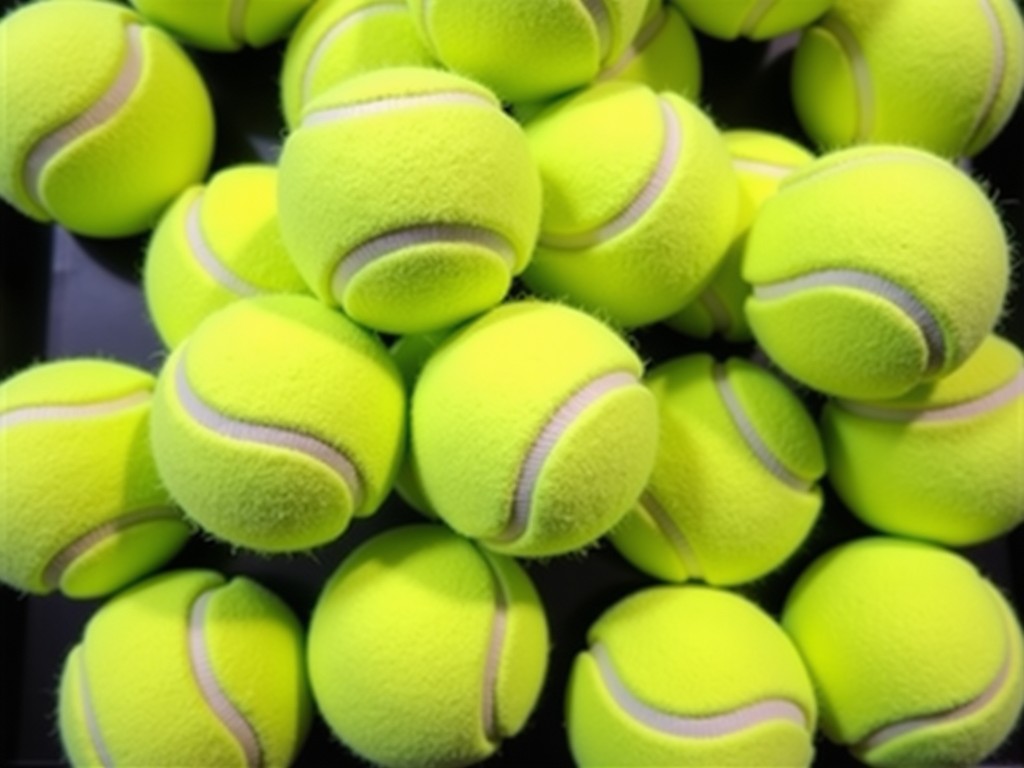
Bulk Tennis Balls For Walkers Wholesale
Walker glides made from standard tennis balls reduce floor wear, lower noise, and provide a predictable sliding resistance. The following details cover the physical properties, material makeup, and
Bulk Tennis Balls for Walkers – Wholesale Specification
Walker glides made from standard tennis balls reduce floor wear, lower noise, and provide a predictable sliding resistance. The following details cover the physical properties, material makeup, and production controls that define a reliable bulk supply for OEM and distributor buyers.
Key Technical Parameters
| Property | Typical Value | Acceptable Tolerance |
|---|---|---|
| Diameter | 6.70 cm | ±0.15 cm (ITF range 6.54–6.86 cm) |
| Mass | 57.5 g | ±2.0 g |
| Internal Pressure | 0.85 atm | ±0.10 atm |
| Rebound Height (100 cm drop onto concrete) | 55 cm | ±3 cm |
| Felt Thickness | 2.0 mm | ±0.3 mm |
Material Composition
The core consists of a natural rubber compound blended with sulfur and fillers to achieve the target pressure and stiffness. The outer felt is a nylon‑wool blend, typically 82 % nylon and 18 % wool, providing abrasion resistance while maintaining a consistent coefficient of friction on common floor finishes such as vinyl, wood, and tile.
Typical Applications
- Attachment to walker legs to prevent scratching and reduce impact noise.
- Temporary floor protection during equipment movement in healthcare or rehabilitation facilities.
- Low‑cost glide solution for institutional furniture where rolling casters are unsuitable.
Manufacturing Considerations
Core pressurization is performed in a controlled chamber to ensure uniform internal pressure across the batch. Felt adhesion uses a water‑based latex adhesive cured at 80 °C for 90 seconds, delivering a peel strength above 1.2 N/mm. Dimensional stability is maintained by post‑mold conditioning at 23 °C and 50 % relative humidity for 24 hours before inspection.
Quality Control Philosophy
Each lot undergoes random sampling for diameter (caliper), mass (analytical balance), and rebound (standardized drop test). Felt adhesion is verified by a peel test on three specimens per lot. Results are recorded against the tolerances shown in the specification table; any deviation triggers a lot hold and root‑cause analysis.
Packaging Options
Standard bulk packaging places 100 balls per polyethylene bag, with 10 bags per corrugated carton (total 1,000 balls). Cartons are sealed with pressure‑sensitive tape and stacked on pallets with a maximum load of 800 kg. Custom counts, bag materials, or pallet configurations are available upon request to meet specific logistics requirements.
Frequently Asked Questions
- Can the diameter or weight be adjusted for specialized walker designs? – Yes, core formulation and molding parameters can be tuned within ITF limits; please provide target values for a quotation.
- What information is needed to receive a formal quote? – Required details include annual quantity, preferred packaging, destination country, and any specific testing or certification requests.
- Which material alternatives exist for the felt covering? – Options include 100 % nylon for higher abrasion resistance or a recycled polyester blend; each alternative changes the coefficient of friction and must be validated for your floor type.
- How is quality verified before shipment? – A lot‑based inspection report summarizing diameter, mass, pressure, rebound, and adhesion is supplied with each shipment.
- What export protections are used for the balls? – Inner polyethylene bags guard against moisture, while outer cartons are reinforced with corner protectors and stretch‑film pallet wrapping.
- What is the typical lead time for an order of 50,000 balls? – Standard production lead time is 3‑4 weeks after receipt of confirmed purchase order, subject to material availability.
For further technical discussion or to request a sample lot that meets your exact specifications, please use the contact link below.
Request a Quote


