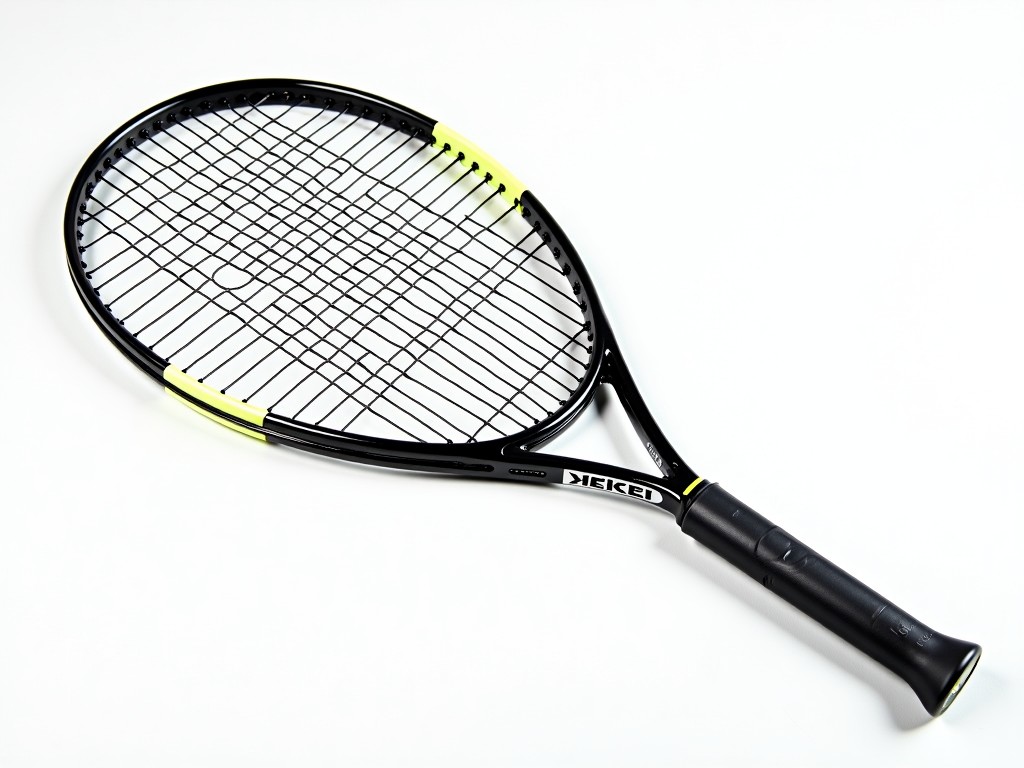
China Carbon Fiber Tennis Racket Manufacturer
Carbon fiber composites replace traditional graphite or aluminum frames by offering a high specific modulus and tailored damping characteristics. Manufacturers in China leverage automated layup and
China Carbon Fiber Tennis Racket Manufacturer – Technical Overview
Carbon fiber composites replace traditional graphite or aluminum frames by offering a high specific modulus and tailored damping characteristics. Manufacturers in China leverage automated layup and resin transfer molding to achieve consistent thickness distribution across the hoop and shaft. This section explains the material science, process controls, and performance metrics that inform procurement decisions for OEMs and distributors.
Material Composition and Layup Design
The racket core typically uses unidirectional T800 carbon fiber with a tensile modulus of approximately 295 GPa, woven with a 3K twill for impact resistance. Epoxy resin systems are selected for a glass transition temperature above 130 °C to maintain dimensional stability during string tensioning. Varying the ply angle from 0° to ±45° adjusts longitudinal stiffness versus torsional rigidity, directly influencing power generation and control feel.
Manufacturing Process
Filament winding places fibers under controlled tension onto a mandrel shaped to the racket’s inner profile, followed by a prepreg layup for the throat and handle zones. The assembled blank undergoes vacuum bagging and autoclave curing at 180 °C and 1.2 bar for 90 minutes to achieve a void content below 0.5 %. Post‑cure machining removes excess flash, and CNC drilling creates the string‑hole pattern with tolerances of ±0.1 mm.
Performance Characteristics
Finished rackets exhibit a static weight range of 280–310 g, with a balance point adjustable between 320 mm and 350 mm from the butt cap. Flexural stiffness measured at the throat typically falls between 65 mm and 80 mm deflection under a 20 N load, correlating to a power‑control ratio suited for baseline players. Damping capacity, evaluated via logarithmic decrement, shows a decay rate of 0.025 per vibration cycle, reducing shock transmission to the forearm.
| Parameter | Typical Value | Adjustment Range |
|---|---|---|
| Weight (unstrung) | 295 g | 280–310 g |
| Balance Point | 335 mm | 320–350 mm |
| Flexural Deflection @20 N | 72 mm | 65–80 mm |
| Torsional Stiffness | 1.8 Nm/deg | 1.5–2.2 Nm/deg |
| Damping Ratio (log decrement) | 0.025 | 0.020–0.030 |
Customization Options
OEMs can specify fiber modulus, resin toughness, and paint finish to match brand performance targets. Grip size, shape, and overwrap material are adjusted via interchangeable pallets, allowing a single mold to serve multiple market segments. Additionally, laser‑etched logos or sublimated graphics can be applied without compromising the composite integrity.
- Modulus selection: T700, T800, M40J, or hybrid blends
- Resin system: standard epoxy, toughened epoxy, or thermoplastic polyurethane
- Grip dimensions: L0–L5, with optional shock‑absorbing inserts
- Paint finishes: matte UV, gloss polyurethane, or metallic flake
- Branding: laser engraving, pad printing, or full‑color sublimation
Quality Control and Testing
Each batch undergoes automated optical inspection for fiber alignment and resin uniformity, followed by tensile coupon testing to verify modulus within ±3 % of target. Finished rackets are subjected to a 500‑cycle impact test simulating ball strikes, with pass criteria set at less than 0.2 % change in stiffness. Acoustic emission monitoring during frame flex checks for delamination onset, ensuring long‑term durability under competitive play conditions.
Applications in Professional and Recreational Play
The high stiffness‑to‑weight ratio enables players to generate greater ball speed with reduced swing effort, beneficial for baseline power games. Simultaneously, the tailored damping minimizes vibration transmission, lowering the risk of tennis elbow for recreational users who play multiple sessions per week. Manufacturers therefore position these rackets as versatile tools that satisfy both performance‑driven and comfort‑oriented market segments.
Frequently Asked Questions
Can dimensions be customized? Yes, head width, beam thickness, and length can be adjusted within standard mold limits; consult engineering for extreme deviations.
What information is required before quotation? Provide target weight, balance point, preferred fiber modulus, grip size, and any cosmetic specifications.
What materials are available? Carbon fiber grades T700–T1100, epoxy, toughened epoxy, and thermoplastic resins; see the customization list for details.
How is quality inspected? In‑process optical checks, tensile coupons, impact cycling, and acoustic emission tests are standard; full test reports are available upon request.
What packaging methods are available? Rackets are packed in single‑wall corrugated boxes with internal foam end caps; bulk palletizing and custom inserts are optional.
How are export shipments protected? Each box includes moisture‑absorbing desiccant and is strapped to pallets with corner boards to resist shifting during transit.
What is the typical production lead time? Standard lead time is 4–6 weeks after approval of pre‑production samples; expedited schedules depend on tooling availability.
How are samples arranged? Sample rackets are produced from the same tooling as the production run and shipped via express courier with a proforma invoice.
Get a Technical Quote
To initiate a detailed engineering review, share your performance targets and any regulatory constraints. Our team will respond with a feasibility assessment, cost estimate, and proposed timeline.
Request Technical Quote


