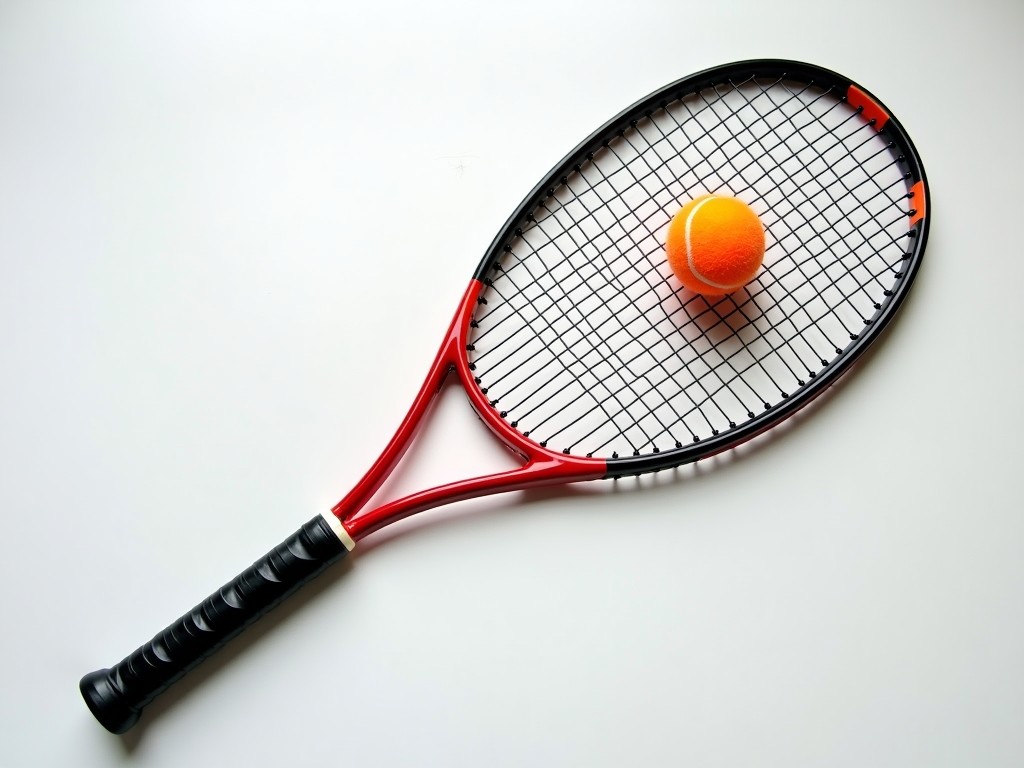
China Classic Cool Tennis Rackets Company
This page details the engineering characteristics of classic‑style tennis rackets sourced from manufacturers in China, focusing on dimensions, mass distribution, material composition, and performance
China Classic Cool Tennis Rackets – Technical Overview
This page details the engineering characteristics of classic‑style tennis rackets sourced from manufacturers in China, focusing on dimensions, mass distribution, material composition, and performance metrics that influence playability and durability.
Materials and Construction
The frame typically uses a unidirectional lay‑up of graphite fiber reinforced with a low‑viscosity epoxy resin, achieving a tensile modulus of approximately 230 GPa and a density of 1.55 g/cm³.
A thin layer of basalt or Kevlar may be added at the 3 and 9 o’clock positions to improve impact resistance without significantly increasing weight.
The grip consists of a polyurethane core wrapped with a synthetic leather overlay, providing a compressive hardness of 70 Shore A and a moisture‑wicking surface treatment.
Design Features
Racket length follows the ITF standard of 685 mm (±2 mm) measured from the butt cap to the tip of the head.
Head size is commonly offered in two variants: midsize at 630 cm² and oversize at 680 cm², affecting the sweet‑spot area and swing weight.
String pattern options include 16×19 (open) for enhanced spin potential and 18×20 (dense) for greater control; the grommet system uses reinforced nylon inserts to maintain string tension over time.
Performance Characteristics
| Parameter | Typical Value | Adjustment Range |
|---|---|---|
| Weight (unstrung) | 285 g | 260 – 320 g |
| Balance point (from butt) | 320 mm | 300 – 340 mm | Stiffness (RA) | 68 | 60 – 75 |
| Swing weight (approx.) | 300 kg·cm² | 260 – 340 kg·cm² |
| String tension recommendation | 24 – 28 kg | 20 – 32 kg |
Values represent median measurements from production samples; actual figures vary with lay‑up geometry and finish.
Applications
- Recreational players seeking a classic feel with moderate power and controllable spin.
- Coaching programs that require consistent racket specifications across multiple trainees.
- Club-level competitors who prefer a balanced weight distribution for versatile court coverage.
- Junior development pathways where a lighter frame (≈260 g) aids in technique acquisition.
Quality Control Philosophy
Each racket undergoes dimensional verification using laser scanning to confirm length, head width, and beam thickness within ±0.5 mm tolerance.
Mass distribution is checked on a precision balance beam; the balance point must fall within the specified range before the frame proceeds to stringing.
Impact resistance is evaluated via a drop‑weight test simulating a 2 m/s ball strike; acceptable frames show no delamination or crack propagation exceeding 2 mm.
Final inspection includes visual assessment of paint uniformity, grip adhesion, and grommet integrity, with a defect threshold of less than 0.5 % per batch.
Customization Options
- Frame length adjustment (±5 mm) for specialized reach requirements.
- Weight tuning through internal carbon tape inserts, enabling fine‑tuning of swing weight.
- Grip size selection ranging from L0 to L5 with corresponding circumference measurements.
- Personalized paint schemes, including matte, gloss, or metallic finishes, with Pantone‑matched color codes.
- String pattern customization (e.g., 16×18, 18×20) to match player spin or control preferences.
Frequently Asked Questions
Can dimensions be customized? Yes, length, head size, and beam thickness can be adjusted within the ranges specified in the performance table, subject to tooling constraints.
What information is required before quotation? Desired weight range, balance point preference, head size, grip size, and any cosmetic specifications.
What materials are available? Standard graphite/epoxy lay‑up, with optional basalt or Kevlar reinforcement layers; grip materials include polyurethane core with synthetic leather or textured rubber overlays.
How is quality inspected? Through dimensional laser scanning, mass distribution balancing, impact drop‑weight testing, and visual inspection as described above.
What packaging methods are available? Individual rackets are placed in low‑density polyethylene sleeves, then packed in corrugated cardboard cartons with corner protection; palletization follows ISPM‑15 standards for export.
What is the typical production lead time? Approximately 20‑25 working days after final design approval, varying with order size and customization complexity.
Get in Touch
For detailed quotations, technical data sheets, or sample requests, please contact our engineering team.
Request Technical Consultation


