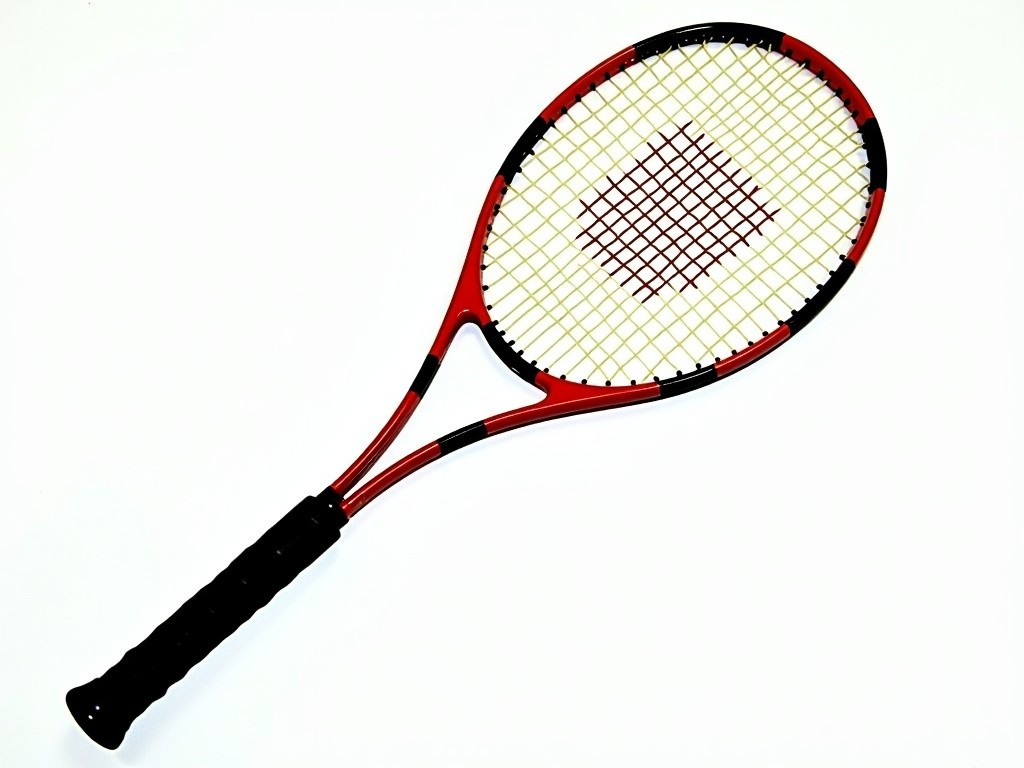
China Custom Personalized Tennis Rackets Manufacturer
This page explains how a Chinese manufacturer engineers tennis rackets that meet specific player preferences, covering the design variables, material choices, production steps, and verification
Custom Personalized Tennis Rackets – China Manufacturer
This page explains how a Chinese manufacturer engineers tennis rackets that meet specific player preferences, covering the design variables, material choices, production steps, and verification methods that industrial buyers evaluate before placing an order.
Customization Variables
Buyers can define geometric and mechanical parameters that influence swing weight, power, and feel. Adjustments are made in millimeter increments to match individual playing styles or brand specifications.
- Head size: 85–110 in², adjustable in 1 in² steps
- Length: 27–29 in, configurable in 0.1 in increments
- Balance point: head‑light to head‑heavy, specified in mm from butt cap
- String pattern: 16×19, 18×20, or custom counts
- Grip size: 4 in to 4 ⅝ in, with optional over‑wrap thickness
Material Options and Their Effects
The frame composition determines stiffness, vibration damping, and fatigue life. Manufacturers typically offer a selection of modulus‑rated carbon fibers, boron reinforcements, and thermoplastic inserts, each with measurable mechanical properties.
| Material | Typical Tensile Modulus (GPa) | Density (g/cm³) | Common Use in Racket |
|---|---|---|---|
| High‑modulus carbon fiber | 230–260 | 1.55–1.60 | Stiff power frames |
| Intermediate‑modulus carbon fiber | 180–210 | 1.50–1.55 | All‑round control frames |
| Boron‑reinforced composite | 250–280 | 1.60–1.65 | High‑stiffness, low‑damp models |
| Thermoplastic polyurethane insert | 5–10 (effective) | 1.20–1.25 | Vibration dampening zones |
Manufacturing Process Overview
Frames are produced using a pre‑preg lay‑up technique where carbon‑fiber sheets are cut to precise shapes, stacked according to the lay‑up schedule, and cured in a heated press at 180 °C for 120 seconds. This cycle yields a void‑free laminate with a fiber volume fraction of approximately 60 %.
After curing, the rough frame undergoes CNC machining to achieve final tolerances of ±0.1 mm on critical dimensions such as beam width and throat geometry. Grip pallets are molded separately from EVA or rubber compounds and bonded using a structural adhesive with a shear strength exceeding 2.5 MPa.
String holes are drilled using a CNC drill with a 0.8 mm bit, followed by deburring to ensure uniform hole diameter, which affects string tension consistency and knot security.
Quality Control Philosophy
Each racket is subjected to a three‑stage inspection: visual surface check for resin richness and fiber alignment, dimensional verification using a coordinate measuring machine (CMM) with a repeatability of ±0.02 mm, and dynamic testing on a swing‑weight pendulum to confirm the target balance point within ±2 mm.
Additionally, a random sample from each batch undergoes a fatigue test where the frame is cycled 10,000 times at a 30 kg load equivalent to a high‑impact serve. Acceptance criteria require less than 5 % loss in stiffness after the test.
All inspection data are recorded in a traceable database linked to the serial number, enabling buyers to request a quality dossier for any shipment.
Typical Applications
Custom rackets are selected by professional coaches who need equipment that matches a player’s biomechanics, reducing the risk of elbow strain by aligning the racket’s sweet spot with the athlete’s natural swing plane. Tennis academies also order personalized sets to provide uniform feel across training groups, facilitating consistent technique development.
OEM brands that private‑label rackets rely on the manufacturer’s ability to hold tight tolerances on weight distribution, ensuring that the final product meets the brand’s performance specifications across large production runs.
Frequently Asked Questions
Can dimensions be customized beyond the listed ranges?
Yes. Head size, length, and balance point can be adjusted outside the standard ranges upon request, subject to structural feasibility review.
What information is required before quotation?
A detailed specification sheet including target weight, balance point, head size, string pattern, grip size, and any cosmetic preferences (paint, logo placement) is needed to generate an accurate cost estimate.
Which materials are available for the frame?
Standard offerings include high‑modulus carbon fiber, intermediate‑modulus carbon fiber, boron‑reinforced composites, and thermoplastic polyurethane inserts. Alternative fibers such as basalt or aramid can be sourced if required.
How is quality inspected?
Inspection combines visual assessment, CMM dimensional checks, swing‑weight verification, and fatigue testing as described in the quality control section.
What packaging methods are available for export?
Rackets are packed in individual foam‑lined cartons, then placed in master cartons with corner protectors and humidity‑absorbing packets. Palletizing follows ISPM‑15 standards for international shipment.
What is the typical production lead time?
Lead time ranges from 4 to 6 weeks after approval of the final specification, depending on order size and material availability.
How are samples arranged?
Pre‑production samples can be produced within 7‑10 business days after receipt of the deposit and signed specification. Shipping costs for samples are borne by the requester.
For further details or to request a formal quotation, please contact our engineering team.
Request Quotation


