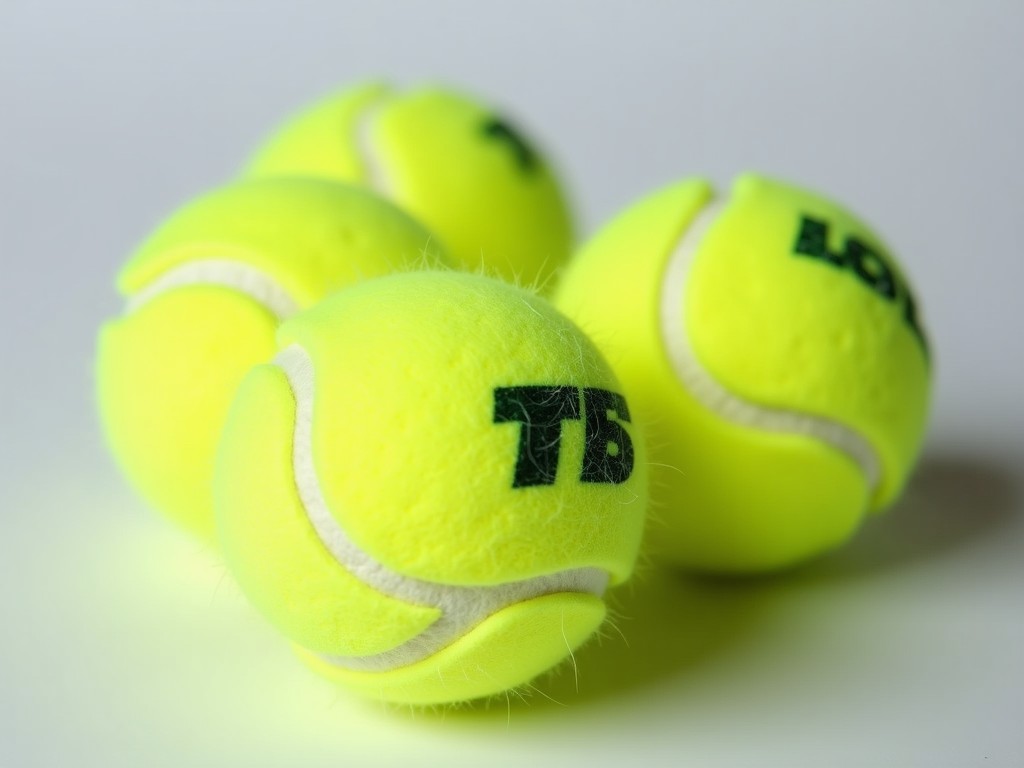
China Tennis Balls For Sale In Bulk
Bulk orders of tennis balls sourced from Chinese manufacturers are commonly specified by international standards for diameter, weight, internal pressure, and bounce resilience. These parameters
China Tennis Balls for Bulk Purchase
Bulk orders of tennis balls sourced from Chinese manufacturers are commonly specified by international standards for diameter, weight, internal pressure, and bounce resilience. These parameters determine suitability for training, recreational play, and low‑level competition.
Technical Specifications
| Parameter | Typical Value | Customizable Range |
|---|---|---|
| Diameter | 6.54 mm – 6.86 mm | ±0.1 mm upon request |
| Weight | 56.0 g – 59.4 g | Adjustable via core density |
| Internal Pressure | 1.65 kg / cm² (≈12 psi) | 1.4 – 1.8 kg / cm² |
| Rebound Height (100 cm drop) | 135 cm – 147 cm | Tunable by felt thickness |
| Felt Thickness | 2.0 mm – 2.5 mm | Customizable for surface speed |
| Core Rubber Hardness (Shore A) | 45 – 55 | Adjustable for durability vs. feel |
Material Composition
The core consists of natural or synthetic rubber compounded with sulfur and accelerators to achieve targeted hardness and elasticity. The outer felt is a blend of wool and nylon fibers, tightly woven to provide consistent wear resistance and optimal ball‑flight characteristics.
- Core: rubber polymer, filler, crosslinking agent
- Felt: 68 % wool, 32 % nylon (typical)
- Adhesive: water‑based latex for core‑felt bonding
Performance Characteristics
Balls with a core hardness of 50 Shore A and a felt thickness of 2.2 mm exhibit a bounce variance of less than 3 % across a temperature range of 5 °C to 35 °C, meeting ITF Type 2 specifications for pressure‑less balls. The felt‑rubber interface shear strength exceeds 0.4 MPa, reducing delamination during high‑impact strokes.
Applications
Training facilities favor bulk packs because consistent bounce and wear rate allow coaches to repeat drills without frequent ball replacement. Community courts benefit from the lower cost per unit while maintaining ITF‑approved bounce for recreational matches. Manufacturers of ball‑machines source these balls for durability under repetitive high‑speed impacts.
- Academy drills – repeatability of bounce reduces variable error
- Public courts – cost‑effective replacement cycle
- Automated feeding systems – resistance to felt wear prolongs machine uptime
Customization Options
Buyers may specify core pressure, felt composition, or surface finish to align with regional climate or playing surface. Custom logos can be applied via sublimation printing on the felt without altering thickness.
- Internal pressure: 1.2 – 2.0 kg / cm²
- Felt blend: wool/nylon ratios adjustable for speed
- Surface finish: standard, extra‑duty, or high‑visibility
- Logo printing: single‑color or full‑color, up to 30 mm diameter
Quality Assurance
Each production lot undergoes dimensional sampling (diameter, weight) at a 1 % AQL, pressure verification using calibrated gauges, and bounce testing on a standardized steel surface. Visual inspection checks for felt uniformity, seam integrity, and absence of surface defects.
- Dimensional tolerance: ±0.05 mm (diameter), ±0.5 g (weight)
- Pressure tolerance: ±0.05 kg / cm²
- Bounce tolerance: ±2 cm drop height
Packaging and Shipping
Balls are packed in pressurizable polypropylene tubes (3 balls per tube) or mesh bags (48 balls per bag) to maintain internal pressure during transit. Cartons are constructed from double‑wall corrugated fiberboard with edge protectors, achieving a stacking strength of 600 kg.
| Package Type | Units per Carton | Typical Carton Dimensions (L×W×H) |
|---|---|---|
| Pressurized tubes (3 balls) | 96 tubes (288 balls) | 400 mm × 300 mm × 200 mm |
| Mesh bags (48 balls) | 20 bags (960 balls) | 500 mm × 350 mm × 250 mm |
| Bulk loose (no internal packaging) | 1000 balls | 450 mm × 300 mm × 300 mm |
Lead Time and Ordering
Standard production cycles range from 15 to 25 working days after receipt of approved artwork and deposit, depending on order volume and customization complexity. Expedited runs are available for orders exceeding 50 000 balls, with lead times shortened to 10 days.
To initiate a quotation, provide the required quantity, desired pressure or bounce specification, packaging preference, and any branding files. Sample units can be dispatched upon request for validation before full‑scale production.
Frequently Asked Questions
- Can dimensions be customized? Yes, diameter and weight tolerances can be adjusted within ITF limits; consult engineering for non‑standard sizes.
- What information is required before quotation? Quantity, target pressure or bounce, packaging type, logo artwork, and delivery destination.
- What materials are available for the felt? Standard wool/nylon blend; optional 100 % nylon for high‑durability applications.
- How is quality inspected? Dimensional checks, pressure gauges, bounce tests, and visual inspection per lot.
- What packaging methods are available? Pressurized tubes, mesh bags, or bulk loose in cartons.
- How are export shipments protected? Double‑wall cartons with corner protectors, moisture‑barrier liners, and strapping.
- What is the typical production lead time? 15–25 days for standard orders; expedited options for large volumes.
- How are samples arranged? Samples are shipped via express courier after approval of specifications; costs are credited against the first order.
Get a Quote
Provide your project details to receive a technical quotation and lead‑time estimate.
Request Quote


