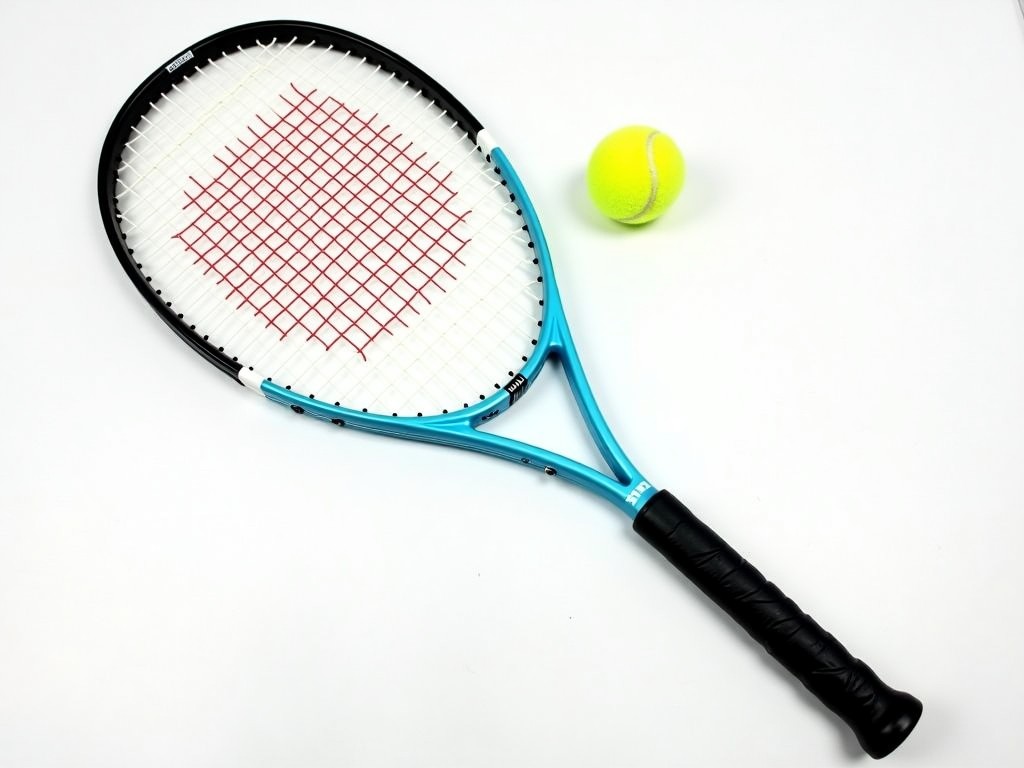
Custom Left Handed Lightweight Tennis Racket Supplier
The supplier focuses on producing tennis rackets engineered specifically for left‑handed players who require reduced swing weight and precise balance. Each racket is built to meet individual
Custom Left‑Handed Lightweight Tennis Racket Supplier
The supplier focuses on producing tennis rackets engineered specifically for left‑handed players who require reduced swing weight and precise balance. Each racket is built to meet individual performance targets rather than relying on generic stock models.
Technical Specifications
Typical frame weight ranges from 240 g to 260 g when unstrung, delivering a swing weight below 280 kg·cm² for rapid maneuverability. Balance points are adjustable between 300 mm and 340 mm from the butt cap, allowing players to fine‑tune head‑light or even‑balance characteristics.
Stiffness (RA) values fall within 55‑65, providing a blend of power transmission and vibration damping suitable for competitive play. String pattern options include 16×19 and 18×20, with custom grommet hole placement available to optimize string bed response.
Materials and Construction
Frames are fabricated from high‑modulus carbon fiber prepreg with a fiber volume fraction of approximately 60 %, yielding a tensile strength exceeding 4 GPa. Layup sequences incorporate bidirectional and unidirectional plies to achieve directional stiffness tailored to left‑handed swing dynamics.
The grip core uses a lightweight polyurethane foam with a density of 0.25 g/cm³, overlaid with a synthetic leather wrap that provides a friction coefficient of 0.45 µ for consistent grip under sweat. All joints are cured at 180 °C under 1.2 MPa pressure to ensure void‑free consolidation.
Customization Options
Customers can specify parameters that directly influence playing feel, rather than selecting from preset categories. Adjustments are made in the design phase to maintain structural integrity while meeting performance goals.
- Weight adjustment in 5 g increments via internal tungsten weighting or carbon layup thickness
- Balance point shift of ±10 mm through asymmetric butt‑cap reinforcement
- Grip size ranging from 4 in to 4 ⅝ in with optional perforated ventilation channels
- String pattern customization including hybrid patterns and variable tension zones
- Paint finish options: matte, gloss, or satin with UV‑stable pigments
Applications
Left‑handed players generate distinct angular momentum and wrist torque compared to right‑handed counterparts, which influences racket twist during off‑center impacts. A racket with a lower polar moment of inertia reduces unwanted rotation, improving shot consistency for serves and forehands executed from the ad court.
In doubles, left‑handed partners often occupy the ad side, requiring quick directional changes and precise volleys at the net. A head‑light balance enhances maneuverability for rapid net approaches while maintaining sufficient mass for stable block returns.
Quality Assurance
Each racket undergoes dimensional verification using a coordinate measuring machine with a tolerance of ±0.2 mm on length, width, and throat geometry. Weight is measured to ±0.5 g using a calibrated analytical balance before and after stringing.
Dynamic stiffness is assessed via a three‑point bend test at 65 mm span, recording load‑deflection curves to ensure RA values stay within the specified band. Additionally, a 50‑hour fatigue cycle simulates 2,000 impact loads at 30 m/s to verify resistance to delamination.
| Parameter | Standard Range | Customizable Range |
|---|---|---|
| Unstrung Weight (g) | 240‑260 | 220‑280 (upon request) |
| Balance Point (mm from butt) | 300‑340 | 280‑360 (upon request) |
| Stiffness (RA) | 55‑65 | 50‑70 (upon request) |
| String Pattern | 16×19, 18×20 | 14×18, 16×20, hybrid (upon request) |
| Grip Size (in) | 4.0‑4.625 | 3.75‑5.0 (upon request) |
Frequently Asked Questions
Can the racket weight be adjusted after initial manufacture?
Weight adjustments are feasible only during the layup stage; post‑cure modifications would compromise structural integrity. Customers should specify target weight at quotation.
What information is required to obtain a quote?
Required details include desired unstrung weight, balance point, stiffness preference, grip size, string pattern, and any cosmetic finish. Providing a player’s swing speed and typical impact location helps refine the layup design.
Which materials are available for the frame?
Standard offering uses high‑modulus carbon fiber prepreg. Alternative fiber systems such as glass‑carbon hybrids or aramid reinforcements are available upon request for specific damping or cost targets.
How is quality inspected before shipment?
Each unit passes visual inspection for surface defects, dimensional checks, weight verification, and stiffness testing. A random sample undergoes ultrasonic C‑scan to detect internal voids or delamination.
What packaging methods are used for export?
Rackets are placed in individual corrugated sleeves with corner protectors, then packed in double‑wall cartons rated for 25 kg burst strength. Palletized shipments include stretch film and corner boards to prevent movement.
Get a Quote
To discuss your specific left‑handed racket requirements, provide the performance targets outlined above. Our engineering team will review the feasibility and return a detailed proposal including lead time and tooling considerations.
Request a quotation to begin the customization process.


