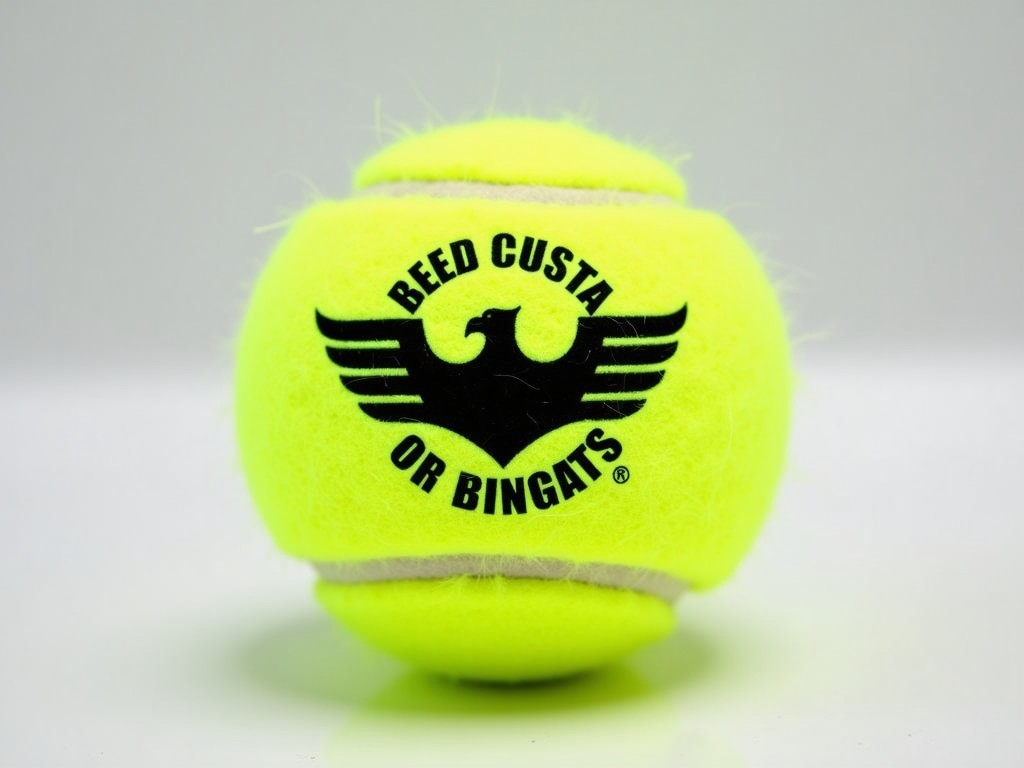
Custom Printed Tennis Balls Top Manufacturer
Custom printed tennis balls combine standard performance characteristics with surface graphics for branding, promotional events, or tournament identification. The printing process must preserve the
Custom Printed Tennis Balls – Manufacturer Overview
Custom printed tennis balls combine standard performance characteristics with surface graphics for branding, promotional events, or tournament identification. The printing process must preserve the ball's aerodynamic properties, felt integrity, and internal pressure while achieving durable ink adhesion. Manufacturers select specific felt substrates, inks, and curing methods to meet these requirements.
Technical Specifications
Key dimensional and material parameters define the baseline for any custom printable tennis ball. The following table lists typical values that can be adjusted according to project requirements.
| Parameter | Typical Value | Adjustable Range |
|---|---|---|
| Diameter | 6.54 mm–6.86 mm | ±0.2 mm |
| Weight | 56.0 g–59.4 g | ±0.5 g |
| Internal Pressure | 1.57 kg/cm²–1.66 kg/cm² | ±0.05 kg/cm² |
| Felt Composition | 68 % wool / 32 % nylon (typical) | Wool 60‑75 %, nylon 25‑40 % |
| Printing Method | Sublimation or UV‑curable inkjet | Depends on artwork complexity |
| Ink Curing Temperature | 150 °C–180 °C (sublimation) | Adjustable per ink type |
Material Selection
The outer felt is usually a blend of wool and nylon fibers chosen for resilience and consistent ball bounce. Wool provides natural elasticity and moisture absorption, while nylon adds abrasion resistance and dimensional stability. Blend ratios are tuned to balance feel, durability, and print surface smoothness.
Customization Options
Customization primarily concerns the graphic application on the felt surface. Options include color, resolution, coverage area, and ink chemistry to match branding requirements.
- Single‑color logo – ideal for simple marks, low ink usage, fast curing.
- Multi‑color artwork – supports gradients and detailed images using CMYK sublimation.
- Full‑surface pattern – repeatable designs covering the entire felt area for high visibility.
- Spot UV coating – adds glossy highlights on selected logo areas without affecting ball dynamics.
Manufacturing Process & Quality Control
Production begins with standard pressurized tennis ball cores that are wrapped with the selected felt blend. The felt‑covered cores undergo printing, where ink is transferred onto the felt using the chosen method. After printing, balls pass through a curing tunnel to set the ink, then are re‑pressurized and inspected.
- Weight verification – ensures each ball meets the specified mass tolerance.
- Diameter measurement – confirms conformance to ITF limits.
- Pressure check – validates internal bounce characteristics.
- Print adhesion test – uses tape pull‑off to assess ink bonding strength.
- Visual inspection – detects registration errors, ink smudges, or missing graphics.
Applications in Sports & Promotional Use
Beyond standard play, printed tennis balls serve distinct functions in various settings. Their visual distinction helps organizers track balls during fast‑paced drills or multi‑court tournaments. Promotional versions act as mobile advertising that retains the ball’s performance properties.
- Tournament identification – different colors for each court or match round.
- Brand activation – logos printed on balls used in fan‑engagement events.
- Coaching aids – numbered or zoned balls for drill tracking.
- Memorabilia – event‑specific designs sold as souvenirs.
Frequently Asked Questions
- Can dimensions be customized? Diameter and weight are kept within ITF tolerances to maintain playability; only surface graphics are altered.
- What information is required before quotation? Artwork files (vector or high‑resolution raster), desired colors, coverage area, and order quantity.
- What materials are available for the felt? Standard wool/nylon blends; alternative synthetic blends are available upon request for specific climate conditions.
- How is quality inspected? Each batch undergoes weight, diameter, pressure, and print adhesion checks before packaging.
Contact for Inquiry
To discuss your custom printed tennis ball project, provide your artwork specifications and target volume. Request a detailed quote to begin the engineering review.


