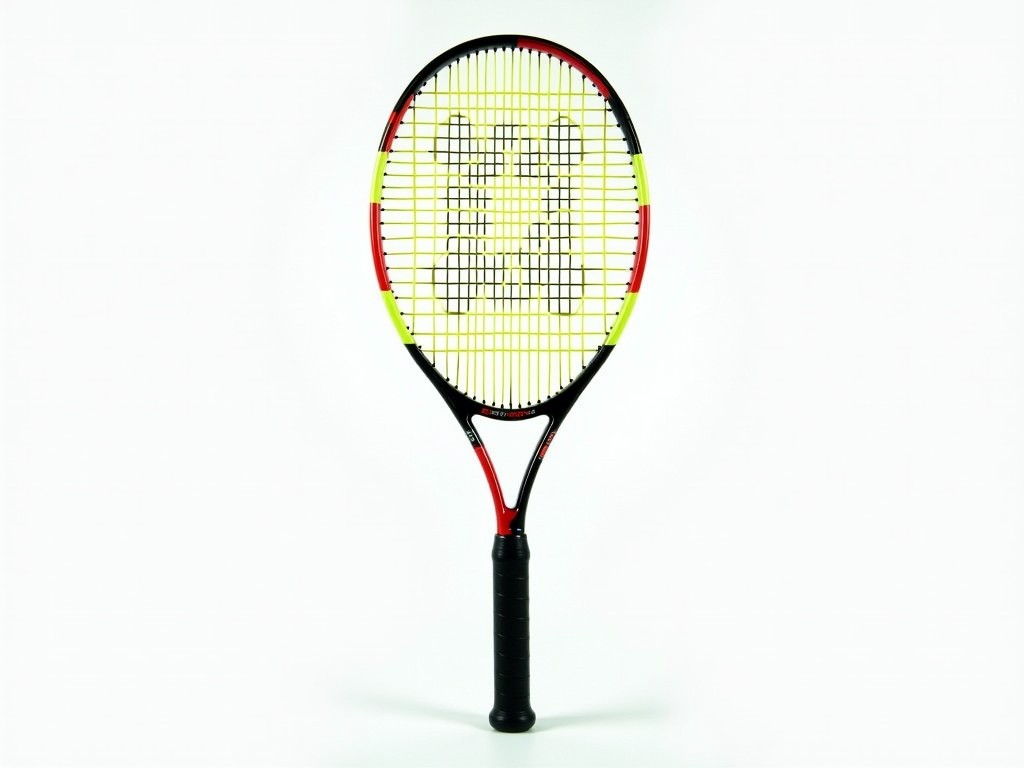
Custom Womens Youth Beginner Tennis Racket Manufacturer
Designing a racket for young female beginners requires attention to biomechanics rather than pure performance metrics. The goal is to reduce shock transmission, promote proper swing mechanics, and
Custom Women's Youth Beginner Tennis Racket Manufacturer
Designing a racket for young female beginners requires attention to biomechanics rather than pure performance metrics. The goal is to reduce shock transmission, promote proper swing mechanics, and build confidence through a tool that feels natural in the hand. This page explains the engineering considerations that guide our custom manufacturing process.
Key Design Parameters for Youth Women Beginners
Length typically ranges from 23 to 25 inches, balancing reach with maneuverability for players under 140 cm tall. Head size is kept between 95 and 105 square inches to enlarge the sweet spot while maintaining controllability. Weight is targeted at 220–260 grams unstrung, with a balance point 280–310 mm from the butt cap to encourage a head‑light feel that reduces wrist strain.
Stiffness (RA) is limited to 58–64 to dampen vibration and lower the risk of elbow discomfort. Grip circumference is offered in 3.5–3.8 inches, matching smaller hand sizes and allowing for overgrip adjustments without altering the overall balance. These parameters are interdependent; changing one influences swing weight and perceived power, so adjustments are made holistically.
Material Selection and Construction Methods
Frame construction commonly uses a graphite‑basalt hybrid layup, providing a modulus of elasticity around 45 GPa while keeping density below 1.55 g/cm³. The basalt fibers improve impact resistance and reduce high‑frequency vibrations transmitted to the arm. For cost‑sensitive projects, an aluminum alloy (6061‑T6) core with a thin graphite overwrap is available, delivering a modulus near 70 GPa and a higher damping coefficient.
String bed options include nylon multifilament with a coefficient of friction below 0.3, or polyester monofilament for players seeking greater spin potential. Grommets are molded from thermoplastic polyurethane with a shore hardness of 85A to prevent string wear. The manufacturing process involves vacuum bag molding at 180 °C for 90 minutes, followed by post‑cure annealing to relieve internal stresses.
Customization Choices
- Length: adjustable in 0.5‑inch increments from 23 to 26 inches.
- Head size: variable from 90 to 110 in² in 5‑in² steps.
- Weight: adjustable via internal weighting tapes, ranging 200–300 g unstrung.
- Balance point: configurable from 260 to 340 mm from butt cap.
- String tension: recommended range 45–55 lbs, customizable per player preference.
- Grip size: offered in 3.5, 3.75, 4.0 inches with optional overgrip layers.
- Color and graphics: full‑color sublimation on the shaft and head cover.
Manufacturing Process and Quality Assurance
Each racket undergoes inline weight measurement with a tolerance of ±2 grams and balance verification using a laser‑based pivot system, accurate to ±0.5 mm. Swing weight is calculated from the mass distribution and verified against a target range of 180–210 kg·cm² for beginner rackets. Residual vibration is assessed with a piezoelectric sensor; acceptable peak acceleration is below 15 g at the handle.
Visual inspection checks for resin voids, fiber misalignment, and surface finish defects using 10× magnification. A random sample of 1 % from each batch is subjected to a fatigue test simulating 5,000 impact cycles at 30 m/s; no delamination or cracking is permitted. All test data are retained for traceability and can be provided upon request.
Typical Specification Ranges
| Parameter | Adjustable Range | Typical Target for Beginner |
|---|---|---|
| Length (in) | 23 – 26 | 24 |
| Head size (in²) | 90 – 110 | 100 |
| Weight unstrung (g) | 200 – 300 | 240 |
| Balance point (mm from butt) | 260 – 340 | 300 |
| String tension (lbs) | 45 – 55 | 50 |
| Grip circumference (in) | 3.5 – 4.0 | 3.75 |
Application Benefits for Young Female Players
A racket matched to the player’s stature reduces the torque required to initiate a swing, lowering the risk of shoulder overuse injuries common in early training. The enlarged sweet spot increases ball‑contact consistency, which accelerates skill acquisition by providing clearer feedback on timing and racquet angle. Psychological studies indicate that equipment perceived as “right‑sized” improves adherence to practice routines by up to 20 % in novice athletes.
The head‑light balance encourages a natural wrist‑lay‑back, promoting proper biomechanics that translate to more advanced strokes as the player matures. By minimizing shock transmission through selective material damping, the racket helps prevent medial epicondylitis, a frequent complaint among junior players using overly stiff frames. These factors collectively support long‑term development and reduce the likelihood of early discontinuation due to discomfort or frustration.
For engineers, procurement managers, or OEM partners seeking a technically sound, adaptable solution for youth women’s beginner tennis rackets, we invite you to discuss your specific performance targets and production volumes. Contact our team to begin a collaborative design review.


