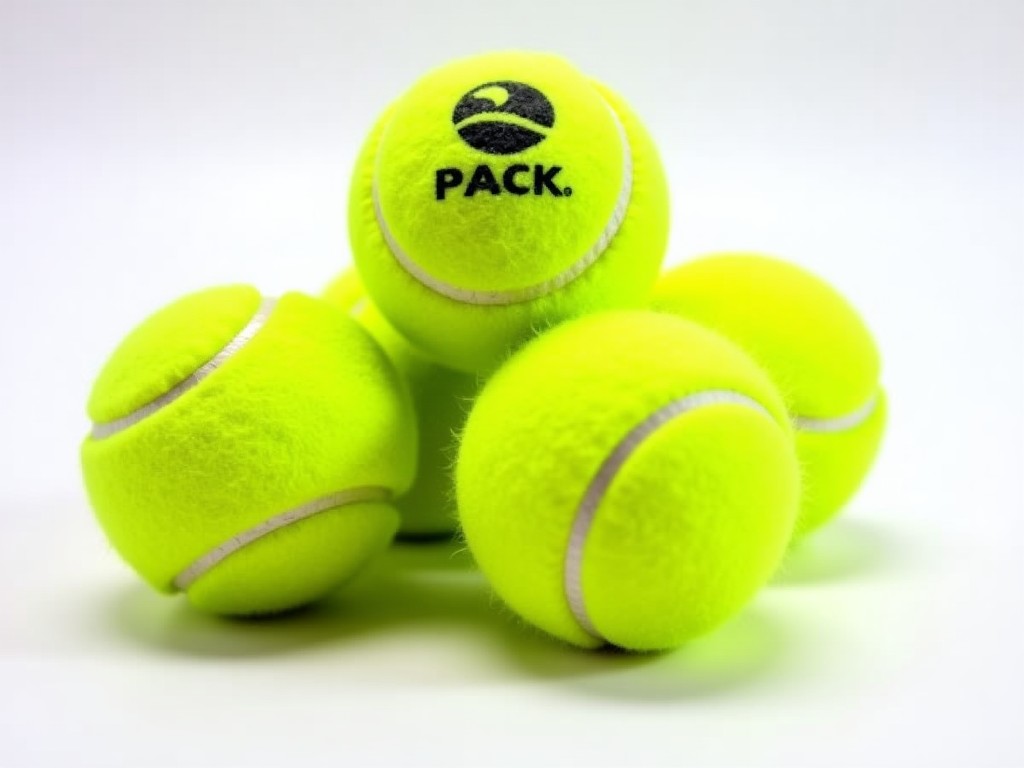
Low Price Best Tennis Balls For Beginners Factory
This product is designed for entry‑level play where consistent bounce, low cost and durability are primary concerns. The balls meet ITF‑approved size and weight tolerances while using a felt
Low Price Tennis Balls for Beginners – Factory Direct
This product is designed for entry‑level play where consistent bounce, low cost and durability are primary concerns. The balls meet ITF‑approved size and weight tolerances while using a felt composition optimized for slower court speeds typical of beginner training.
Key Specifications
| Parameter | Typical Value | Adjustable Range |
|---|---|---|
| Diameter | 6.54 mm – 6.86 mm | ±0.1 mm per lot |
| Weight | 56.0 g – 59.4 g | ±0.5 g per lot |
| Internal Pressure | 0.8 bar – 1.0 bar (nitrogen filled) | Customizable per request |
| Felt Thickness | 1.9 mm ± 0.1 mm | Available in 1.7 mm or 2.1 mm |
| Rebound Height (ASTM F1887) | 135 cm ± 5 cm (dropped from 254 cm) | Adjustable via core formulation |
Material Composition
The core consists of a rubber blend formulated for low modulus, providing the soft feel required for beginner strokes while retaining sufficient elasticity for consistent bounce. The outer felt is a nylon‑wool blend with a tight weave that reduces flaking and extends service life on abrasive surfaces.
- Core: natural rubber (60 %) + synthetic styrene‑butadiene rubber (40 %)
- Felt: 70 % nylon, 30 % wool, twisted yarn construction
- Adhesive: water‑based latex, cured at 120 °C for 2 min
- Internal gas: high‑purity nitrogen, pressure‑regulated
Manufacturing Process
Production begins with precision molding of the rubber cores to ±0.02 mm dimensional tolerance. After curing, cores are pressurized with nitrogen in a sealed chamber, then transferred to the felting line where the felt is wrapped and bonded under controlled temperature and humidity. Each ball undergoes a final buffing step to achieve uniform surface texture.
Inline vision systems check roundness and surface defects at a rate of 200 units/min, rejecting any ball that deviates beyond the specified tolerance before packaging.
Quality Control Philosophy
Quality assurance follows a three‑tier approach: in‑process monitoring of core weight and pressure, statistical process control of felt adhesion strength, and end‑of‑line performance testing for rebound and deformation. Acceptance criteria are based on ASTM F1887 and ITF Appendix I, with a target AQL of 0.65 % for critical defects.
All test data are logged in a traceable database linked to batch numbers, enabling rapid investigation of any field performance concerns.
Applications
These balls are ideal for school physical‑education programs, community tennis clubs, and beginner coaching academies where cost per session is a key purchasing factor. The lower internal pressure reduces ball speed, giving novice players more reaction time to develop proper swing mechanics without the intimidation of high‑velocity rebounds.
Because the felt is engineered for durability on hard courts and synthetic turf, the balls maintain performance over extended use, reducing the frequency of replacement and the associated logistical burden for facility managers.
Comparison with Standard Tournament Balls
| Attribute | Beginner‑Grade Ball | Standard Tournament Ball |
|---|---|---|
| Internal Pressure | 0.8 – 1.0 bar | 1.4 – 1.6 bar |
| Rebound Height | 135 cm ± 5 cm | 147 cm ± 5 cm |
| Felt Wear Resistance (Taber cycles) | ≈ 1200 cycles | ≈ 2000 cycles |
| Target Player Level | Beginner, recreational | Intermediate‑advanced, competition |
Frequently Asked Questions
Can the diameter or weight be customized for specific training programs?
Yes. Diameter can be adjusted within ±0.2 mm and weight within ±1 g per lot, subject to minimum order quantity.
What information is required to obtain a quotation?
Required details include requested quantity, delivery destination, any custom specifications (pressure, felt thickness), and preferred packaging (bulk carton or pressurized can).
Which materials are available for the felt?
Standard nylon‑wool blend is stocked; alternatives such as 100 % nylon or polyester‑wool mixes are available upon request.
How is quality inspected before shipment?
Each batch undergoes 100 % visual inspection, pressure verification on 10 % of units, and rebound testing on 5 % of units according to ASTM F1887.
What packaging options protect the balls during export?
Balls can be packed in corrugated cartons with internal dividers, or in pressurized cans with silicone gaskets to maintain internal pressure for up to 12 months.
What is the typical production lead time?
Lead time ranges from 15 to 25 working days after receipt of confirmed purchase order, depending on order size and customization level.
For further technical details, sample requests, or to discuss a customized solution for your facility, please contact our sales engineering team.
Request a Quote


