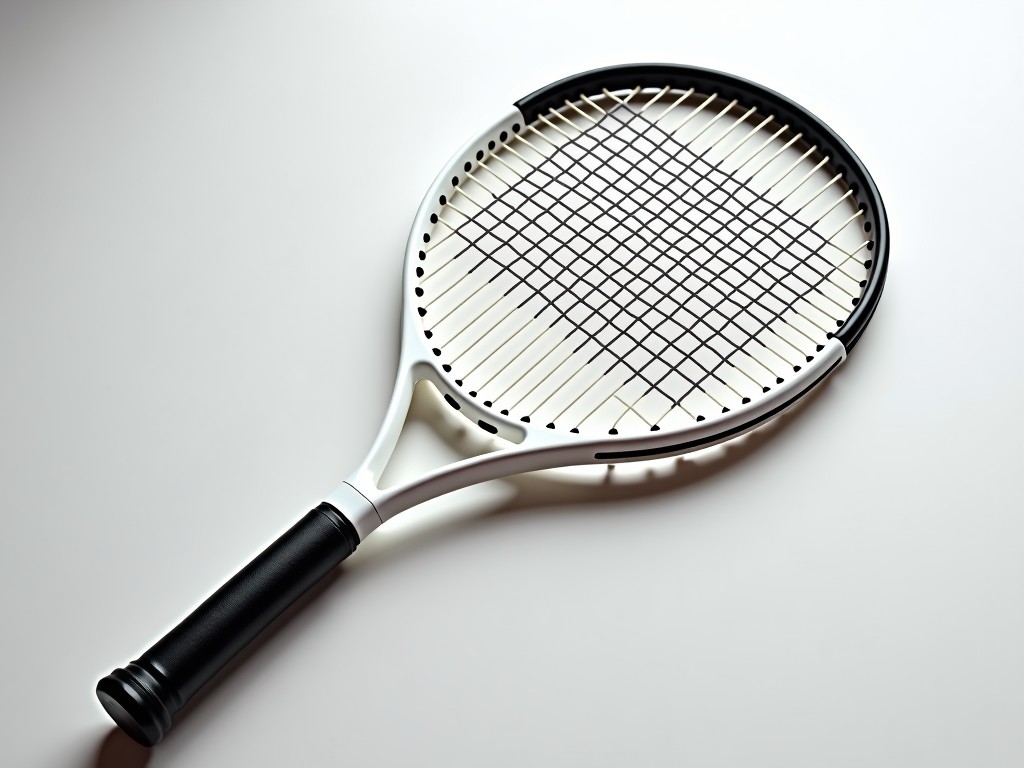
Oem All White Tennis Racket Manufacturer
Producing a tennis racket that meets OEM specifications requires control over material composition, frame geometry, and surface finish. An all‑white appearance introduces additional considerations
OEM All‑White Tennis Racket Manufacturing
Producing a tennis racket that meets OEM specifications requires control over material composition, frame geometry, and surface finish. An all‑white appearance introduces additional considerations for paint adhesion, UV stability, and weight balance, which must be addressed during design and production.
Frame Materials and Construction
The racket frame is typically built from a lay‑up of carbon fiber prepreg sheets, chosen for their high tensile strength (≈4,000 MPa) and low density (≈1.6 g/cm³). For an all‑white finish, the outer layers are coated with a white polyurethane‑based paint system that adds less than 2 g of mass per racket while maintaining flexural rigidity.
Core reinforcement may include aramid or glass fiber inserts at the throat and handle zones to dampen vibration. These inserts are positioned using computer‑controlled placement to ensure consistent stiffness distribution across the hitting surface.
Manufacturing Process Overview
Production begins with cutting prepreg to precise patterns, followed by lay‑up in a heated mold under vacuum pressure (≈0.8 bar) at 180 °C for 60 minutes. This cycle achieves a void content below 1 %, critical for consistent performance.
After curing, frames undergo CNC trimming to tolerance ±0.1 mm on outer dimensions. The painted finish is applied in a clean‑room spray booth, cured at 80 °C for 30 minutes, then inspected for film thickness (target 25 µm ±5 µm) and color uniformity (ΔE < 2).
Customization Options
- Frame stiffness: adjustable via lay‑up angle (0°/±45°/90°) to achieve RA values from 55 to 70.
- Weight distribution: head‑light, even, or head‑heavy balances achievable by varying throat reinforcement thickness.
- Grip size: standard L0–L5 with optional custom molding for oversized or undersized handles.
- String pattern: 16×19, 18×20, or custom patterns with grommet hole tolerances ±0.05 mm.
Quality Assurance
Each racket undergoes three inspection stages: (1) dimensional verification using laser scanning (±0.05 mm), (2) dynamic stiffness testing on a bench‑top modal analyzer (frequency range 100–500 Hz), and (3) paint adhesion cross‑hatch test per ASTM D3359 (target rating 5B). Only units passing all criteria are cleared for shipment.
Statistical process control charts monitor key parameters (cure temperature, paint thickness, weight) with control limits set at ±3σ. This approach reduces variability and supports predictable lead times for OEM programs.
Applications
An all‑white racket provides a neutral visual platform for branding, allowing OEMs to apply logos, sponsor marks, or custom graphics without color clash. The uniform surface also simplifies UV‑resistant coating applications, extending outdoor durability in high‑exposure environments.
Clubs and academies that require a consistent appearance across equipment fleets benefit from the repeatable color and finish, reducing visual variation that could affect player perception of equipment uniformity.
Typical Specifications
| Parameter | Typical Value | Adjustable Range |
|---|---|---|
| Frame Length | 685 mm | 670–695 mm |
| Head Size | 645 cm² | 600–680 cm² |
| Strung Weight | 300 g | 285–320 g |
| Balance Point | 320 mm from butt | 300–340 mm |
| Stiffness (RA) | 62 | 55–70 |
| Paint Film Thickness | 25 µm | 20–30 µm |
Frequently Asked Questions
Can dimensions be customized? Yes, frame length, head size, and balance can be adjusted within the ranges shown in the specifications table, subject to tooling availability.
What information is required before quotation? We need target weight, balance, stiffness, grip size, string pattern, and any branding or graphic specifications.
What materials are available for the frame? Standard is high‑modulus carbon fiber prepreg; aramid or glass fiber reinforcement can be added for vibration damping.
How is quality inspected? Each racket undergoes laser dimensional checks, modal analysis for stiffness, and paint adhesion testing per ASTM D3359.
What packaging methods are available? Rackets are packed in individual foam‑lined cartons with optional corrugated master cartons for bulk shipment; anti‑static lining is available upon request.
How are export shipments protected? Pallets are stretch‑wrapped and corner‑reinforced; moisture‑desiccant packs are included for climate‑controlled transit.
What is the typical production lead time? For standard configurations, lead time is 4–6 weeks after final drawing approval; custom colors or graphics may add 1–2 weeks.
How are samples arranged? We can provide up to two prototype rackets for evaluation; shipping costs are borne by the requester.
For further technical discussion or to request a formal quotation, please contact our engineering team.
Contact Us for OEM Partnership


