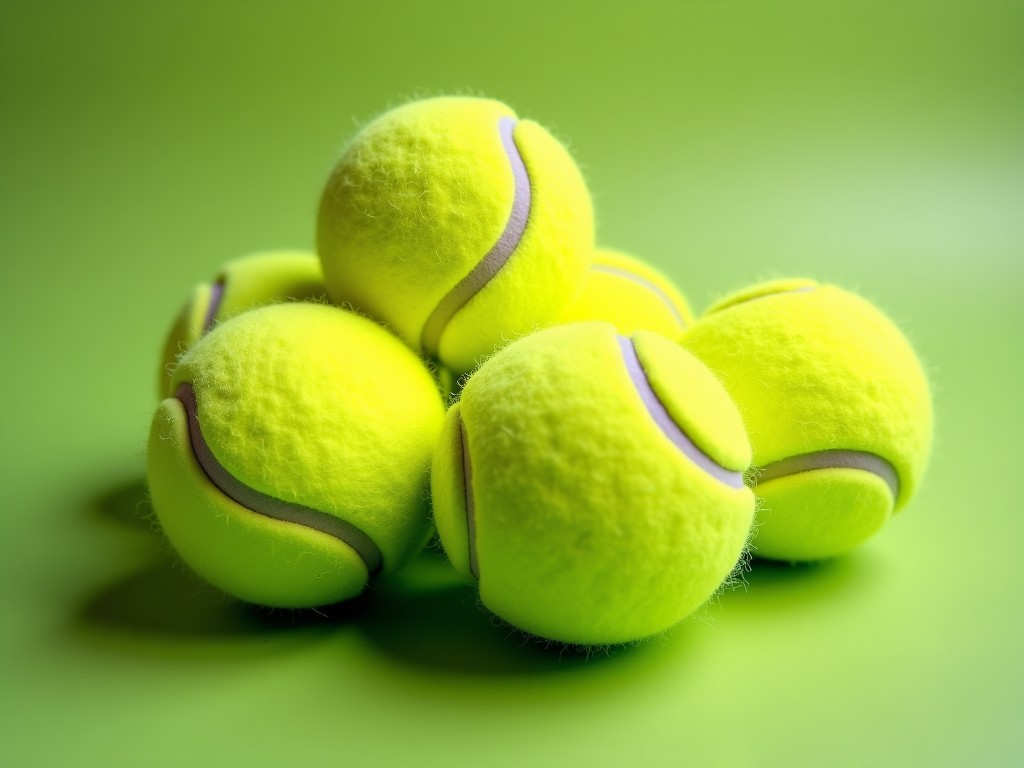
Wholesale Bulk Tennis Balls Manufacturer
Tennis balls used in training, coaching, and recreational play must meet strict dimensional and dynamic standards to ensure consistent performance across large volumes. Bulk purchasing decisions
Wholesale Bulk Tennis Balls Manufacturer
Tennis balls used in training, coaching, and recreational play must meet strict dimensional and dynamic standards to ensure consistent performance across large volumes. Bulk purchasing decisions hinge on understanding how material composition, internal pressure, and felt construction affect bounce, durability, and visibility under varied court conditions.
Material Composition
The core consists of a natural rubber compound formulated for specific modulus and rebound characteristics, typically measured in Shore A hardness between 40 and 50. A hollow cavity is pressurized with air or nitrogen to a target internal pressure, which directly influences the ball’s rebound height when dropped from a standard height.
Surrounding the core is a woven felt cover made from a blend of wool and nylon fibers, engineered to provide controlled friction and wear resistance. Felt thickness is maintained within a tolerance of ±0.2 mm to ensure uniform drag and flight stability.
Manufacturing Process
Rubber pellets are injection‑molded into half‑shells, then cured under precise temperature and pressure cycles to achieve the desired elasticity. The shells are joined, pressurized, and sealed before the felt is applied using a specialized adhesive that withstands repeated impact.
After felt application, each ball undergoes a brief tumbling process to align the fibers, followed by a final inspection for surface uniformity and seam integrity.
Technical Specifications
| Parameter | Typical Value | Tolerance |
|---|---|---|
| Diameter | 67 mm | ±0.5 mm |
| Weight | 58 g | ±0.5 g |
| Internal Pressure | 0.80 bar (gauge) | ±0.02 bar |
| Rebound Height (drop from 2.5 m) | 135 cm | ±2 cm |
| Felt Thickness | 2.0 mm | ±0.2 mm |
Customization Options
- Felt color selection (standard optic yellow, high‑visibility orange, or custom dyed shades)
- Internal pressure adjustment for altitude‑specific play or low‑bounce training
- Logo or branding printing on the felt surface using UV‑stable inks
- Alternative core rubber formulations for extended durability on abrasive courts
- Special packaging configurations such as shrink‑wrapped trays or reusable bulk containers
Quality Assurance
Each production lot is subjected to a statistical sampling plan where weight, diameter, and rebound are measured against the tolerances listed above. Visual inspection checks for felt irregularities, seam defects, and surface contamination. Pressure retention is verified after a 24‑hour hold period to ensure no premature leakage.
Test results are documented in batch records, and any deviation beyond acceptable limits triggers a root‑cause review before the lot is released for shipment.
Applications
Coaching academies and school programs benefit from bulk supplies that guarantee uniform bounce, allowing athletes to develop consistent stroke mechanics without variable equipment interference.
Tennis clubs hosting tournaments or league matches require large quantities that meet ITF‑approved specifications, reducing the risk of ball‑related disputes during play.
Promotional events and retail distributors often request customized felt colors or logo‑printed balls to enhance brand visibility while maintaining performance standards.
Packaging & Logistics
Bulk tennis balls are packed in corrugated cartons designed to protect against compression and moisture ingress. Each carton holds a defined count (e.g., 48 balls) and is sealed with adhesive tape that maintains integrity during transit.
Cartons are stacked on pallets with interlocking patterns and secured with stretch film. For international shipments, desiccant packs are included to control humidity, and pallets are labeled with handling instructions to prevent exposure to extreme temperatures.
Frequently Asked Questions
Can the internal pressure be adjusted for specific altitudes?
Yes, the core can be pressurized to different target values during molding to compensate for reduced atmospheric pressure at higher elevations, ensuring consistent bounce performance.
What information is required to receive a quotation?
Please provide the desired quantity, felt color or customization details, pressure specification if non‑standard, packaging preference, and destination for freight estimation.
How is quality inspected before shipment?
Each lot undergoes dimensional checks, weight verification, rebound testing, and visual inspection per the sampling plan described in the Quality Assurance section.
What packaging options are available for bulk orders?
Standard options include corrugated cartons of 48 balls, shrink‑wrapped trays of 24 balls, and reusable bulk containers upon request. Custom branding on cartons can also be arranged.
Get in Touch
For technical data sheets, sample requests, or to discuss a custom specification, contact our engineering team.
Request a Quote


