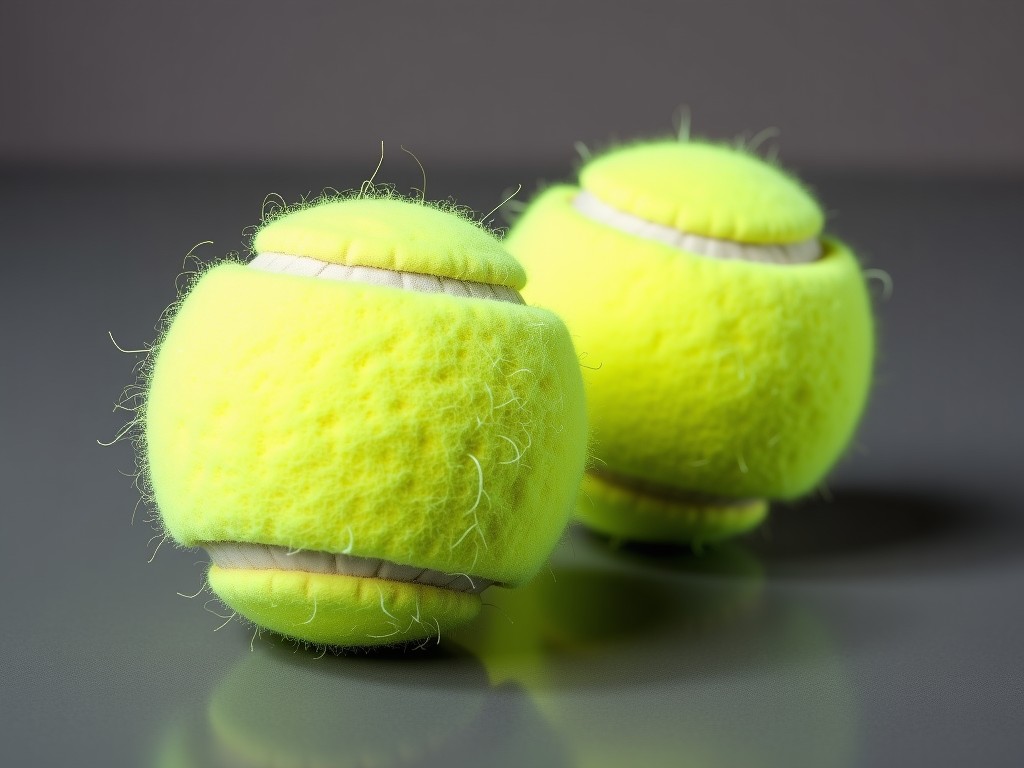
Wholesale Different Types Of Tennis Balls Exporter
The supplier offers a wholesale catalogue of tennis balls engineered to meet ITF specifications for various playing surfaces and climatic conditions. Each variant is produced in bulk for
Wholesale Different Types of Tennis Balls Exporter
The supplier offers a wholesale catalogue of tennis balls engineered to meet ITF specifications for various playing surfaces and climatic conditions. Each variant is produced in bulk for distributors, clubs, and institutional buyers who require consistent performance across large volumes. Export shipments comply with international packaging standards to maintain pressure and felt integrity during transit.
Product Comparison Table
| Type | Typical Use | Internal Pressure (psi) | Weight (g) | Diameter (mm) | Felt Composition | Bounce Height (cm) |
|---|---|---|---|---|---|---|
| Regular Duty | Indoor clay courts | 12 | 57.0 | 67.0 | 68% nylon / 32% wool | 138 |
| Extra Duty | Outdoor hard courts | 12 | 58.5 | 67.5 | 70% nylon / 30% wool | 140 |
| Pressureless | Training & high‑volume use | 0 (non‑pressurized) | 59.0 | 68.0 | 80% nylon / 20% wool | 135 |
| High Altitude | Locations >1,200 m | 10 | 56.0 | 66.5 | 65% nylon / 35% wool | 132 |
Materials and Construction
The core consists of a rubber compound molded to precise dimensions, then infused with pressurized nitrogen or left pressureless depending on the type. A felt covering is wrapped around the core using a tension‑controlled winding process; the felt is a blended nylon‑wool fabric engineered for abrasion resistance and consistent friction. Seam integrity is achieved through a heat‑activated adhesive that bonds the felt edges without adding measurable thickness.
Performance Characteristics
Bounce height is measured by dropping the ball from a height of 100 inches onto a concrete surface; typical values range from 132 cm to 140 cm across the product line. Weight tolerance is held to ±0.5 g to ensure uniform flight dynamics, while diameter stays within the ITF limits of 65.41–68.58 mm. Pressure retention tests show less than 5 % loss over a six‑month storage period for pressurized models, satisfying the demands of long‑haul distribution.
Typical Applications
- Professional tournament play on outdoor hard courts where extra duty felt provides enhanced durability.
- Club and recreational facilities that rotate balls frequently; pressureless versions reduce maintenance costs.
- Training academies requiring large volumes of consistent‑bounce balls for drills and match simulation.
- School and community programs where low‑cost, high‑visibility balls support beginner development.
- High‑altitude venues where reduced internal pressure compensates for thinner air, preserving bounce characteristics.
Quality Control Philosophy
Each production batch undergoes a three‑stage inspection: first, a gravimetric check verifies weight against the ±0.5 g specification; second, a pressure decay test confirms internal pressure remains within 0.5 psi of target after 24 h; third, a bounce test on a calibrated steel plate measures rebound height, rejecting any unit deviating more than 2 % from the mean. Visual inspection under standardized lighting assesses felt uniformity, seam flatness, and absence of surface defects before packaging.
Customization Options
- Logo printing in up to two spot colors on the felt or sleeve, using water‑based inks that do not affect ball dynamics.
- Alternative felt colors (e.g., optic yellow, white, or custom pantone) achievable through dye‑lot changes without altering tensile properties.
- Private‑label packaging options including branded cartons, shrink‑wrapped sleeves, or reusable polymer totes.
- Special marking such as batch numbers or QR codes for traceability, applied via laser etching on the sleeve.
Packaging and Logistics
Standard packaging places three balls in a polyethylene sleeve, four sleeves per cardboard dozen box, and sixty dozen boxes stacked on a pallet. Cartons are constructed from single‑wall corrugated board with a 150 gsm liner, providing sufficient crush resistance for containerized shipments. A thin silica‑gel packet is inserted per box to mitigate humidity‑induced felt deformation. Pallets are stretch‑wrapped and fitted with corner boards to protect against transit damage, enabling direct loading onto 20‑ft or 40‑ft freight containers.
Frequently Asked Questions
Q: Can the internal pressure be adjusted for specific court altitudes?
A: Yes, pressure levels are customizable between 8 psi and 14 psi to match local atmospheric conditions; specify the target altitude during quotation.
Q: What information is required to receive a formal quote?
A: Provide desired ball type, quantity per order, required customization (logo, color, packaging), preferred shipment port, and required delivery date.
Q: How is product quality verified before shipment?
A: Each lot passes weight, pressure, bounce, and visual inspections; a test certificate summarizing the results is available upon request.


