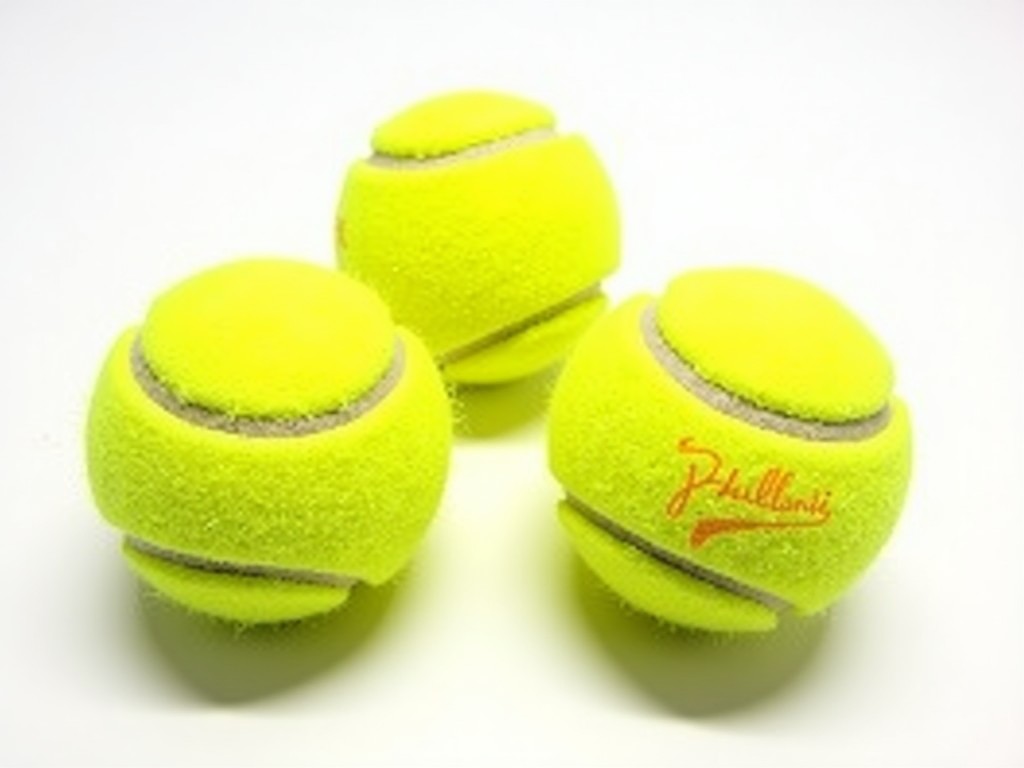
Wholesale Orange Dot Non Pressurized Tennis Balls Supplier
Pressureless tennis balls use a solid rubber core instead of pressurized gas, which removes the need for re‑pressurizing and delivers a stable bounce over thousands of impacts. The orange dot marking
Wholesale Orange Dot Non-Pressurized Tennis Balls
Pressureless tennis balls use a solid rubber core instead of pressurized gas, which removes the need for re‑pressurizing and delivers a stable bounce over thousands of impacts. The orange dot marking aids visibility during drills and ball‑machine sessions.
Technical Specifications
Key dimensional and mechanical parameters are tightly controlled to ensure compatibility with training equipment and consistent play feel.
| Property | Typical Value |
|---|---|
| Diameter | 6.54–6.86 mm |
| Weight | 56.0–59.4 g |
| Bound Height (drop 254 cm onto concrete) | 135–147 cm |
| Core Hardness (Shore A) | 45–55 |
| Felt Cover Thickness | 1.6–2.0 mm |
Material Composition
The core is formulated from a natural rubber blend with specific fillers to achieve the target hardness and rebound. The felt covering consists of a woven nylon‑wool hybrid that provides durability and consistent surface texture. The orange dot is applied using a UV‑stable pigment that resists fading under prolonged outdoor exposure.
Performance Characteristics
Because internal pressure does not decay, bounce height remains within specification after >2,000 impacts, making the balls ideal for repetitive drills. The felt wear rate averages 0.02 mm per 500 hits, allowing extended use before visual degradation affects spin response.
Applications
Training facilities benefit from the elimination of pressure loss, which reduces the need for frequent ball replacement and ensures uniform ball behavior across multiple courts. Ball‑machine operators rely on the predictable trajectory to calibrate feeding mechanisms without adjusting for pressure variation.
- Coaching drills requiring consistent bounce
- Extended‑session practice with ball machines
- Recreational play where pressurization maintenance is impractical
- Indoor facilities with limited access to pressurization equipment
Quality Control & Testing
Each production lot undergoes weight verification (±0.5 g), diameter measurement with laser gauges (±0.02 mm), and bounce testing per ITF Appendix A. Visual inspection checks for felt uniformity, dot adhesion, and surface defects. Statistical process control maintains a defect rate below 0.2 %.
Packaging Options
Bulk shipments are packed in corrugated cartons containing 72 balls (3 × 24‑ball sleeves) with internal dividers to prevent abrasion. Alternative packaging includes mesh bags of 12 balls for quick‑distribution to coaches and recyclable cardboard boxes of 24 balls for retail‑style wholesale.
Customization
Buyers may specify logo printing on the felt, alternative dot colors (green, yellow, white), adjustments to core hardness for softer or firmer feel, and felt composition variations (higher nylon content for increased abrasion resistance). Custom orders require a minimum quantity of 500 balls and a lead time of 3–4 weeks.
| Option | Details |
|---|---|
| Logo Print | Single‑color, up to 30 mm diameter, water‑based ink |
| Dot Color | Orange (standard), green, yellow, white |
| Core Hardness | Shore A 40–60 (adjustable in 5‑point steps) |
| Felt Blend | Nylon/wool ratio 70/30 (standard) or 90/10 for extra durability |
Frequently Asked Questions
Can the balls be used in official tournament play? They are designed for training and practice; official matches require pressurized balls that meet ITF competition standards.
What information is needed for a quotation? Required details include desired quantity, any customization (logo, dot color, core hardness), preferred packaging, and delivery destination.
How are the balls protected during overseas shipment? Cartons are lined with polyethylene film and placed on pallets with corner braces; moisture‑absorbing packets are included to prevent felt degradation.
What is the typical production lead time? Standard orders ship within 10 working days; customized orders require 3–4 weeks after artwork approval.
For further specifications, sample requests, or to discuss a custom solution, please contact our sales team.
Request Quote


