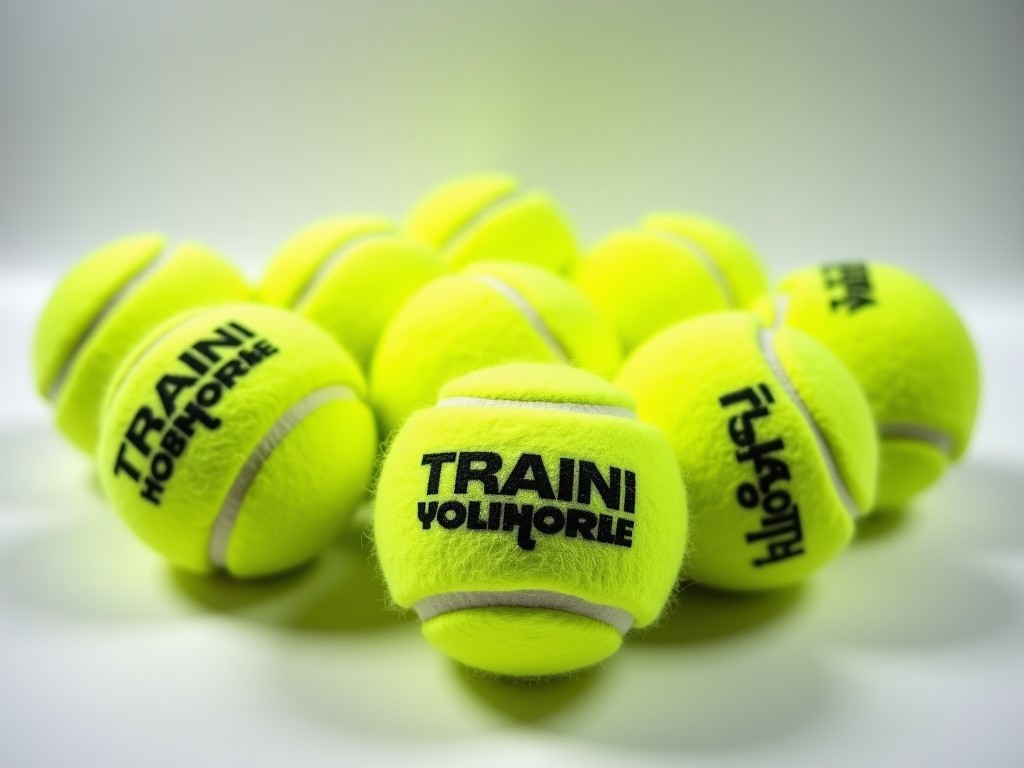
Wholesale Personalized Training Tennis Balls Top Factory
This section explains the core design considerations for training tennis balls that can be customized with logos, colors, or text for bulk procurement. The ball core consists of a pressurized rubber
Wholesale Personalized Training Tennis Balls
This section explains the core design considerations for training tennis balls that can be customized with logos, colors, or text for bulk procurement.
Material Composition and Construction
The ball core consists of a pressurized rubber compound formulated to retain internal pressure for consistent bounce over repeated impacts. The felt covering is a blended wool-nylon fabric with a uniform pile height of 2.0 mm, providing controlled abrasion resistance on court surfaces.
Pressure retention is measured after 500 standard impacts; typical loss is less than 0.02 bar per 100 impacts, ensuring bounce variation stays within ±5 % of the initial value.
Performance Characteristics
- Diameter: 6.54 mm ± 0.02 mm (ITF standard)
- Weight: 56.0 g ± 0.5 g
- Rebound height: 135 cm ± 5 cm when dropped from 254 cm onto concrete
- Felt wear rating: ASTM D3884‑09, 500 cycles
These values are typical for balls intended for high‑volume training where consistent feel reduces player adjustment time.
Customization Options
Personalization is applied via sublimation printing on the felt surface before final curing, allowing full‑color logos, alphanumeric codes, or gradient designs without adding measurable thickness.
- Print area: up to 30 mm diameter centered on the ball
- Color fidelity: Pantone‑matched within ΔE < 2
- Durability: print survives ≥ 2000 impacts with < 5 % fading
Minimum order quantity for custom runs is 500 balls; standard white or yellow stock can be ordered from 100 units.
Manufacturing and Quality Control
Each batch undergoes three inspection stages: (1) raw material tensile testing of rubber compound, (2) in‑line pressure check after molding, and (3) final visual and dimensional audit of printed balls.
| Inspection Point | Method | Acceptance Criteria |
|---|---|---|
| Rubber tensile strength | ASTM D412, die C | ≥ 15 MPa |
| Internal pressure | Digital gauge, 24 h after molding | 1.65 bar ± 0.02 bar |
| Print adhesion | Cross‑hatch tape test (ASTM D3359) | Rating 5B (no removal) |
| Final diameter | Caliper, 3 points | 6.54 mm ± 0.02 mm |
All inspection data are recorded per lot and available upon request.
Packaging and Logistics
Balls are packed in three‑layer corrugated cartons with internal polyethylene liners to prevent moisture ingress. Each carton holds 50 balls, stacked in a 5 × 5 × 2 arrangement to minimize movement during transit.
- Carton dimensions: 300 mm × 300 mm × 150 mm
- Gross weight per carton: ≈ 3.0 kg
- Pallet configuration: 48 cartons (2400 balls) per standard Euro pallet
Export shipments include ISPM‑15 compliant pallets and optional desiccant packets for climates with > 80 % relative humidity.
Typical Applications
Training facilities use these balls for repetitive drills where consistent bounce reduces variability in player feedback. The ability to add club logos or court identifiers helps coaches track ball rotation and manage inventory across multiple courts.
Academic sports programs benefit from low‑cost customization for intramural tournaments, while professional academies employ numbered sets to monitor wear cycles and schedule timely replacement.
Frequently Asked Questions
Can dimensions be customized?
Diameter and weight follow ITF standards for training balls; only surface graphics can be altered. Custom core pressure adjustments are possible upon special request and affect bounce characteristics.
What information is required before quotation?
Desired quantity, base color (yellow or white), artwork files in vector format (AI, EPS, or SVG), and any specific packaging instructions.
How is quality inspected?
Refer to the inspection table above; each lot includes tensile strength, pressure, print adhesion, and dimensional checks.
What packaging methods are available?
Standard cartons of 50 balls, bulk‑packed bags of 200 balls, or custom‑branded boxes; all options include moisture barriers.
What is the typical production lead time?
10‑15 working days for stock colors; 18‑22 days for custom printed orders, subject to artwork approval.


