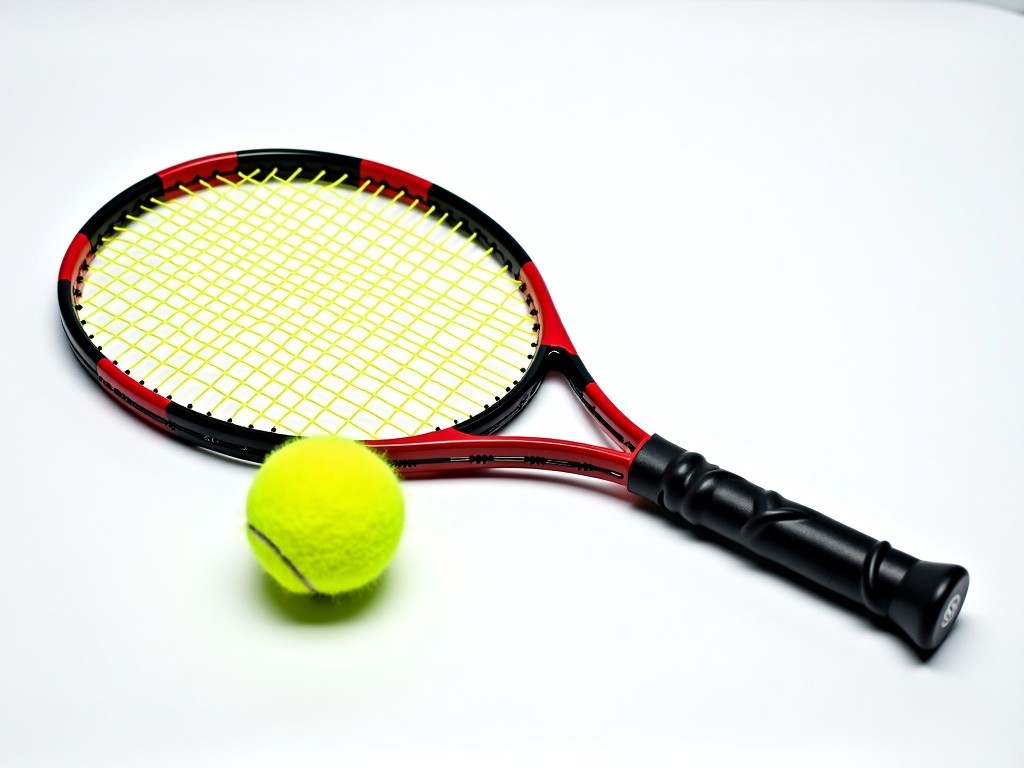
Wholesale Professional Tennis Racket Price Supplier
Professional tennis rackets supplied at wholesale level are engineered for distributors, OEMs, and sports retailers who require consistent performance across large batches. These rackets meet
Wholesale Professional Tennis Racket Price Supplier
Professional tennis rackets supplied at wholesale level are engineered for distributors, OEMs, and sports retailers who require consistent performance across large batches. These rackets meet International Tennis Federation (ITF) specifications for length, head size, and stiffness, ensuring they are suitable for sanctioned competition. Supplying at scale allows buyers to maintain inventory stability while offering end‑users a product that adheres to recognized sport standards.
Key Technical Specifications
| Parameter | Typical Range |
|---|---|
| Weight (unstrung) | 280 g – 310 g |
| Balance point (from butt) | 320 mm – 340 mm |
| Swing weight | 300 kg·cm² – 340 kg·cm² |
| Stiffness (RA) | 60 – 70 |
| String pattern | 16 × 19 (common) |
| Head size | 95 in² – 100 in² |
| Length | 27.0 in (686 mm) |
| Beam width | 22 mm – 24 mm |
These values represent typical ranges for graphite‑based professional models; actual figures vary with specific layup, grommet design, and finish. Buyers should confirm exact tolerances during sample approval.
Material Composition and Construction
The racket frame is primarily constructed from high‑modulus carbon fiber prepreg, often blended with basalt or Kevlar reinforcements to adjust damping and torsional stability. The prepreg layers are oriented in a quasi‑isotropic layup to achieve targeted stiffness and strength while keeping weight within the desired range. A thermoplastic polyurethane (PU) or silicone-based grommet system protects the strings and contributes to vibration attenuation.
- Carbon fiber modulus: 330 GPa – 420 GPa (high‑modulus grades)
- Resin system: epoxy with Tg > 180 °C for heat resistance during curing
- Reinforcement options: basalt fiber (increase shock absorption), Kevlar (improve impact toughness)
- Grommet material: PU shore A ≈ 85 for durability and string movement
Manufacturing Process and Dimensional Control
Production begins with laser‑cut prepreg plies that are placed into a heated compression mold. The mold defines the exact beam width, throat geometry, and head contour, holding tolerances of ±0.2 mm on critical dimensions. After layup, the mold is closed and cured at 180 °C for approximately 20 minutes under 150 bar pressure, ensuring full consolidation and minimal void content. Post‑cure, frames undergo precision grinding to achieve the final weight balance point, followed by drilling for string holes with a tolerance of ±0.1 mm.
Inline metrology stations measure weight, balance, and swing weight after each batch, feeding data back to the molding cycle to maintain statistical process control (CPK > 1.33). This approach reduces variability and supports consistent performance across large production runs.
Quality Assurance and Testing
Each racket undergoes a series of nondestructive checks before packaging. Weight is verified using a calibrated scale with readability of 0.1 g; balance point is measured on a pivot beam with resolution of 0.5 mm; swing weight is determined via a pendulum method calibrated against known reference rackets. Stiffness is assessed using a three‑point bend fixture, delivering an RA value with repeatability of ±0.5.
- Visual inspection for surface defects, paint adhesion, and grommet seating
- String tension retention test: measure loss after 24 h at 60 lb reference tension
- Impact durability: simulated ball strikes at 30 m/s for 2000 cycles without frame cracking
- Environmental conditioning: exposure to 40 °C/90 % RH for 48 h to check for delamination
Only units that pass all criteria are cleared for wholesale shipment, reducing the risk of field failures and returns.
Applications in Sports Distribution
Wholesale buyers source these rackets to supply retail chains, club pro shops, and online sports retailers. The consistent spec distribution allows resellers to market the product as “tournament‑grade” without needing individual performance testing. Additionally, the rackets’ neutral paint base facilitates private‑label branding, enabling distributors to apply custom logos or color schemes while retaining the underlying performance characteristics.
Because the frames meet ITF standards, they are eligible for use in sanctioned junior and adult tournaments, making them attractive to institutional buyers such as school sports departments and community centers that require compliant equipment for program delivery.
Customization Options
- Paint finish: matte, gloss, or metallic; custom Pantone matching
- Grip size: L0 – L5 (4 in – 4 ⅝ in) with optional overwrap thickness
- String pattern: 16×19, 18×20, or 16×18 (client‑specified)
- Weight tuning: addition of tungsten weights in the handle or head (±5 g increments)
- Logo application: laser engraving, water‑transfer decal, or sublimation print
- Packaging: individual foam sleeves, bulk cartons, or retail‑ready boxes with inserts
Pricing Structure and Minimum Order Quantity
Unit price depends on frame material grade, level of customization, and order volume. Typical FOB pricing for a standard graphite model with no custom paint begins at USD 12.00 per unit for orders of 500 pieces, decreasing to USD 9.50 per unit at 5,000 pieces. Adding custom paint or grip modifications adds approximately USD 1.20–USD 2.00 per unit, while weight‑tuning inserts add USD 0.80 per unit. The standard minimum order quantity (MOQ) is 100 units for stock models; custom‑color runs often require an MOQ of 300 units due to setup of the paint line.
| Order Quantity | Base Price (USD/unit) | Notes |
|---|---|---|
| 100 – 499 | 13.50 | Stock colors only |
| 500 – 1 999 | 12.00 | Standard model |
| 2 000 – 4 999 | 10.80 | Price break |
| 5 000 + | 9.50 | Best rate |
All prices are indicative and subject to confirmation based on final specifications, freight terms, and currency fluctuations. A detailed quotation is provided after receipt of a technical data sheet or sample approval request.
Frequently Asked Questions
- Can dimensions be customized? Yes, beam width, head size, and length can be adjusted within ITF limits; changes affect mold tooling and may impact MOQ.
- What information is required before quotation? Desired weight range, balance point, string pattern, grip size, paint finish, and order volume. Providing a sample or technical sketch speeds up the process.
- What materials are available? Standard high‑modulus carbon fiber, with optional basalt or Kevlar reinforcement; alternative alloys (e.g., titanium‑grade) are available upon request for specialty lines.
- How is quality inspected? Each unit undergoes weight, balance, swing weight, stiffness, and visual checks as described in the quality assurance section.
- What packaging methods are available? Individual foam sleeves, divider packs, bulk cartons, or retail‑ready boxes with custom inserts; palletization conforms to ISPM‑15 standards for export.
- How are export shipments protected? Frames are placed in moisture‑barrier bags, then packed in corrugated cartons with corner protectors; pallets are stretch‑wrapped and strapped.
To receive a formal quotation or request a sample for evaluation, please provide your technical requirements and expected annual volume. Our engineering team will review the specifications and respond with a detailed cost breakdown, lead time, and tooling implications.
Request a Quote


