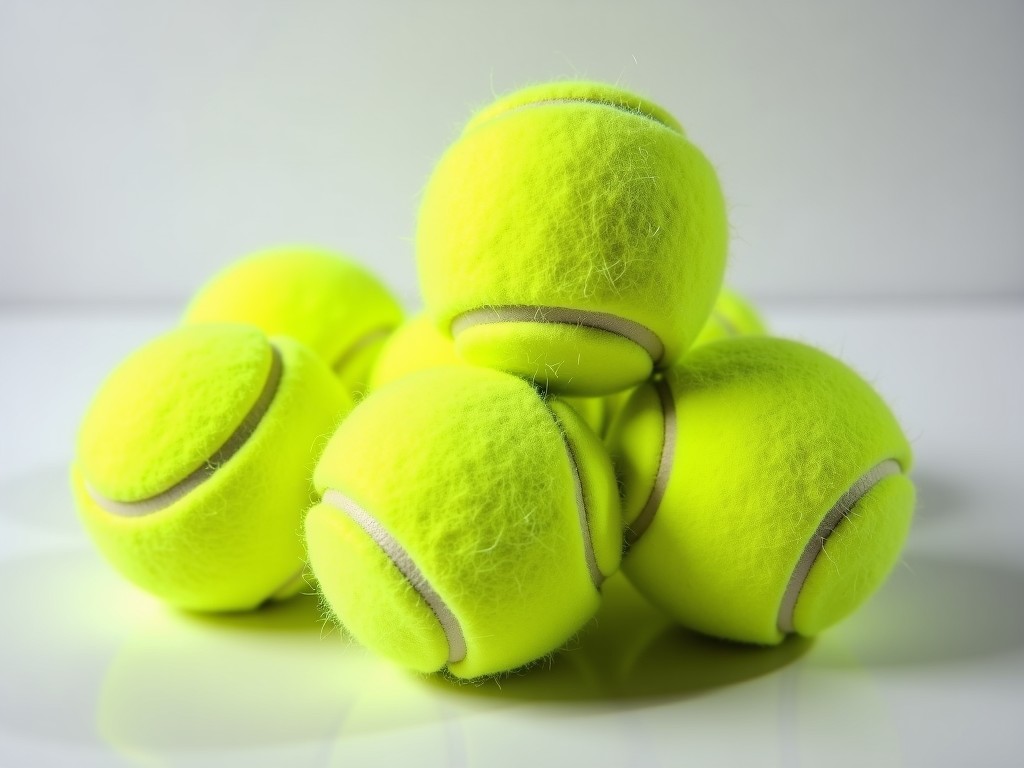
Wholesale Soft Court Tennis Balls For Beginners Supplier
Soft court tennis balls feature a reduced internal pressure, typically around 0.5 to 0.6 atmospheres, which lowers the ball’s rebound height compared to standard pressurized balls. The felt covering
Wholesale Soft Court Tennis Balls for Beginners Supplier
Soft court tennis balls feature a reduced internal pressure, typically around 0.5 to 0.6 atmospheres, which lowers the ball’s rebound height compared to standard pressurized balls.
The felt covering is made from a finer, softer nylon blend that minimizes abrasion on court surfaces and provides a gentler impact feel for novice players.
Technical Specifications
| Parameter | Typical Value |
|---|---|
| Diameter | 6.54 – 6.86 mm |
| Weight | 56.0 – 59.4 g |
| Rebound Height (100 in drop) | 90 – 110 cm |
| Felt Thickness | 1.8 – 2.2 mm |
| Core Material | Natural rubber compound |
These values represent common ranges for beginner‑focused soft court balls; actual specifications can be adjusted according to project requirements.
Material Composition and Construction
The core consists of a natural rubber formulation engineered for low modulus elasticity, enabling consistent deformation under low impact forces.
A pre‑wound nylon felt is adhesively bonded to the core using a water‑based latex adhesive that maintains flexibility after curing.
The felt’s fiber orientation is optimized to reduce fluffing, thereby extending usable life on abrasive hard‑court surfaces.
Color pigments are incorporated into the felt during manufacturing, allowing for standard yellow or custom hues without compromising durability.
Performance Characteristics for Beginner Play
Lower internal pressure results in a slower ball speed, typically reducing racket‑head velocity requirements by approximately 15 % compared to standard balls.
The decreased bounce height permits players to practice groundstrokes with a more predictable trajectory, facilitating timing development.
Reduced ball shock lessens wrist and elbow strain, which is beneficial for younger or less‑conditioned athletes undergoing skill acquisition.
Overall, the ball’s dynamics support longer rallies and increased shot repetition, key factors in building foundational technique.
Typical Applications
- Entry‑level tennis programs in schools and community centers
- Recreational clubs offering beginner lessons and junior leagues
- Training facilities focusing on stroke mechanics and footwork drills
- Wholesale distributors supplying sporting‑goods retailers and institutional buyers
These applications benefit from the ball’s forgiving play characteristics, which encourage sustained participation and skill progression.
Quality Control Philosophy
Each production lot undergoes dimensional verification using calibrated calipers to ensure diameter remains within the 6.54‑6.86 mm window.
Weight is checked via precision scales; acceptance criteria are set at 56.0‑59.4 g per ball.
Rebound testing is performed on a standardized drop‑tower apparatus, measuring height after a 100‑inch free fall.
Adhesion of the felt to the core is evaluated by a peel‑strength test, guaranteeing that the covering remains intact under repeated impact.
Visual inspection identifies surface defects such as felt irregularities, core deformities, or color inconsistencies before packaging.
Customization Options
- Alternative felt colors (e.g., white, orange, or team‑specific shades)
- Custom logo printing via water‑based ink on the felt surface
- Special packaging configurations such as inner poly bags or branded cartons
- Adjustable internal pressure for specific training objectives
Customization is managed through direct engineering consultation to ensure any modifications maintain the ball’s intended performance envelope.
Packaging and Logistics
- Bulk cartons containing 72 balls (3 dozen) with internal dividers to prevent movement
- Poly‑bagged packs of 12 balls for retail‑ready presentation
- Palletized configurations optimized for container loading, typically 48 cartons per pallet
All packaging materials are recyclable corrugated cardboard or low‑density polyethylene, selected to protect the balls from moisture and deformation during transit.
Frequently Asked Questions
- Can the internal pressure be tailored for specific age groups?
Yes, pressure levels can be adjusted within the 0.4‑0.8 atm range to suit different player competencies. - What information is required to receive a quotation?
Requested quantity, desired felt color, any logo artwork, packaging preference, and delivery destination. - Are samples available before placing a bulk order?
Sample packs of 12 balls can be arranged, with shipping costs borne by the requester. - How is product consistency verified across large production runs?
Statistical process control monitors key parameters (diameter, weight, rebound) and triggers corrective action if deviations exceed predefined limits.
For detailed specifications, customization requests, or to initiate a wholesale inquiry, please use the contact form below.
Request a Quote


